



We savour the Nissan Tekton around the breathtaking landscapes of the Himalayas
Story: Gaurav Davare
Photography: Chirayu Gijare
There was a time when doing a road trip to Leh-Ladakh used to be a near-impossible feat. But now, with infrastructural progress over the years, it is more accessible to one and all. So, it was the perfect opportunity for us to go on an adventure away from the hubbub of the urban jungle to show how accessible it is. You also need a dependable companion for it, and we got the chance, courtesy of Nissan India, to experience why their recently launched Tekton mid-size sport utility vehicle (SUV) is exactly that.
The journey itself would be spread over three days, from Chandigarh to Leh-Ladakh through the diverse landscapes of the Himalayas. This made it a unique first drive experience, considering that average first drives barely last a day of driving. Thus, we had plenty of time to spend behind the wheel of the car over this three-day period.
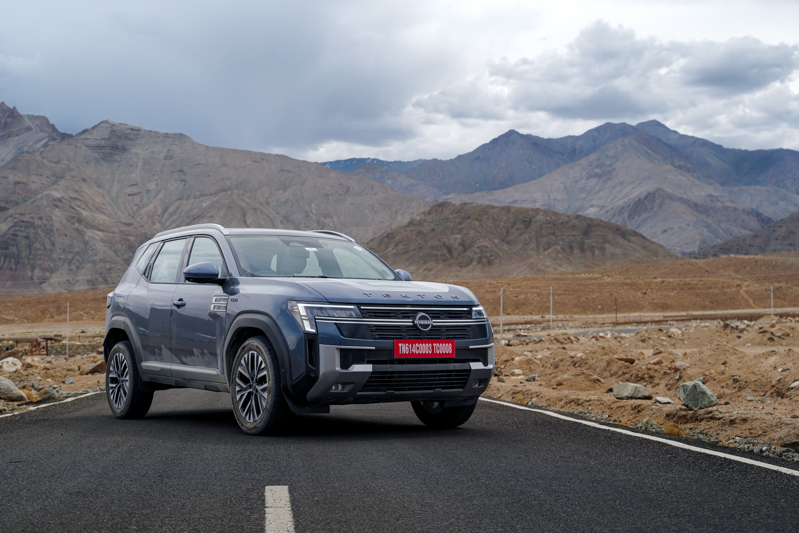
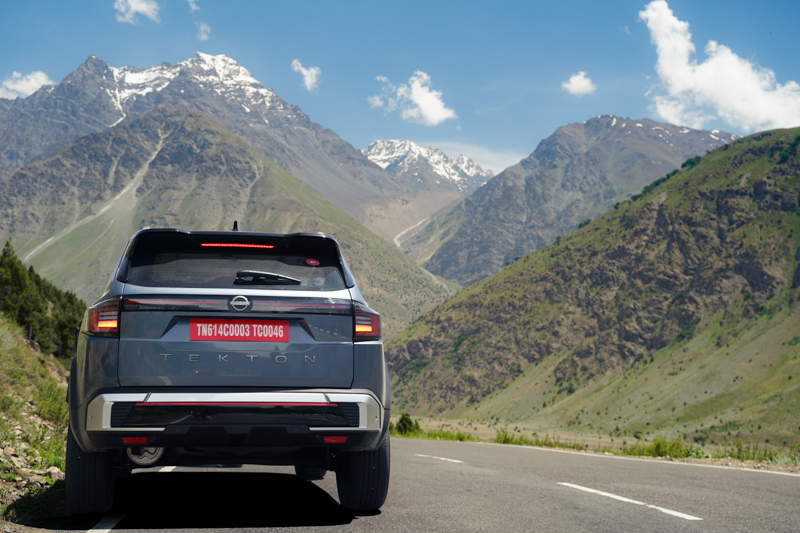
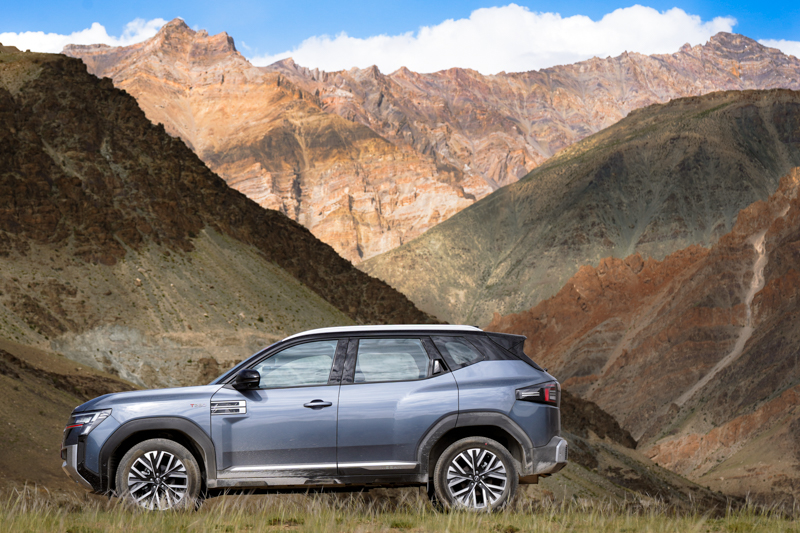
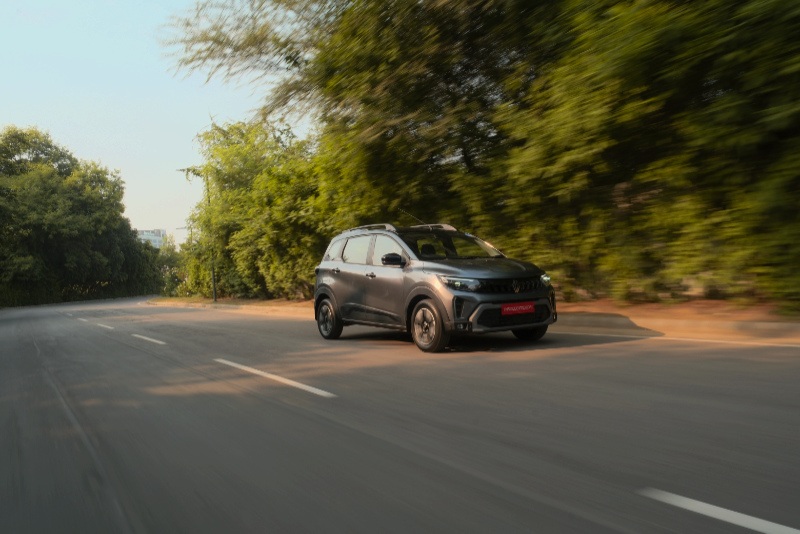
Before we embark on our journey, however, let’s first see what the Nissan Tekton is. It is a mid-size monocoque SUV that may share its platform and mechanicals with the Renault Duster. It clearly stands out with its own unique identity. As for how it looks, the proper butch and muscular silhouette is familiar, but the Tekton boasts of a more mature personality. The face is inspired by the Patrol SUV with horizontal slats, a wide grille, and wraparound connected LED daytime running lights (DRL) above the LED headlights. Interestingly, this arrangement reminds one of the previous generation of the Duster. Rounding off the differences here is the design for the 18-inch alloy wheels and C-shaped LED taillights; the overall look I prefer to the Duster’s.
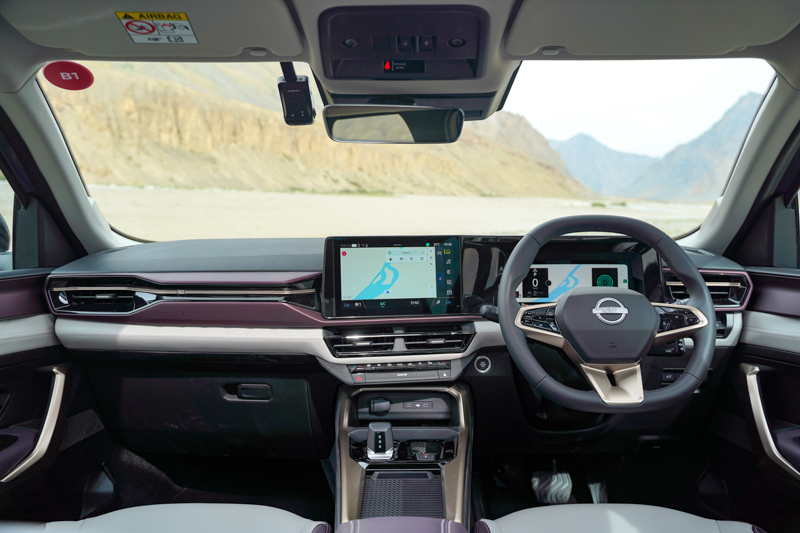
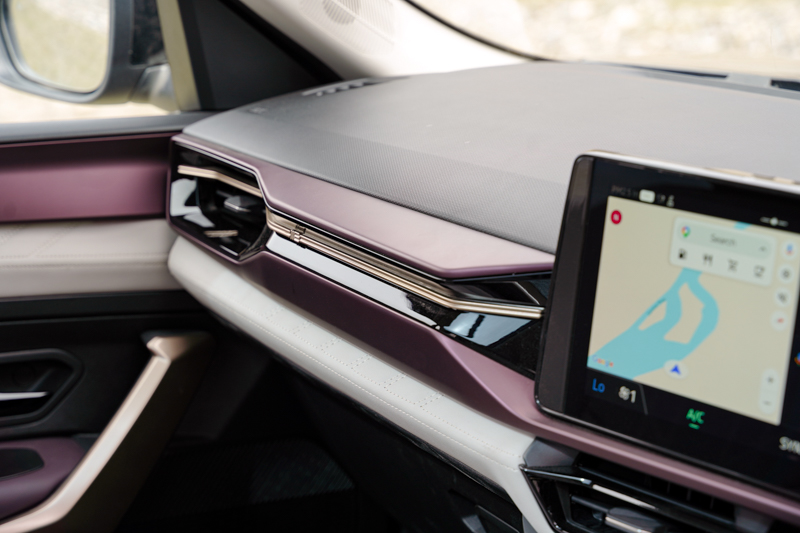
Inside, there’s a fairly simple yet contemporary layered dashboard design, with plenty of soft-touch materials that look and feel premium. The Tekton, however, has a better theme of burgundy-and-cream, alongside tastefully done gold accents, compared to the Duster’s dark-and-green-themed cabin. That said, the cream upholstery will be harder to maintain. Both SUVs are matched with a packed feature list including bits like a 10.1-inch touchscreen infotainment system with Google UI built-in, wireless Android Auto and Apple CarPlay connectivity, a 10.25-inch digital instrument cluster, wireless phone charging pad, an electric panoramic sunroof, six-way powered and ventilated front seats with manual lumbar support, a 360-degree camera, dual-zone climate control, a powered tail gate, and two Type-C USB charging ports.
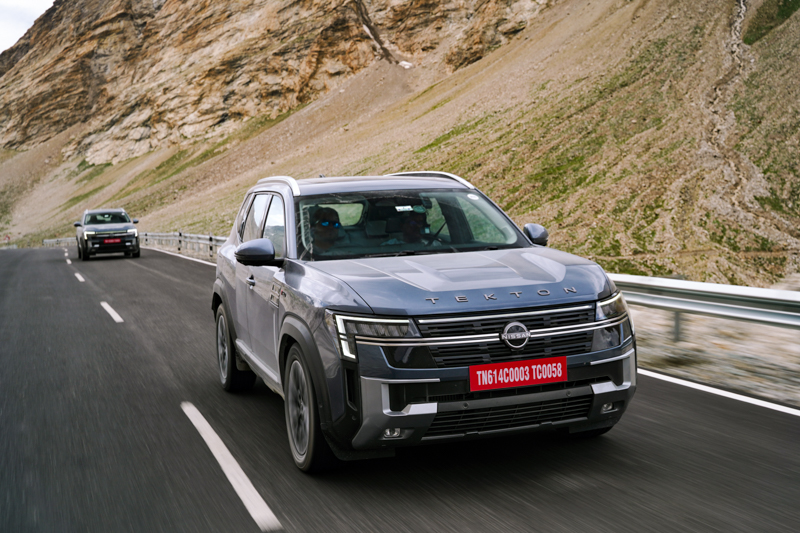
The first leg of our journey was from Chandigarh to Manali, and we had the 163-hp, 1.3-litre, turbo-petrol variant paired with a six-speed DCT automatic at our disposal. This was the easiest leg. There was an impressive network of seemingly endless four-lane highways and smooth surfaces, eventually giving way to a pleasant transition from the urban environment to the picturesque hill-station atmosphere of Manali. The Nissan Tekton is a great mile-muncher with a smooth, refined powertrain and a well-settled ride, keeping things comfortable inside, which is what you need on a road trip, complemented by adequate stopping power and decent NVH levels.
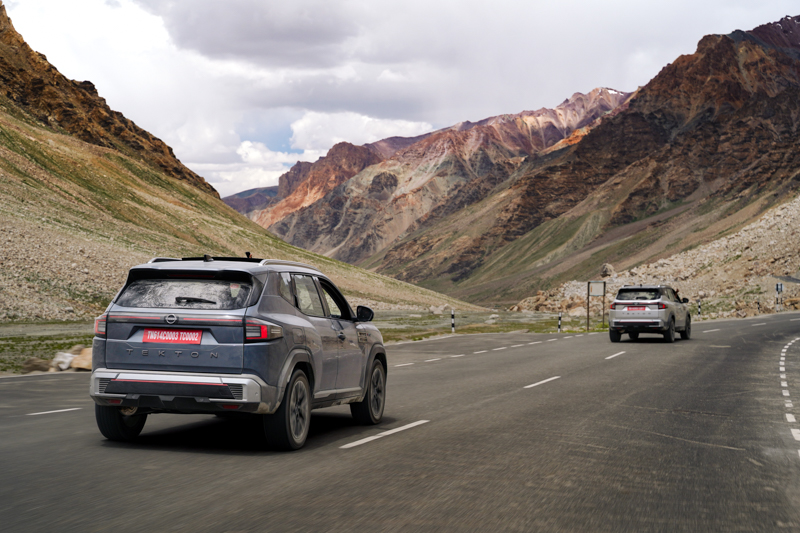
The highway we traversed was a great test bed for the Level 2 ADAS suite, with conveniences such as adaptive cruise control, lane change assist, and driver attention monitor well-tuned for Indian conditions. As for fuel efficiency, one may get high single-digit figures within the city, with those going up towards 15 km/l during consistent highway running.

Now came the next leg, the longest one, wherein we would be driving from Manali to Zangla Valley. Manali itself is popular amongst tourists with rivers flowing along city streets, extreme sports, and dense forests, but there’s a lot more beyond it. Part of that journey was the impressive Atal Tunnel, 9.02 kilometres long, which makes it one of the world’s longest single-tube highway tunnels at an altitude above 3,000 metres (10,000 feet). At the other end of it, entering Sissu Lake is another world itself, with winding open roads, endless hairpins, complemented by a lake and a host of towering and diverse mountains that are heaven on earth for driving enthusiasts. This also presented a perfect opportunity to soothe the driving senses of the Nissan Tekton as its excellent ride and handling capabilities really shone through. It felt extremely rewarding to tackle these bends with precise steering feedback while being absolutely planted.
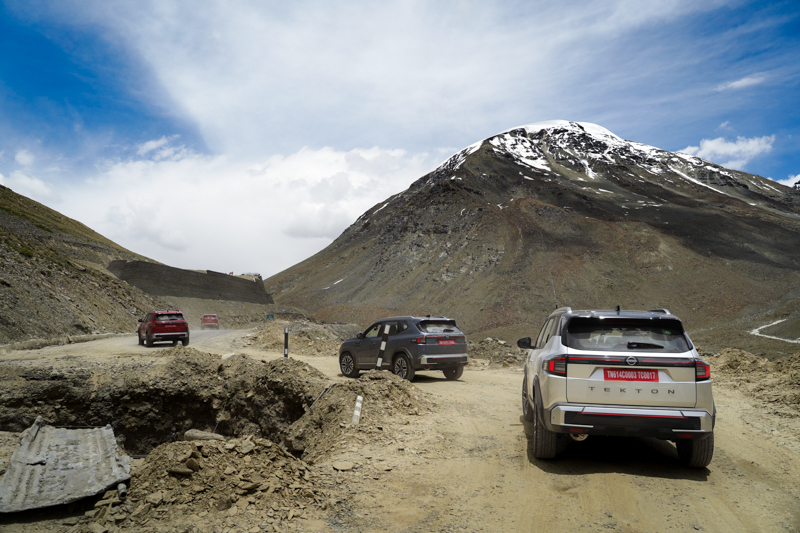
En route to Zangla, we went through the Shinku La pass, situated at an altitude of 16,703 feet above sea level, and here it was that the Tekton’s main weakness became apparent: turbo lag. Since air density gets lower as the altitude increases, there’s less oxygen available for the engine to mix with fuel, which doesn’t let the turbocharger build boost effectively, thus leading to lower engine performance. Around inclines, even though the 1.3-turbo-petrol DCT managed to glide through, I had to switch to manual mode and keep it in low gear to ensure momentum. In the 100-hp, 1.0-litre, turbo-petrol set-up paired to the six-speed manual gearbox, you have to keep it largely in first or second gear at high revs to have any sort of momentum, so the 1.3-litre turbo-petrol is a better option for high-altitude running.
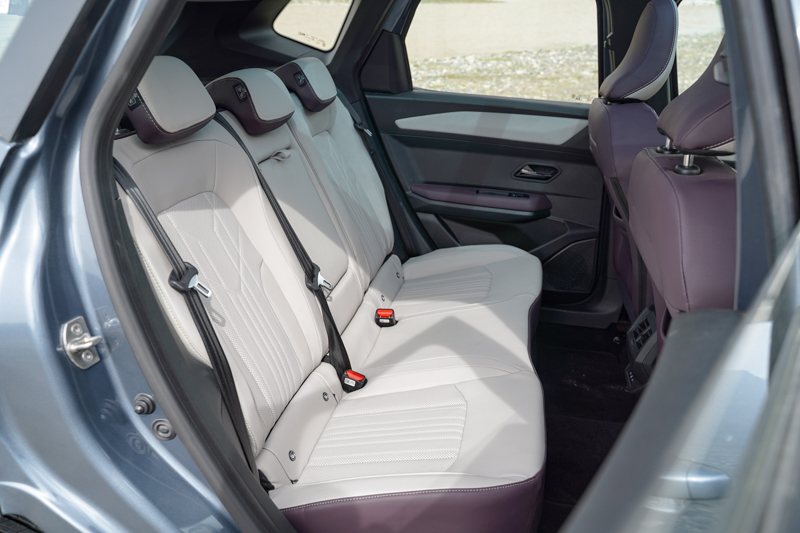
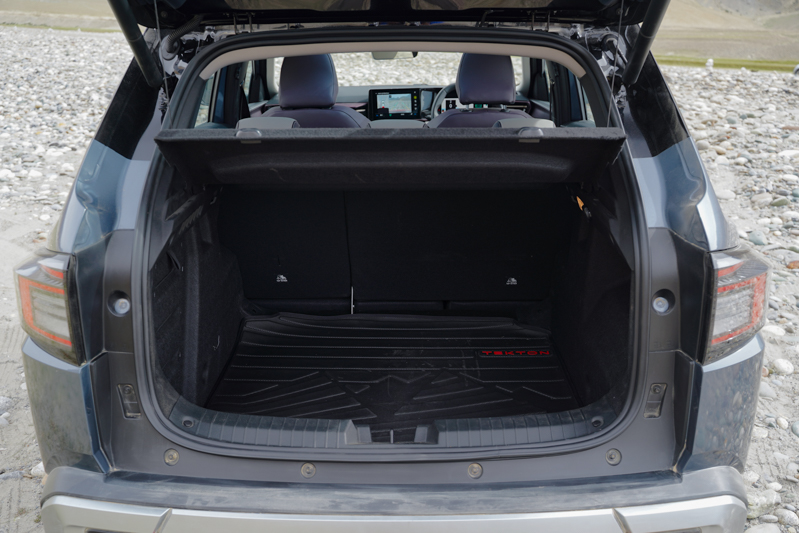
What really impressed me was the largely brilliant quality of roads, albeit with a few rough patches, but the Tekton just glided over those. On such a long journey, having supportive and nicely contoured seats was a huge boon as I could drive on for hours. While the 700-litre boot was plentiful to accommodate our luggage for this three-day trip, the front door pockets could’ve been better designed to accommodate decent-sized bottles.
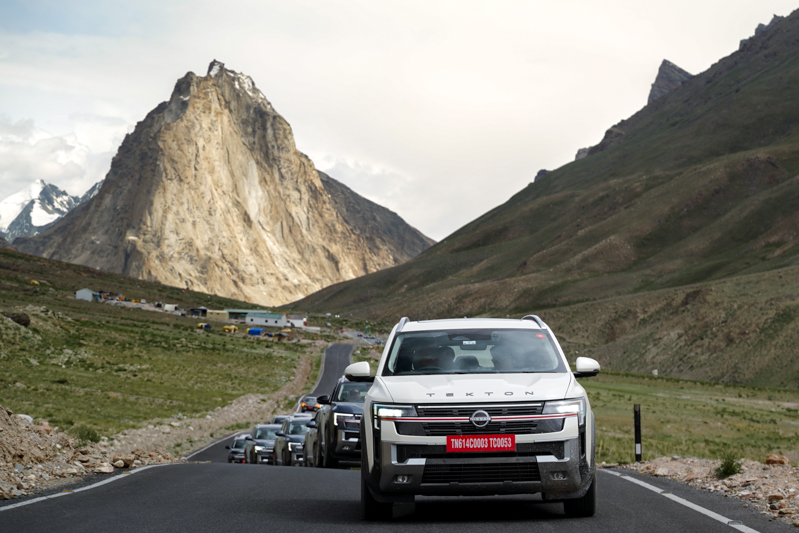
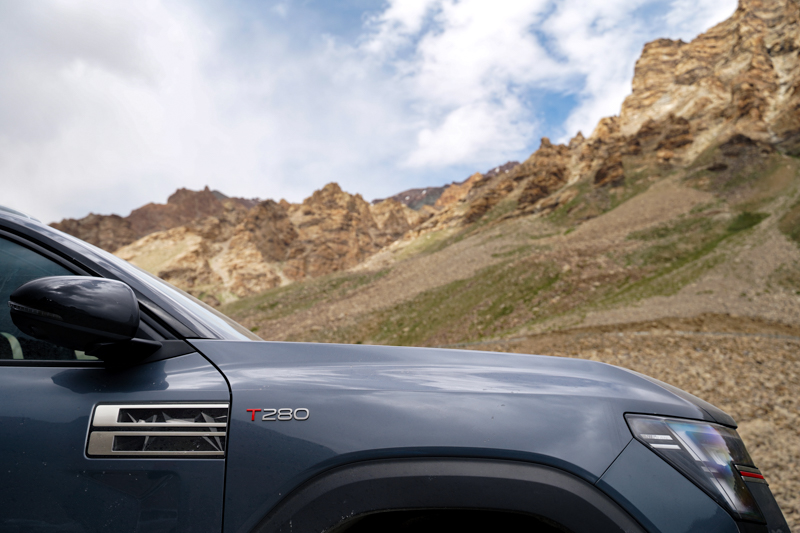
Taking in those breathtaking landscapes, we finally reached our second stop, Zangla Valley, an ancient remote village a little further from Padum at an altitude of 11,800 feet above sea level, situated alongside the beautiful Zanskar River. The true allure, however, lay in the fact that there was almost no mobile phone signal, barring select postpaid networks, making for perfect conditions to go off-grid. Overall, it just made the second leg a feast for the eyes and the soul.
Next came our third and final leg, heading to Leh-Ladakh, and we switched over to the 1.0-litre turbo-petrol-manual set-up. I felt that this, being exclusively a manual option, was better as one could have control over the revs, keeping them within the ideal torque curve, useful while tackling inclines and loose soil sections on this route. Through the many rough patches, the Tekton continued to excel effortlessly, with its 212-millimetre ground clearance helping tackle all manner of inconsistencies in road surface. While the 360-degree camera proved useful while navigating tight spots, there is room for improvement in its resolution.
Interestingly, this route moves along the mountain pass with the Zanskar River, where the road looks like a geological cross-section carved open by time itself, with many vertical landscapes holding memories of an ancient ocean that disappeared millions of years before humans arrived.
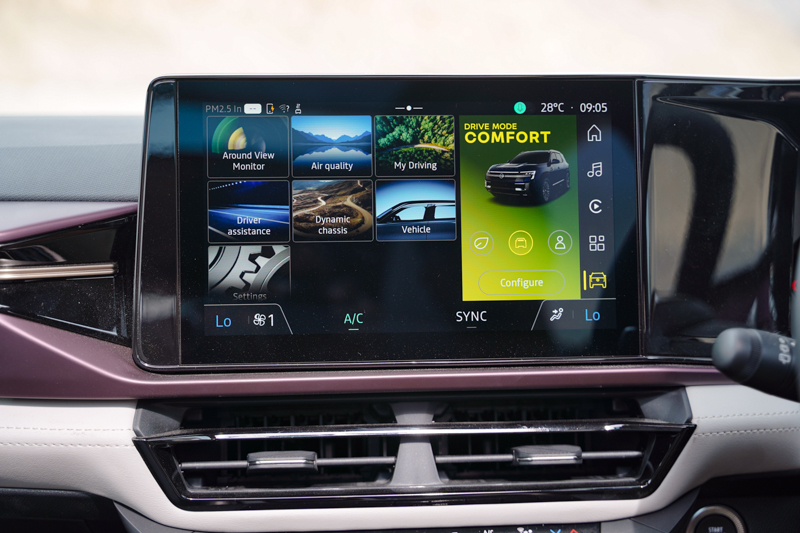
On such a long trip, one’s co-passenger can get a little bored, so there is a bit of entertainment thanks to the Google UI-enabled infotainment, where you can access apps like YouTube, Spotify, and more. This UI is also useful to the driver as Maps is projected on to the instrument cluster, which is less of a distraction. Also, the instrument cluster theme on the Tekton looks better than the Duster.
Having covered over 700 km over three days, we fetched up at Leh-Ladakh, in the process setting an India Book of Records entry for the largest convoy of a single-model four-wheeler, comprising as many as 60 Tekton SUVs, to reach Leh. My favourite leg of the journey was the second one, with its diverse landscapes showcasing a small slice of the breathtaking Himalayas. Mention must be made of the fact that the credit for those largely impressive and well-marked roads, especially from Manali to Leh-Ladakh, goes to the Border Roads Organisation (BRO). Needless to say, such excellent tarmac added immeasurably to the joy of this long road trip.
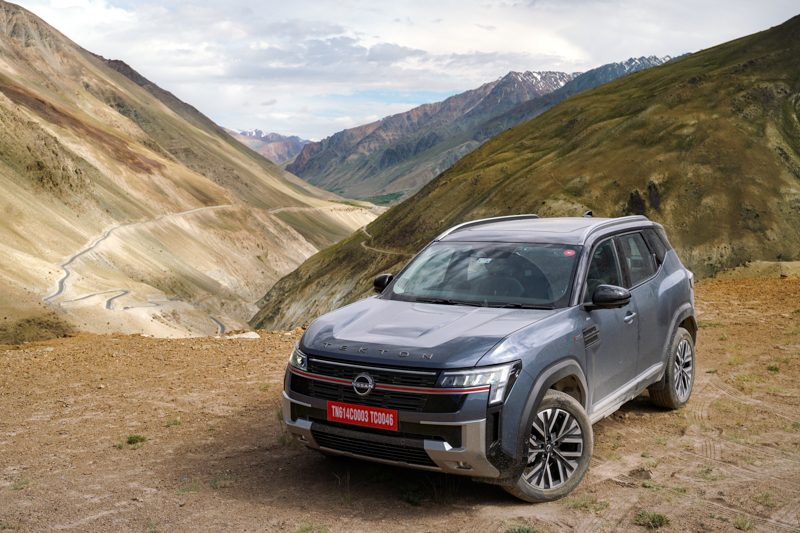
Overall, this adventure was not only a brilliant showcase of the diverse nature of India that is now more accessible than ever before, but also of how the Nissan Tekton was a worthy companion for it. With its price ranging from Rs 10.49 lakh to Rs 18.59 lakh (ex-showroom), it not only looks muscular but is capable of tackling a variety of surfaces while keeping the occupants comfortable inside.







Leave a Reply