


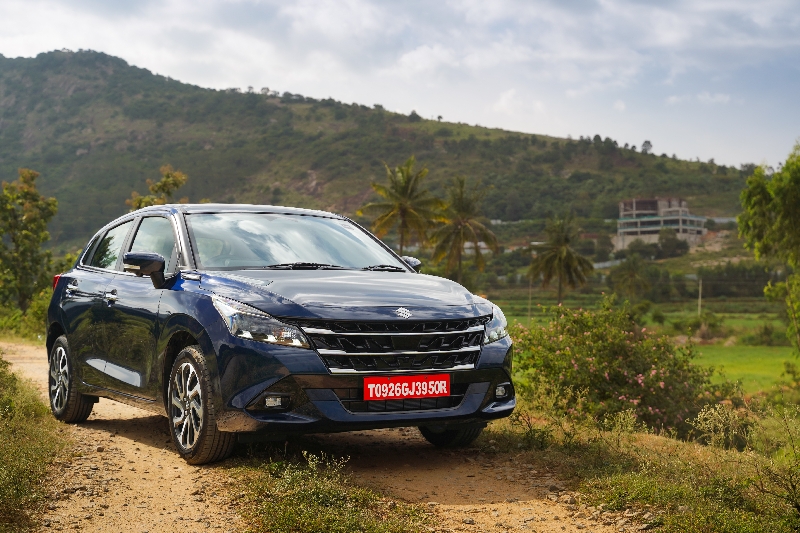
The new Maruti Suzuki Baleno gets the “Z12” engine from the Swift and the Level 2 ADAS from the Victoris, plus a new grille, some stripes, and more features. We drove it in Bengaluru the day after its launch.
Same silhouette, new face. We’ve seen that before. More than 11 years and 19 lakh units later, they know the formula works, so they haven’t done much. It’s still 3,990 millimetres long on a 2,520-mm wheelbase, with the same width, height, tyres, ground clearance, and boot space, but it’s got some more kit. Let’s get to it.
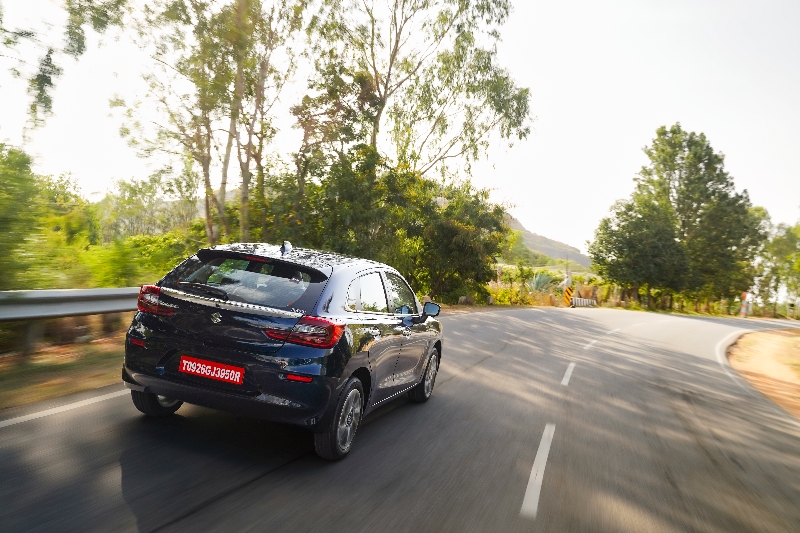
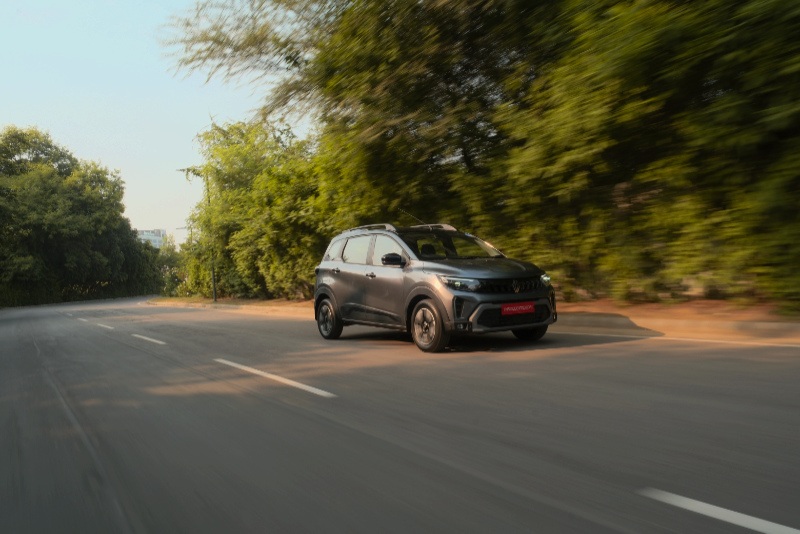
The new grille may seem hideous at first with the three obnoxious chrome slats, but, upon closer look, the thicker edges meld well with the bonnet lines, smoothing out the look. A new chrome strip adorns the area at the base of the A-pillar. Okay, then. There are LED fog-lamps in revised recesses as well. New 16-inch wheels with curved spokes look correct from the left but wrong from the right side. The rear gets LED tail-light clusters which appear new but retain the same shape. That’s the exterior changes then. Oh, and there’s no sunroof. But there is a new “Enigmatic Teal” exterior paint option—which we didn’t get; we got the traditional “Nexa Blue”.
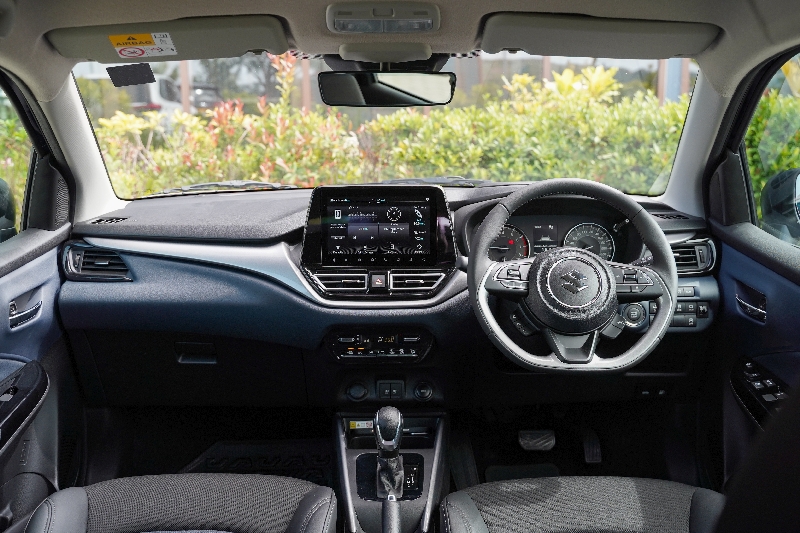
Inside, the cabin is familiar, but the seats and the steering wheel are different. The new fabric-meets-art-leather concept means a unique seat pattern, but now the front seats feature ventilation. The buttons are located on the inner wall of the wireless charging unit inside the centre console—thankfully, not within the screen and the menus. Overall ergonomics are good and simple, and everything is where I expect it to be. No complaints there. However, the seat cushioning felt far too soft, especially at the outer edges, and the lack of thigh support for tall occupants like me was telling. At the front, that can be managed by taking the seat further back—at the expense of rear knee-room, of course—but in the second row, the lack of support is something the tallies will have to deal with.
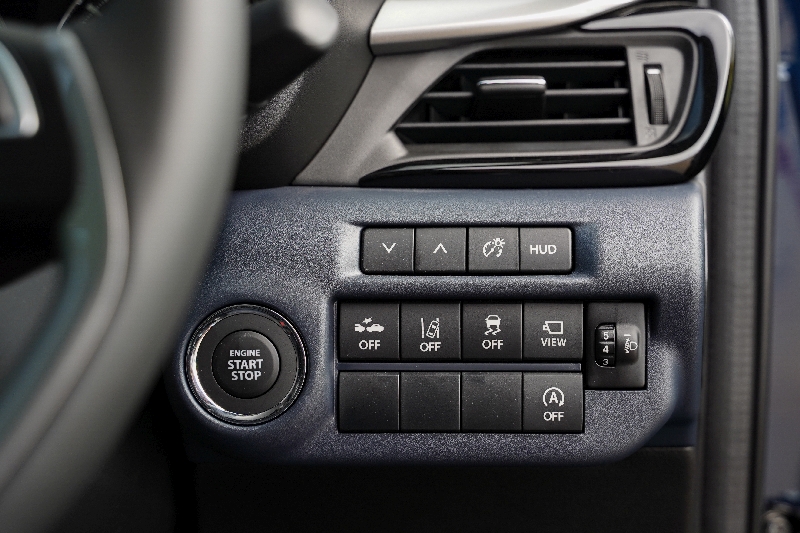
The addition of the advanced driver assistance systems means the steering gets more buttons. The right-hand side features buttons for adaptive cruise control, vehicle speed, and distance level presets. And the systems work well. The ACC held on to the 40 km/h limit set on the narrow two-lane road while a few of the shots you see here were being taken. The collision warning and autonomous emergency braking also work well—as I would find out when a bike rider suddenly slowed and stopped without warning. Yes, I may have been doing 35 km/h or so, but it worked flawlessly.
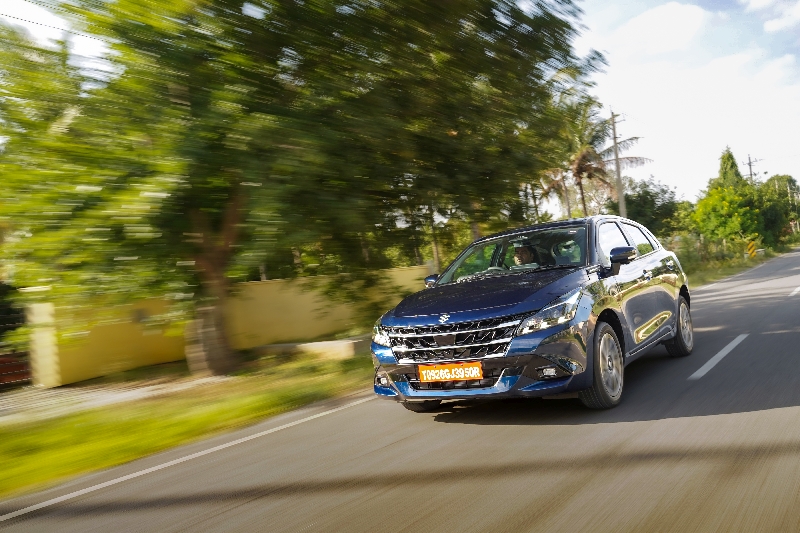
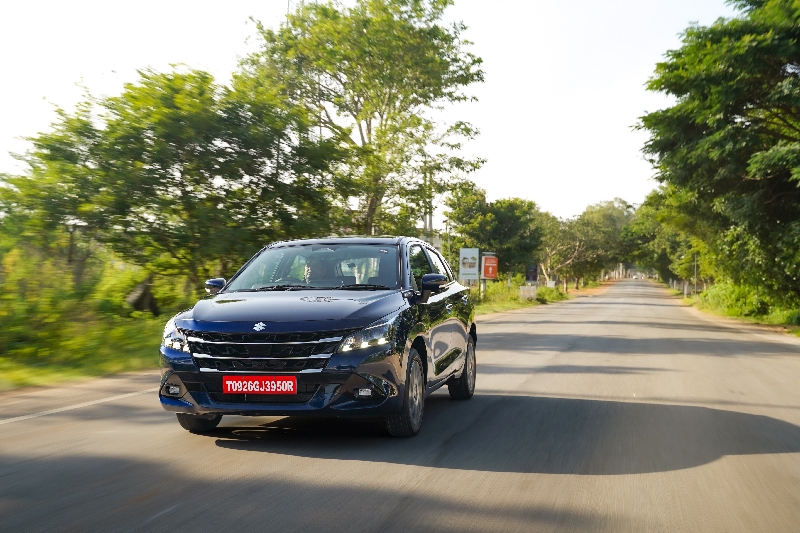
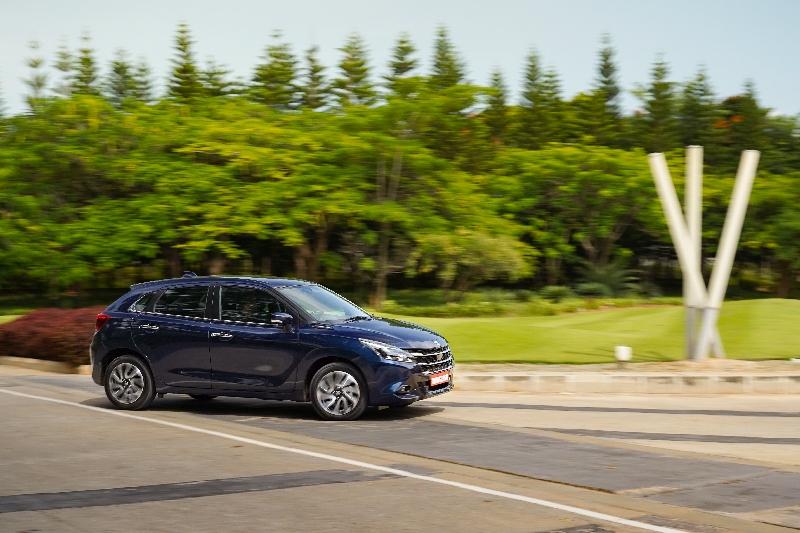
Getting to the actual driving, and we got some good minutes around Nandi Hills and the beautiful forest-y roads. The Baleno still drives as it did before. Its suspension is sorted, neither too soft nor too firm, but the sound insulation could be far better. The steering feel is still just as vague, even dead at times. The big change is the engine. The four-cylinder “K12” makes way for a similar displacement but a literally downsized three-cylinder “Z12E”-spec engine. Output is 83 hp with a quoted 112.4 Nm of peak torque. This engine is far more undersquare, however, with a bore and stroke of 74 x 92.8 mm compared to the 73-mm bore and 71.5-mm stroke of the K12, although the compression ratio is only slightly higher and still 13-ish:1. This engine also powers the Swift, and I found it a hoot to drive, especially with three pedals as a manual. Here, however, with the automated manual transmission (AMT), or AGS (auto gear system) as Maruti Suzuki refers to it, the story took a turn for the worse.
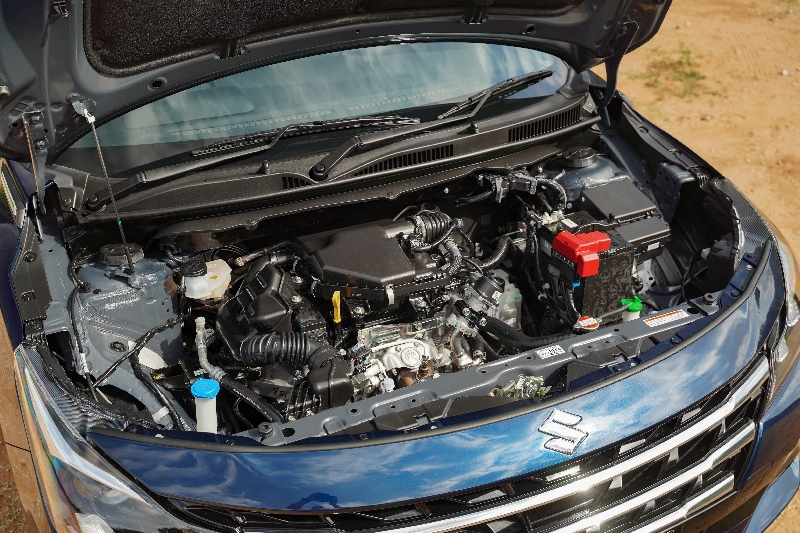
The AMT works. Yes. I do not deny that. And it is extremely efficient. I saw a real-time figure of 16 km/l in traffic and as much as 23 km/l going easy on more open roads. The thing is, it is far from quick. The ’box is slow to respond, lets the engine rev hard before realising it needs to shift, and is even confused at times while shifting from neutral to drive or reverse unless the brake pedal is absolutely smashed to the floor—not one for quick getaways, that’s for sure. Then again, this is not a car for remotely enthusiastic driving. It’s best crawling about stuck in traffic—with minimal steering input needed, the parking sensors and new 360° camera activated showing plenty of other road-users around, the new Clarion audio system booming, the centre screen showing the map of the road all bright red, and the auto climate and ventilated seats keeping the front occupants cool. And that’s exactly the audience the new Baleno caters to. But there isn’t a sunroof; something that audience wants, or so I feel. But what do I know? Well, I do know that the Hyundai i20 gets a sunroof, and that the N Line has a delightful steering feel. I also know a friend with a decade-old Polo GT TDI diesel and I know what I would do if I had to put my money where my mouth is.
So, there you have it. The new Baleno is well-equipped, spacious and has improved active safety features, and it’s got a Z12 under the bonnet.
Need to Know – Maruti Suzuki Baleno Alpha(O) AGS
Price: Rs 10.50 lakh (estimated, line-up starts from Rs 6.10 lakh)
Engine: 1,197-cc, in-line three, petrol
Max Power: 83 hp @ 5,700 rpm
Max Torque: 112.4 Nm @ 4,500 rpm
Transmission: Five-speed automated, front-wheel drive
Suspension: MacPherson strut front, torsion beam rear
Weight: 985 kg
Story: Jim Gorde
Photography: Chirayu Gijare








Leave a Reply