


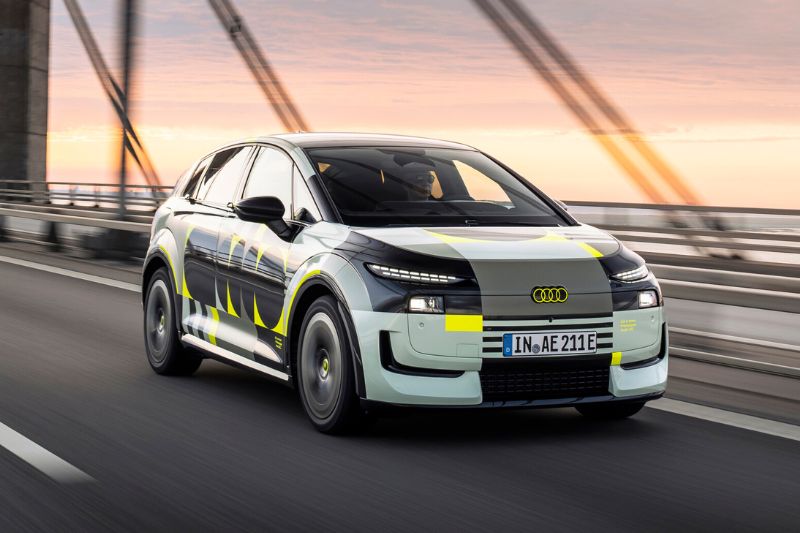
This and more details revealed by the car-maker, ahead of A2 e-tron’s autumn 2026 debut
Audi has showcased exciting new details of the upcoming A2 e-tron, claiming it will be the most energy-efficient production model in the brand’s history. The all-electric hatchback is expected to achieve a preliminary WLTP energy consumption figure of just 12.8 kWh/100 km in 140-kW (190-hp) guise, when equipped with the optional efficiency package. The brand additionally claims the battery’s lithium iron phosphate (LFP) chemistry offers greater durability, improved thermal stability and slower degradation than many alternative battery types, allowing owners to routinely charge the battery to 100 per cent without significantly affecting its lifespan. Based on Audi’s published specifications, the estimated WLTP driving range from the A2 e-tron’s 61-kWh battery, keeping in mind the quoted energy consumption figures, equates to about 476 km.
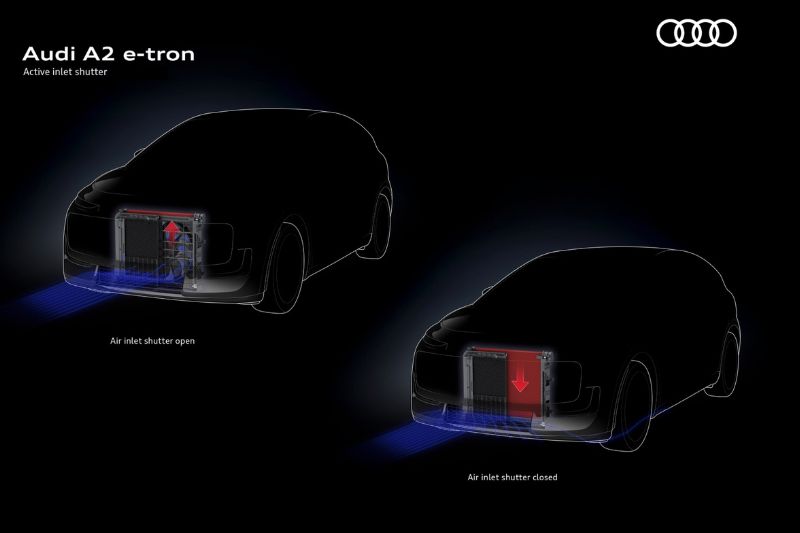
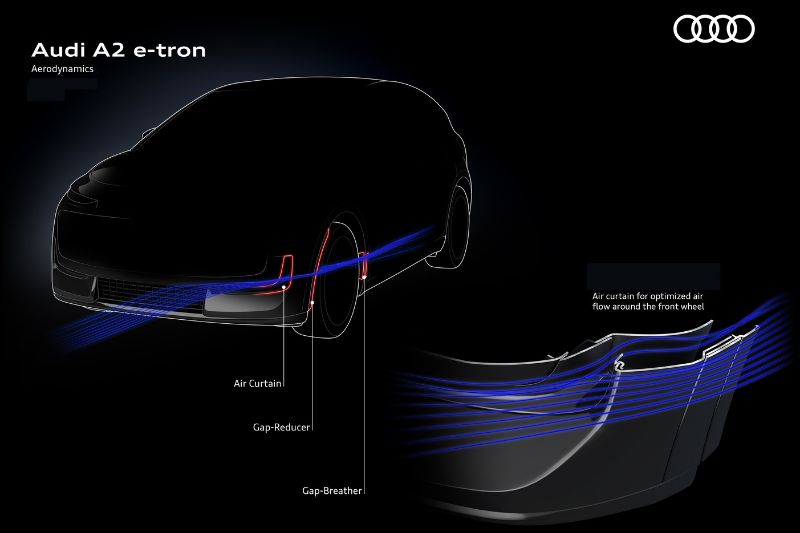
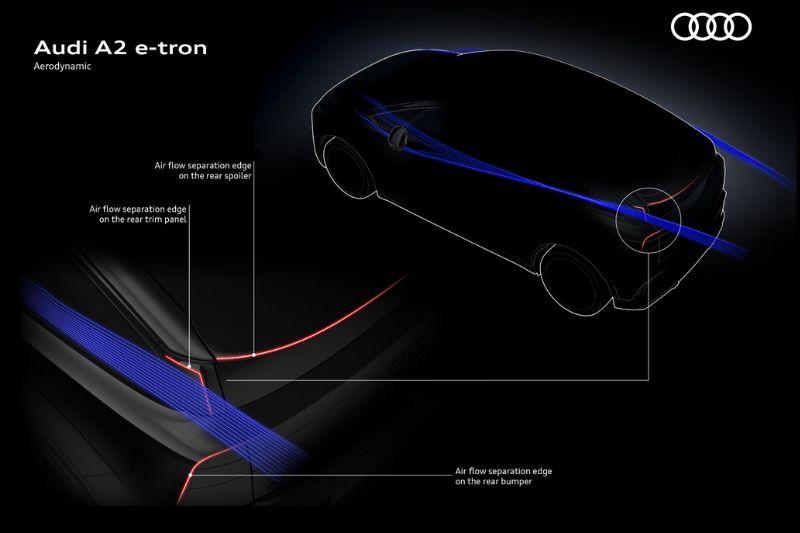
One of the biggest contributors to the car’s efficiency is its aerodynamic design. With a drag coefficient of just 0.24, the A2 e-tron is the most aerodynamic compact model Audi has produced. Right off the bat, the rounded front end employs an active cooling intake that remains closed during most driving conditions to minimise drag, opening only when additional cooling is needed.. Next, the air curtain up front and gap reducers around the wheel arches minimise drag along the sides. And finally, the smooth roofline and integrated rear spoiler manages turbulence behind the vehicle as well. Audi says all these measures reduce WLTP energy consumption by up to 0.9 kWh/100 km compared with the standard version of the vehicle.
The electric powertrain has been optimised as well; Audi says the latest permanently excited synchronous motor is up to 10 per cent more efficient thanks to silicon carbide power electronics that reduce switching losses (energy used up when converting DC battery power to AC motor power), thinner motor laminations that lower internal energy losses, and a revised stator winding configuration that lowers AC loss. Additionally, new low-friction transmission oil and a taller 10.2:1 gear ratio further improve efficiency, particularly during high-speed driving.
The car-maker has also refined the battery’s thermal management system, claiming an adapted cooling strategy improves wallbox charging efficiency to 89.6 per cent, so more of the electricity drawn from the grid reaches the battery. Moreover, new software continuously monitors battery health and state of charge, enabling the vehicle to optimise efficiency and maintain consistent performance throughout its service life.
Beyond efficiency, the A2 e-tron will support bidirectional charging. Vehicle-to-Load functionality allows owners to power external electrical devices directly from the car, while Vehicle-to-Home capability enables the vehicle to function as a home energy storage system in compatible markets, including Germany, Austria and Switzerland, when paired with an Audi-approved charging unit.
Now, as mentioned, the A2 e-tron will make its world premiere in Autumn 2026 as Audi’s new entry-level electric model in the compact segment. And, though we believe it’s far too early to speak of an India launch, an EV such as this would do wonders for bolstering the average enthusiast’s interest towards EVs. That’s chiefly because rather than taking the conventional path of increasing battery size, Audi has played a masterstroke, emphasising aerodynamic refinement, drivetrain efficiency, and intelligent battery management.














Leave a Reply