


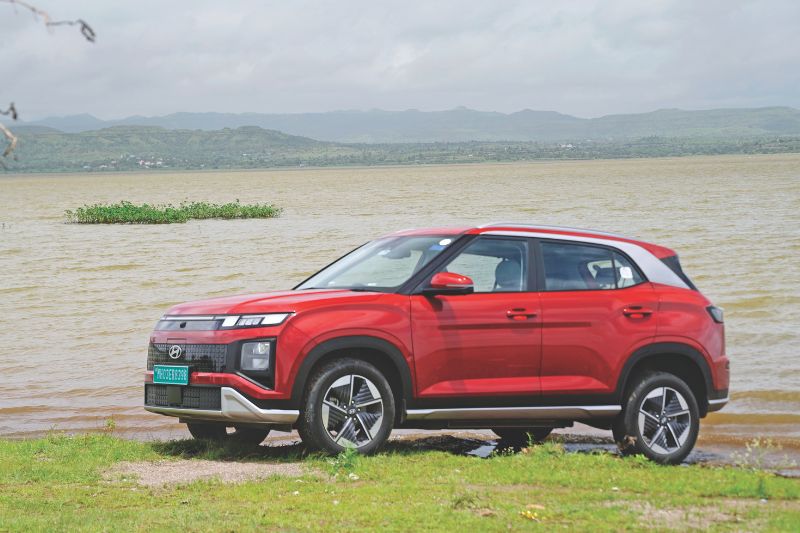
To truly become mainstream, electric cars need to do more than offer an alternative powertrain, says Hyundai
Over three decades, Hyundai has played an integral role in India’s automotive sphere, which is now transitioning towards electric mobility. But rather than asking customers to calibrate themselves onto an entirely new type of vehicle, Hyundai has integrated electric propulsion into one of its most ubiquitous SUVs.
Why the Creta Electric?
It all starts with the familiarity of the established Creta nameplate, with the SUV format bringing the advantageous combination of ground clearance, spaciousness and practical proportions. But keep in mind: the Creta Electric isn’t simply a conventional Creta with its engine replaced by a battery and motor. Hyundai has, in fact, developed the driving experience around the characteristics of electric propulsion.
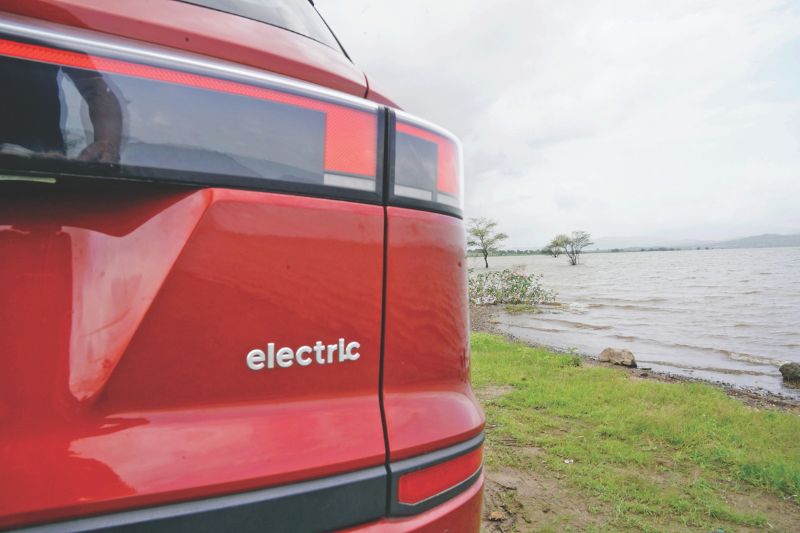
Take i-Pedal, for example. In stop-start traffic, where conventional cars require the driver to keep skipping between pedals, i-Pedal allows both acceleration and deceleration to be controlled largely via the accelerator pedal. And as the car slows, regenerative braking also recovers energy, feeding it back into the battery. That’s an innovative way that technology blends seamlessly into the driving experience.
The battery-management system and thermal management are similarly important, particularly in a country where ambient temperatures can be high. Here, the Active Air Flaps, that open so as to cool the batteries, and stay closed at all other times for better aerodynamics, help keep the battery within its optimum operating conditions. The result is an electric SUV developed around everyday driving rather than being merely an electric derivative.
Can an EV really be practical?
The Creta Electric addresses prospective buyers’ range concerns with an ARAI-certified range of up to 510 km. Real-world range will naturally vary according to speed, traffic, temperature, terrain, driving style, and use of the vehicle’s systems. Besides, Hyundai’s battery-management system, regenerative braking and i-Pedal are part of the larger efficiency equation.
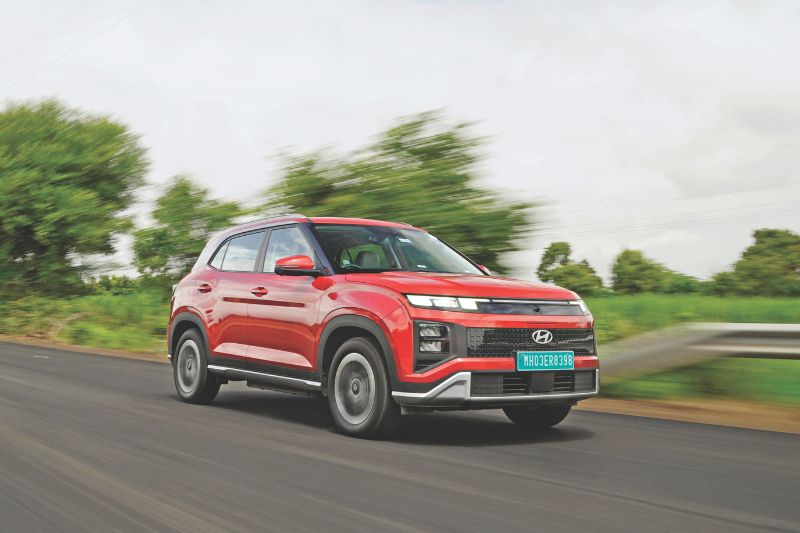
For most owners, though, the more relevant question remains “How often will I actually need to charge?”, the answer to which is surprisingly familiar. We don’t normally wait for our smartphones to reach 15 or 20 per cent; we charge them as part of a routine. The Creta Electric is the same, courtesy the 7.4-kW home charger replenishing its battery. And when a longer journey requires a charging stop, DC fast charging helps top up from 10 to 80 per cent in about 39 minutes, roughly the length of a usual highway break.
Moreover, Hyundai currently has 183 DC fast-charging stations–ranging from 60 kW to 240 kW–across 105 cities, with plans already in place for 600 stations by 2030. The myHyundai app helps provide access to over 30,000 charging points through its charging network, particularly helpful when travelling beyond familiar routes.
Making EV ownership easier to understand
Hyundai’s Battery-as-a-Service (BaaS) model helps separate the battery cost from the initial vehicle purchase. With BaaS, the Creta Electric starts at Rs 10.99 lakh (ex-showroom), with the battery component starting at Rs 3.9 per kilometre.
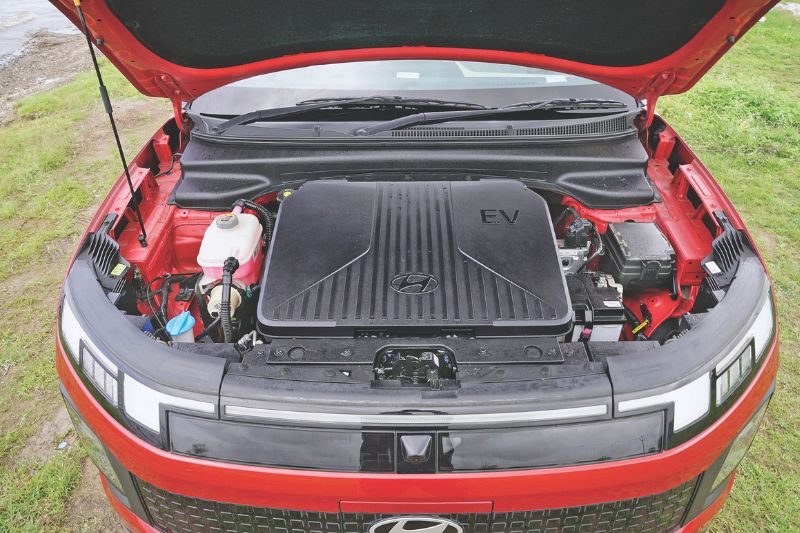
In effect, the ownership calculation pivots more towards paying for the energy-storage component as per usage. Hyundai also backs the battery with a warranty of eight years or 1,60,000 km, providing additional reassurance around one of the most important and expensive components of an EV.
And because the financial calculation doesn’t end when the car is bought, Hyundai’s assured buyback/residual-value proposition after three years adds another element of predictability to ownership. Together, these measures address an aspect of EV ownership that is sometimes overlooked: not merely how much an electric car costs to buy, but how predictable its ownership journey can be.
Beyond zero tailpipe emissions
“Sustainability” feels rather abstract to the layman, so Hyundai offers a more tangible example, using 20 per cent recycled PET-bottle material in the Creta Electric’s fabric variants, while the bio-leather variants incorporate 10 per cent bio-material derived from corn extracts.
Agreed, this doesn’t, by itself, make the vehicle “sustainable”; but it demonstrates Hyundai’s well-though approach to reducing environmental impact.
Technology that works in the background
The Creta Electric’s technology is best understood through how it fits into everyday use. The dual 10.25-inch curvilinear displays, for instance, form the centre of the digital interface, with the touchscreen’s responsive operation making interacting with navigation, vehicle functions and entertainment feel more natural.
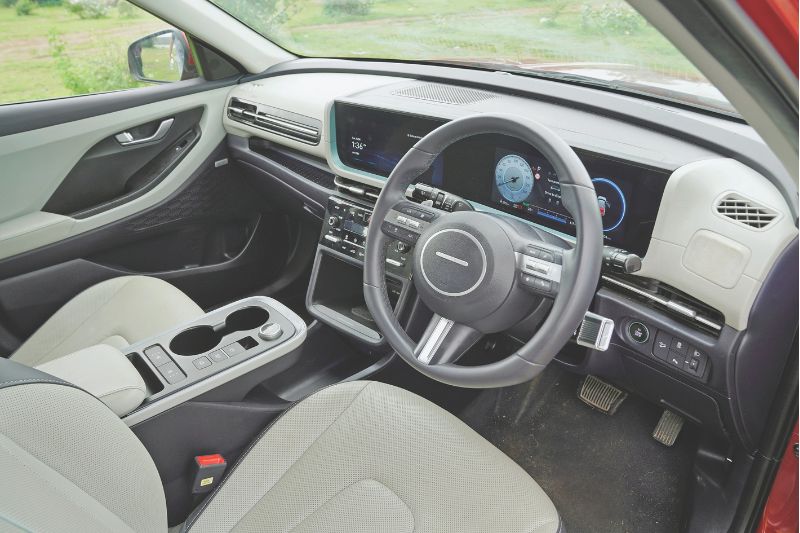
Hyundai Bluelink extends that connected experience beyond the cabin. Functions such as Digital Key and remote start/stop allow the driver’s smartphone or smartwatch to become an extension of the vehicle.
Moreover, simpler touches, like the side step, makes getting into and out of the SUV more convenient, while the sunroof adds to the sense of openness in the cabin. Even the Active Air Flaps have a functional purpose, helping thermal management besides regulating airflow around the vehicle. Individually, these features may not define the Creta Electric. Together, however, they contribute to the sense that the car is designed to be lived with.
Assistance, rather than autonomy
The Hyundai SmartSense Level 2 suite, with features such as blind-spot warning, forward collision warning, rear cross-traffic alert and adaptive cruise control, designed to assist the driver in their respective situations, add another layer to everyday usability.
This is an important distinction, as the value of Level 2 technology lies in making the driving task less demanding while keeping the driver firmly in charge.
When the car becomes a power source
Most conversations around EVs are about how much electricity they need. V2L reverses that relationship, allowing the Creta Electric to supply power to external equipment.

The possibilities are easy to imagine, like at a campsite or an outdoor gathering, providing power away from conventional electrical infrastructure; a small but useful reminder that an EV can function as more than simply a vehicle.
The Indian-family proposition
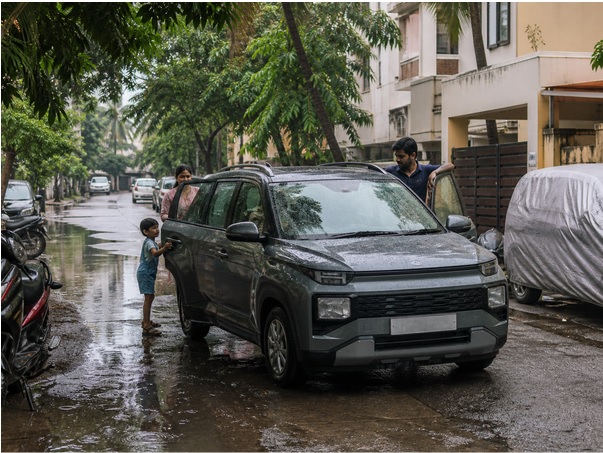
The real proposition of the Creta Electric, then, isn’t its long range, fast charging, sophisticated tech or electric powertrain. It’s in all these elements integrated into a format that already makes sense to the Indian family.
Over the past three decades, we at Car India have watched car buyers’ priorities, and the market itself, evolve. And though electrification is becoming an increasingly important part of that evolution, an EV’s success ultimately depends on how easily it fits into everyday life: the commute, the weekend drive, and the occasional unplanned getaway.
That is where the Creta Electric makes its strongest case. It simply works as an SUV, as a family car and, increasingly, as an everyday companion.

And perhaps that is the real sign that electric mobility is moving into India’s mainstream: when the question is no longer “Should I buy an EV?”, but simply “Which car should I buy?”










Leave a Reply