


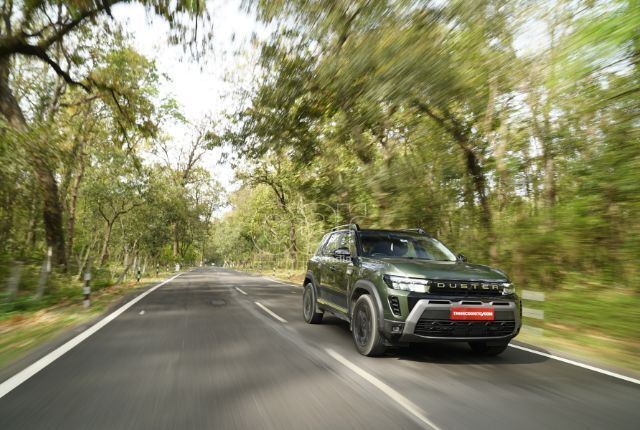
Can the 2026 Renault Duster recapture or exceed the charm of the OG Duster? We drove it around the beautiful backdrop of Dehradun to find out just that
Story: Gaurav Davare
Photography: Sanjay Raikar
India owes a lot to the Renault Duster nameplate as it essentially pioneered the mid-size SUV segment in the country. First launched in 2012, it made a strong impression amongst the masses with its no-nonsense nature, dependable diesel engine, rugged underpinnings and great ride quality. Now it did receive a fair number of updates over the years, but the competition in the segment kept heating up. Eventually, it was axed in 2022, and now four years later, it’s back in a new generation. But this is 2026, and the competition for the throne is extremely intense, with a plethora of options. So the 2026 Duster has some pretty big shoes to fill. Can it recapture or exceed the charm of the OG Duster and truly make a mark in this segment? We got to find out just that around the beautiful backdrop of Dehradun.
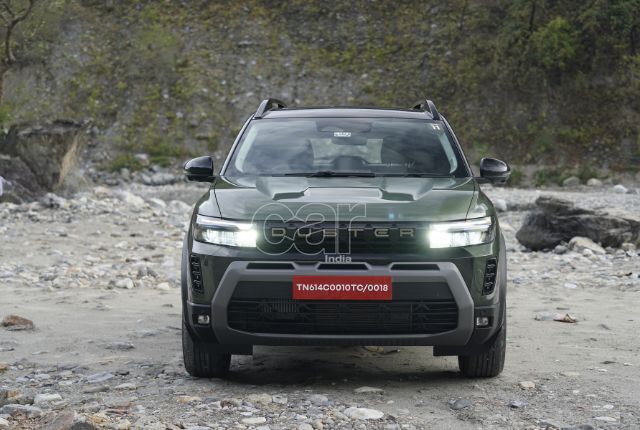
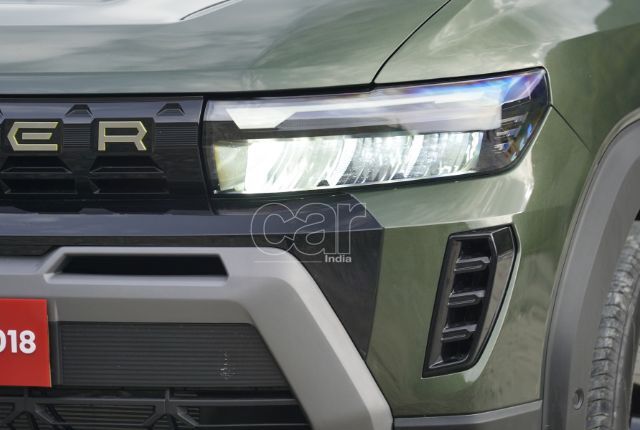
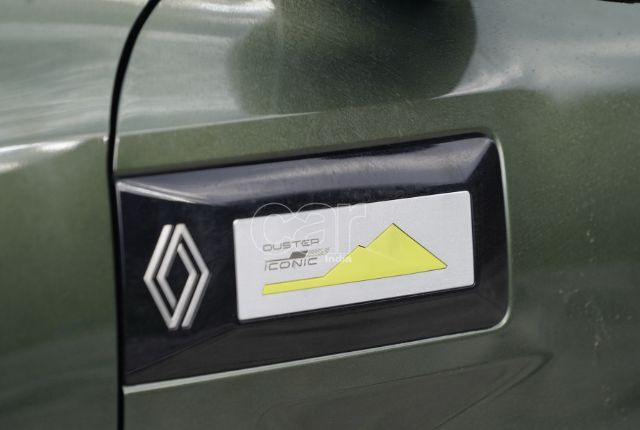
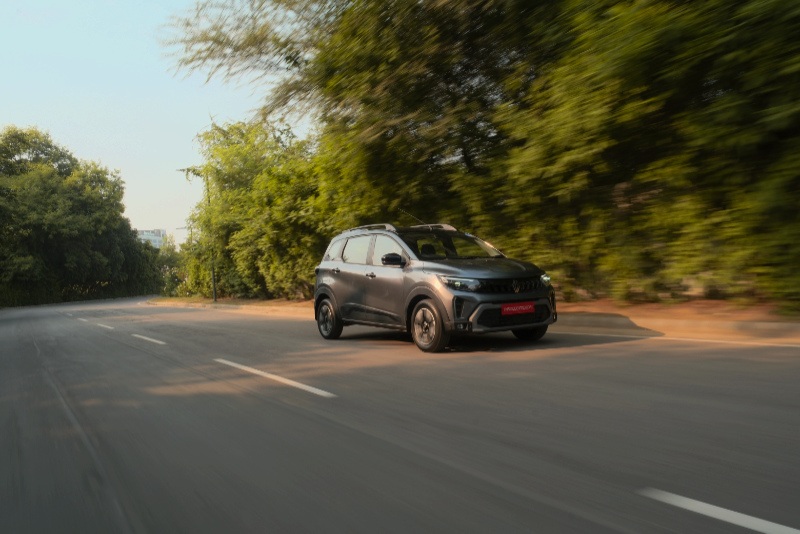
What is immediately noticeable and a positive point is that it looks properly muscular and butch as an SUV should, especially with the chunky set of bumpers and the large lower air dam, which is flanked by a prominent faux skid plate. In fact, Renault is so confident with the strength of the Duster brand that they’ve put the Duster lettering on the nose without the Renault logo. Interestingly, the India-spec Duster gets its own identity from the one sold abroad as the front and rear bumpers are a touch more aggressive and the LED DRLs are a sleek bar instead of Y-shaped units. Personally, it’s a nicer attention to detail.
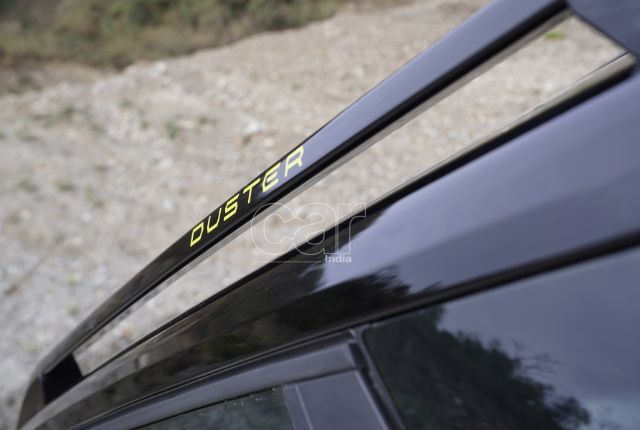
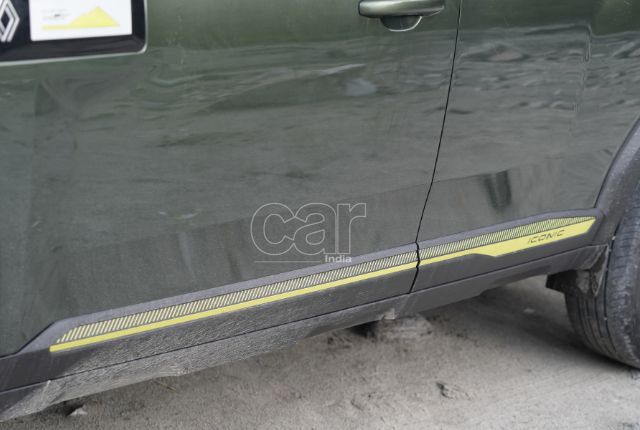
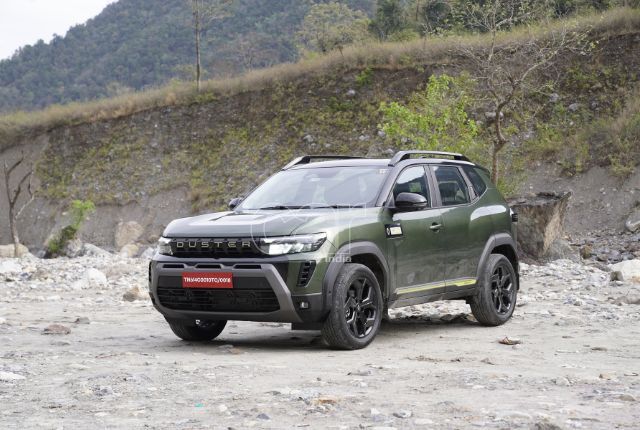
Move over to the side profile and it’s great to see that the new Duster retains a tough SUV persona like its predecessor with nicely muscular haunches and actually usable roof rails. That being said, the new Duster does look more boxy, it gets an upright nose, more prominent cladding, as well as larger, more modern looking 18-inch wheels, and the rear door handles have been moved to the C-pillar. In true SUV fashion, there’s 212 mm of ground clearance and we’ll get to how this translates to the drive experience a little later.
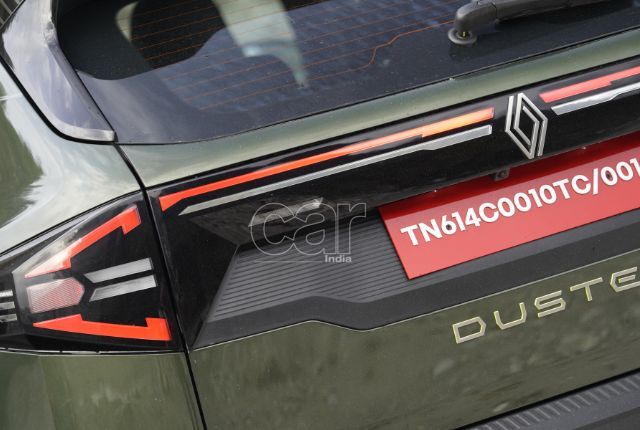
Another India-specific bit is at the rear with this LED strip that nicely blends with the C-shaped tail lights which is complemented by a chunky rear bumper and a rear spoiler. So overall, there’s a decent first impression with the design.
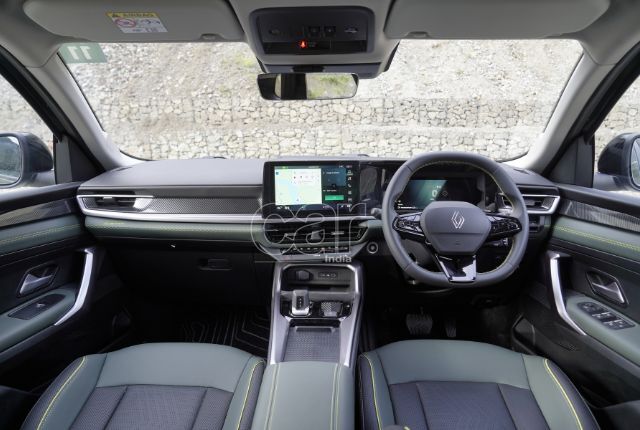
Where the 2026 Duster takes a notable leap forward from its predecessor is when you step inside. The cabin gets a function over form cabin philosophy, with an upright dashboard layout. There’s a decent dose of premium soft-touch materials, followed up by faux carbon elements. Yes, there are slightly hard plastic elements, but they don’t feel cheap and overall, it feels premium and built to last. The steering wheel is new, looks modern and chunky which feels nice to hold on to. There’s a cause for celebration too as you actually get physical controls, including a dedicated switch to control ADAS settings, and the controls feel nicely tactile to use. Overall, the fit and finish lives up to the mark and certainly a step forward for a Renault model in India.
Another India-specific element are the digital screens comprising the 10.1-inch touchscreen infotainment system and the 10.25-inch digital instrument cluster are actually integrated units. Personally I prefer the separated setup abroad as there’s a lot of empty space within that piano black slab that isn’t being used for the digital driver’s display. That minor gripe aside, I particularly like how clutter-free, colourful and easy-to-use this UI is and you get crisp resolution. The modern layout of the instrument cluster that you can customize with different viewing modes and has all the necessary information easily accessible, is another nice brownie point. More importantly, since this Duster gets Google OS in-built, you get a proper map view, which is beneficial while trying to navigate unfamiliar areas as you don’t need to pay attention to the map on the infotainment screen.
The step ups over its predecessor don’t end there as there’s an extensive feature list that includes wireless smartphone connectivity, dual-zone climate control, a wireless phone charging pad, a six-speaker Arkamys sound system, that sounds relatively decent, Type-C charging ports, 48-colour ambient lighting, and of course, this being India, an electric panoramic sunroof, that makes for an airy ambience.
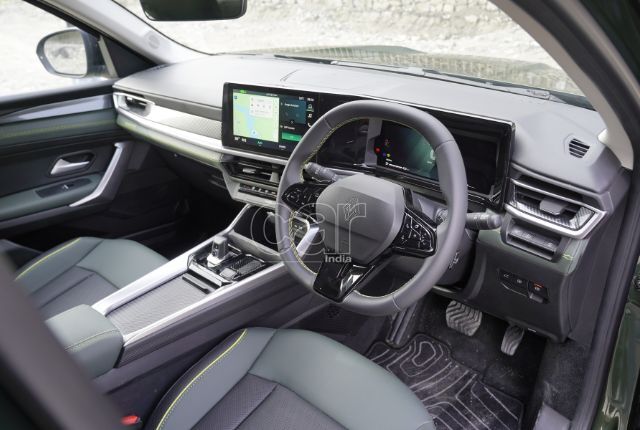
Driving enthusiasts will appreciate the 2026 Duster here as with the high dashboard layout, the seats are low enough where you feel like you’re in the car and not on top of it. Also, you can adjust the rake and reach in the steering wheel for an optimal driving position. The front seats themselves are a nice place to be in as they feel supportive, are nicely contoured and have the convenience of manual lumbar support. This is in addition to them having six-way powered adjustability and a ventilation function.
At the rear, with the driving seat set to my position, you get good legroom and kneeroom and even better headroom, being comfortable enough to seat three people. As for other niceties here, you get rear AC vents, two Type-C charging ports, an armrest with cup holders and a phone holder, as well as three adjustable head rests.
Now how can I talk about space without mentioning the boot. On the 2026 Duster, there’s up to 518 litres of boot capacity counting the rear parcel tray and I could comfortably store four cabin trolleys and smaller luggage, with ample space still available. So packing up for a family vacation in a place like Dehradun? Comfortably possible. This is of course complemented by a number of deep enough door pockets and smartly placed storage spaces in the centre console as well as underneath the armrest.
In the realm of safety, you get six airbags, a 360-degree camera with parking sensors, that has a very decent resolution, and more importantly, is detailed enough to change angles as the wheels are turning. In fact, if you’re perilously close to an obstruction while parking, the camera changes angles to zoom in towards that obstruction. Other safety elements include electronic stability control, hill hold assist, and an electronic parking brake with auto-hold. A key highlight here is the 2026 Duster being the first Renault to get the ADAS suite of safety assists like adaptive cruise control, auto high beam assist, lane keep assist, automatic emergency braking, and a blind spot monitor.
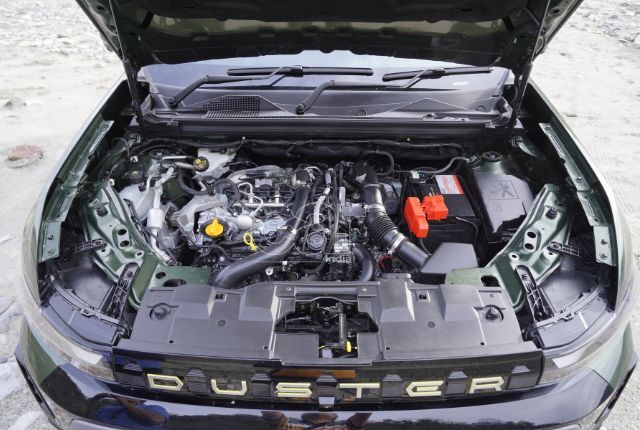
The new Duster is built on the Renault Group Modular Platform, allowing multiple powertrain options. For India, we can opt for a 100-hp 1.0-litre turbo-petrol engine, a 1.3-litre turbo-petrol unit or a 1.8-litre strong-hybrid powertrain. The one we’re driving here is the 163-hp 1.3-litre turbo-petrol engine specced with the six-speed DCT automatic gearbox and you also have the option of a six-speed manual unit. This makes it the most powerful mid-size SUV in the country, but being strong on paper, needs to translate onto the real world. So there’s only one way to prove that claim, that’s to get behind the steering wheel and start driving.
Now before I get to the driving impression, I just wanted to point out the serenity that is the roads around Dehradun. There’s a nice nip in the air, and the quality of the roads is great. More importantly, a lot of the roads here aren’t four-lane or six-lane layouts; rather, they’re two-lane, all winding through the picturesque countryside and towering hills. So this is the perfect backdrop to test the 2026 Duster’s mettle.
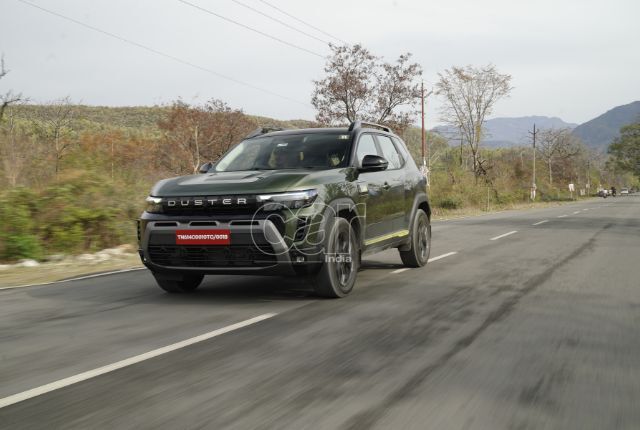
If I had to describe the 2026 Duster’s driving experience in a few words, it would be a “delight for the driver.” The 1.3-litre turbo-petrol engine is properly enthusiastic, is rev-happy, and is decently energetic while getting off the line from a standstill or executing a roll-on acceleration test. To add to this, the power delivery is smooth and well refined, and can certainly be a match against the competition benchmarks. As for the six-speed wet-clutch DCT automatic gearbox, I feel, there is a bit of room for improvement in refinement and shift quality as the shifts, especially in lower gears can get a little laggy at times, where it is trying to catch up to what the engine asks of it in performance. Also under sharp inclines and declines, it had a tendency to shift up or down, when it wasn’t required.
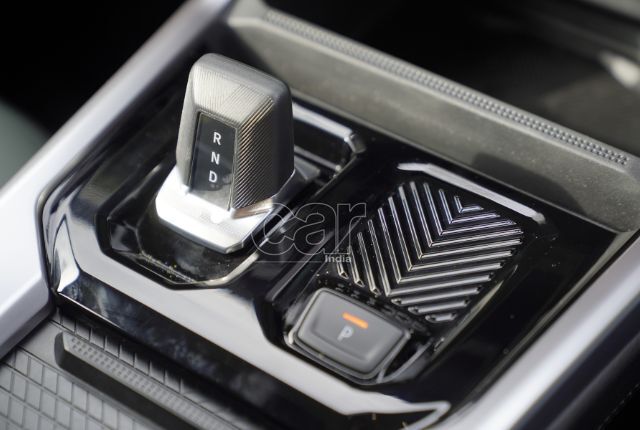
Nevertheless, it isn’t a deal breaker, and is the option to go for if your use case scenario is daily driving and dealing with traffic gridlocks. While it is difficult to get a proper gauge on the fuel economy considering the time we had with the SUV, it can get into double-digit figures under sedate driving and impressively while pushing it, took a while to get down to single figures. The big question is of course, where’s the option of an all-wheel drivetrain? Well, the platform supports it, and according to Renault, it can be brought in if there’s enough demand for it. Which means, you should probably visit a Renault dealership and let them know.
Renault claimed some pretty interesting trickery underneath the skin. The MacPherson strut front suspension has a segment-leading 25-mm thick anti-roll bar, alongside a transverse arm. The rear suspension setup is a semi-independent “super twist beam” with coil springs and an even thicker anti-roll bar. All this is claimed to help with great handling dynamics. Does it live up to the promise? Well, not only is it a strong contender to deliver on it, but retains the great go-anywhere philosophy from its predecessor.
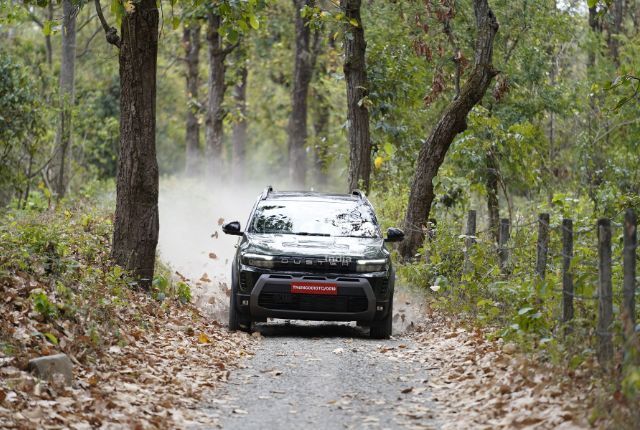
Ride quality is excellent as it can take a lot of punishment which we put it through amongst the varied types of roads which includes rocky surfaces, and plenty of broken patches. Impressively, the SUV remains unsettled throughout, and you can barely notice road noise either. The 212-mm ground clearance of course helps in that aspect, giving a sense of confidence to tackle deep gaps in road surfaces or high speed breakers. It’s also comfortable enough to remain settled around sorted highway roads at high speeds and feels very well planted around mountain trails, with barely noticeable body roll.
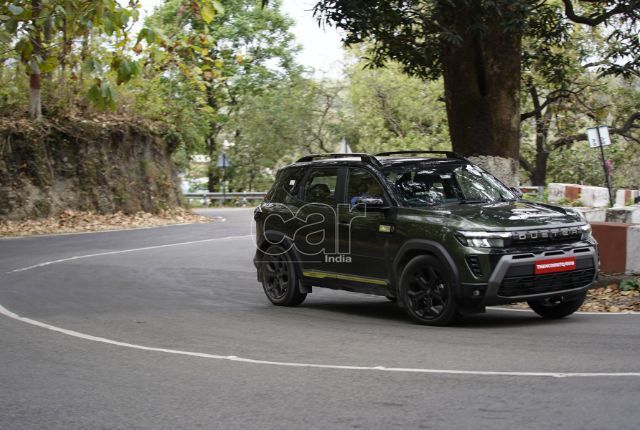
You can set the steering feedback for a soft or heavy feeling, which does make a difference. Feedback settings aside, the wheel doesn’t have any play so it’s quick to directional changes, which gives a good sense of connection to the SUV. What I particularly liked was that I had to try extremely hard to induce understeer or oversteer and even when it does, it is minimal and corrects itself quickly. That’s the perfect recipe to confidently hoon around a fast winding touge without worry.
In my limited driving time with the ADAS features like adaptive cruise control, lane keep assist, and blind spot monitor, it seems well tuned for Indian roads, but a more detailed road test would give a clearer picture. Nevertheless, I will appreciate the dedicated button to change ADAS settings or to turn it off entirely as normally to access ADAS functions, you have to dig deep into various menus or sub-menus of the infotainment screen to either turn it on or off, as some people don’t prefer to drive with ADAS on.
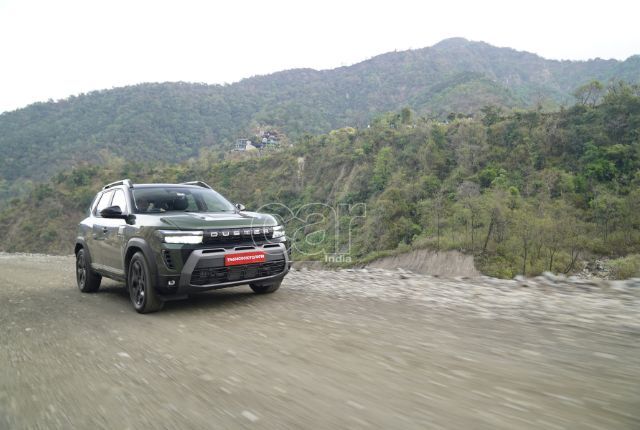
Prices for the 2026 Renault Duster range from Rs 10.49 lakh to Rs 18.49 lakh (ex-showroom), with the strong-hybrid prices yet to be revealed, which can be expected to head into the Rs 20 lakh ballpark. Nevertheless, with this price range, it is a very tempting prospect, with the nameplate returning guns blazing, helped by a muscular persona, an extensive feature list, a pretty potent engine, and excellent ride and handling dynamics. With very little to criticise, overall, it’s got the ingredients to be a well packaged and value-for-money option in this segment.







Leave a Reply