


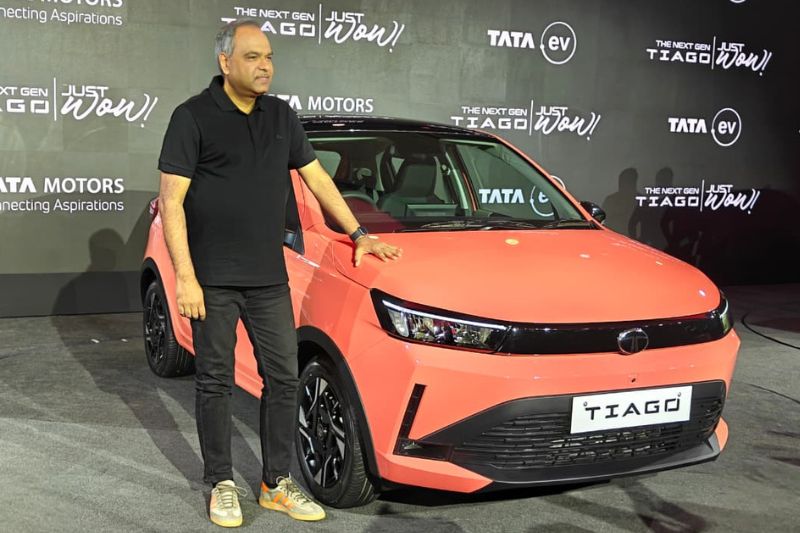
The makeover for the Tiago and Tiago.ev includes significant exterior and interior changes as well as key feature additions
The Tata Tiago has been a much-loved affordable hatchback since the nameplate showed up in 2016 and has been consistently updated to keep itself relevant. Along the journey, it’s even gained an electric counterpart via the Tiago.ev, that quickly gained popularity as an affordable, and sensible city car. Well now, both hatchbacks have received a facelift, and it’s more than just minor touchups.
The facelifted Tata Tiago is priced from Rs 4.69 lakh to Rs 7.99 lakh (ex-showroom), while the Tiago.ev can had from Rs 6.99 lakh to Rs 9.99 lakh (ex-showroom), with the BaaS (Battery as a Service) facility allowing for an upfront cost of Rs 4.69 lakh, and a battery EMI of Rs 2.6 per km.
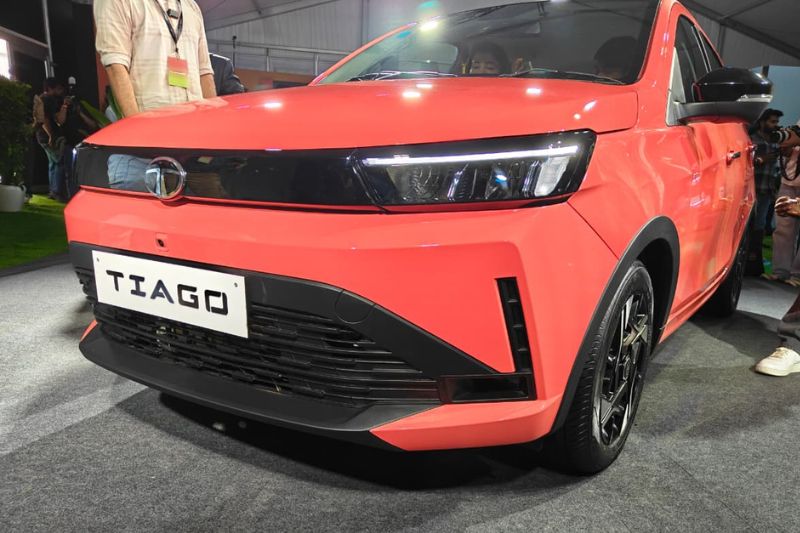
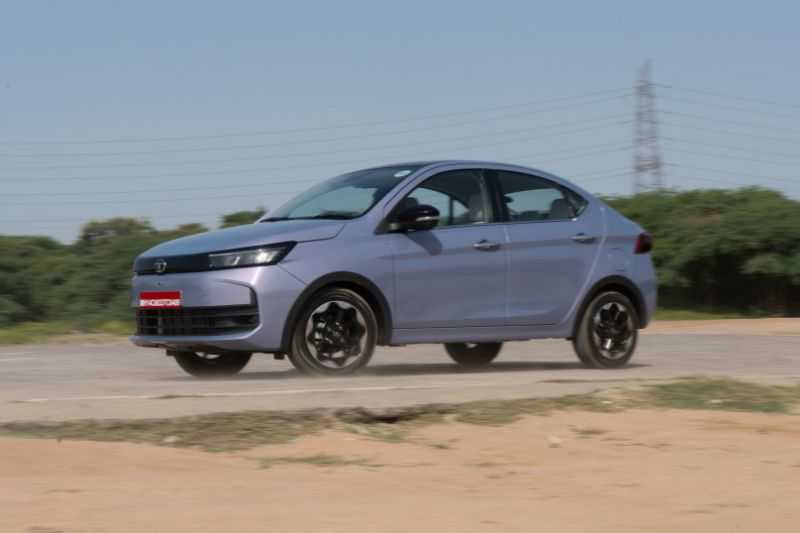
Getting down to the nitty-gritty of the changes, let’s start with the exterior as the facelifted Tata Tiago certainly seems more mature with the sharper bumpers, sleeker LED headlights, eyebrow-styled LED DRLs and a gloss black strip and a larger front grille. The front fascia actually takes a cue from the Altroz and Punch.
Moving over to the side profile and much of that compact hatchback silhouette is familiar but the changes comprise blacked-out outside mirror covers, more prominent wheel-arch cladding and most notably a fresh, more aggressive alloy wheel design. At the rear, apart from the reworked bumper, the LED tail-lights are more modern with vertical elements and are now a connected unit, really accentuating the width of the hatchback.
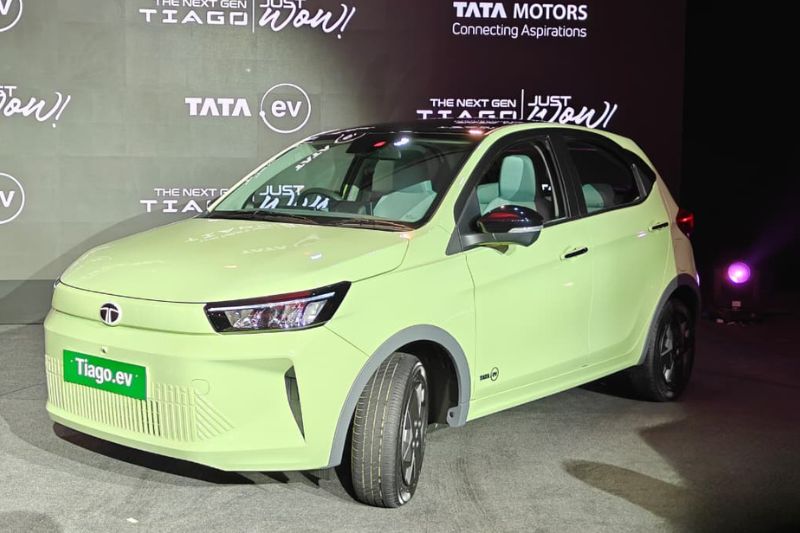
As for the Tiago.ev, a decent chunk of the changes are familiar but it now finally gains its own unique identity over the ICE-model. The biggest differentiator is up front is the revised, sharper headlight, closed-off front grille and, notably, the gloss black panel on the ICE model being body coloured on the Tiago.ev. Aside from that you get a different alloy wheel design and a cleaner design for the bumpers to accentuate its EV personality.
The biggest change for the two hatchbacks is arguably on the inside as the layout has been overhauled for a cleaner look. There is still a smattering of digital controls. At the centre is a familiar 10.25-inch touchscreen infotainment system, flanked by a now floating housing for the digitised instrument cluster. The two-spoke steering wheel has also undergone a slight revision. The Tiago.ev too has a similar theme albeit with the Tata.ev logo on the steering wheel and it’s angled in an offset manner.
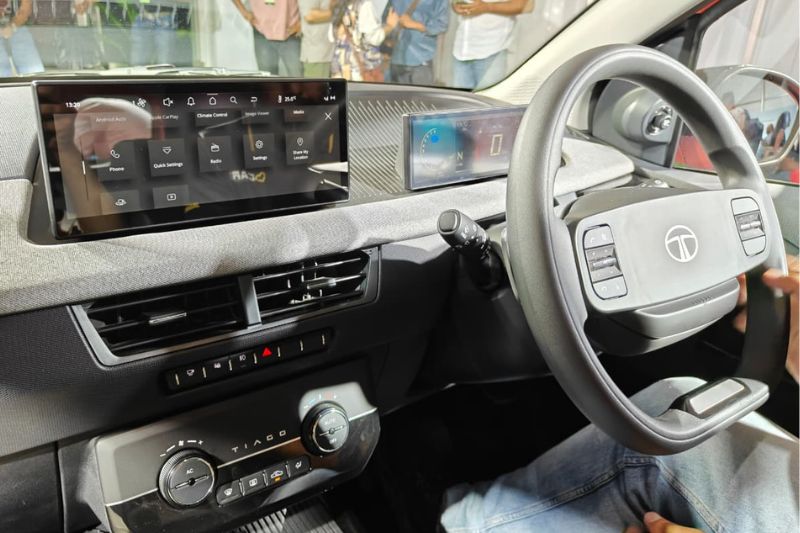
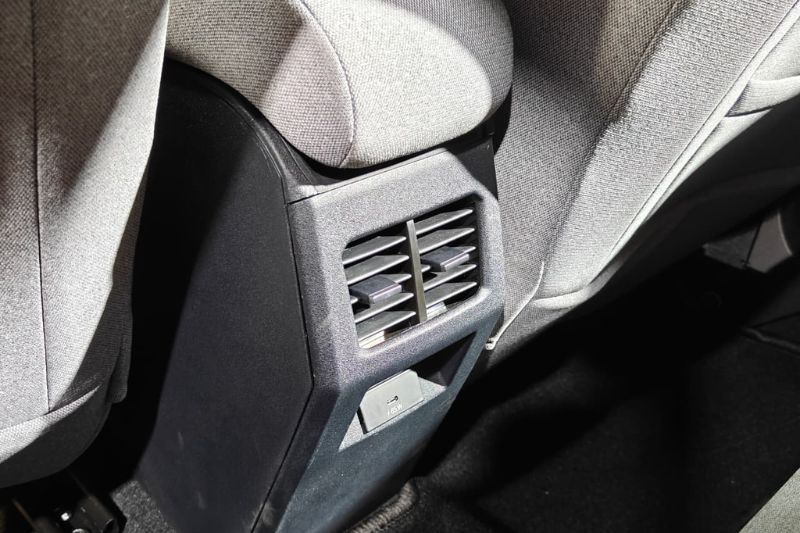
There’s some key feature additions in the form of a 360-degree camera along with blind view monitoring, a segment-first Bluetooth-enabled cluster which, in some variants, supports hands-free calling and music streaming, USB Type-C charging ports, a wireless phone charging pad and rear a-c vents; features normally associated with the Nexon or the Punch. These additions further complement existing niceties like automatic climate control, wireless smartphone connectivity, automatic headlights, a tyre-pressure monitoring system (TPMS), and cruise control.
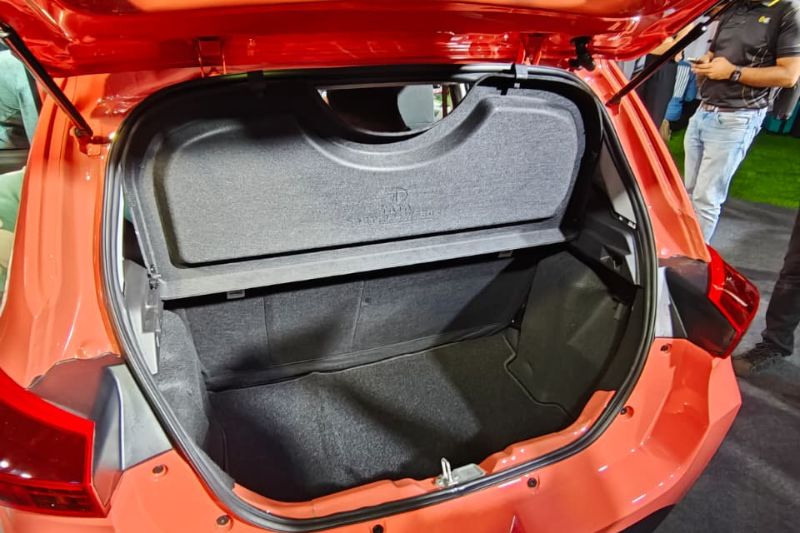
Where the Tata Tiago and Tiago.ev have unsurprisingly gone conservative is under the skin. The ICE model continues on with the 86-hp 1.2-litre naturally aspirated petrol engine which, in the bi-fuel model, makes 75.5 hp in CNG mode. A five-speed manual gearbox is standard with the option of a five-speed AMT, with the AMT unit now getting paddle shifters—a segment-first. Another unique bit in the CNG variants is the twin-cylinder technology to help offer a usable boot.
Now for the Tiago.ev, you get the same 61-hp/19.2-kWh and 75-hp/24-kWh (powertrain and battery pack, respectively) options but there have been gains in both charging time (Tata claims a 40 per cent faster charge time, as well as 100 km worth of charge in about 18 minutes) and efficiency, for a range of up to 285 km (MIDC) available with the 24-kWh battery. Besides, Tata is also offering a lifetime warranty on the battery. The new Tiago.ev also gets a segment-first addition of six airbags as standard. Also on offer is the “i-high beam alert”, also seen on the Punch.ev, which alerts the driver when driving below 40 km/h over 60 seconds with the headlights on high beam, as well as “auto demist” with sensors that activate the windshield defoggers as soon as they sense an increase in humidity within the cabin.
Overall, this hefty facelift to the Tata Tiago and Tiago.ev is a good sign that hatchbacks are getting some love in a space dominated by SUVs, and making small cars feel that much more appealing. The Tata Tiago will rekindle its rivalry with the Hyundai Grand i10 Nios, Maruti Suzuki Swift, and Maruti Suzuki Celerio, while the Tiago.ev continues as an alternative to the MG Comet and Citroën ëC3.









Leave a Reply