


TSI performance, and good for the environment too!
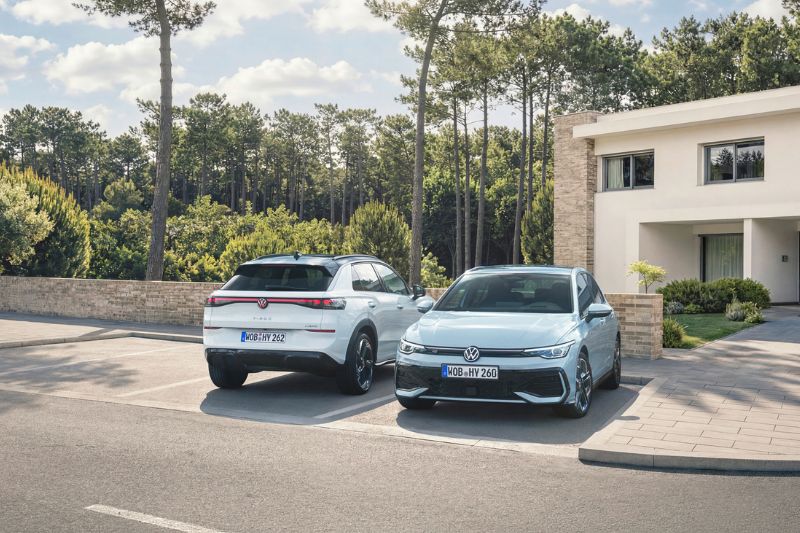
Volkswagen has opened the order books in Germany, its home market, for the brand’s new full-hybrid versions of the Golf and T-Roc. The respective variants packing the new powertrain will be identified simply by the “Hybrid” lettering on the tailgate, and will slot in between the existing eTSI mild-hybrid models and the plug-in eHybrid and Golf GTE variants, both of which are available only in Germany, for now.
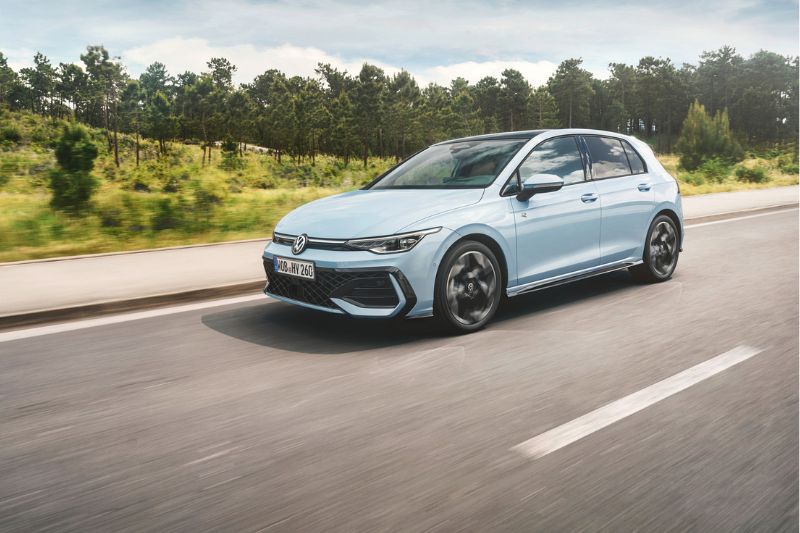
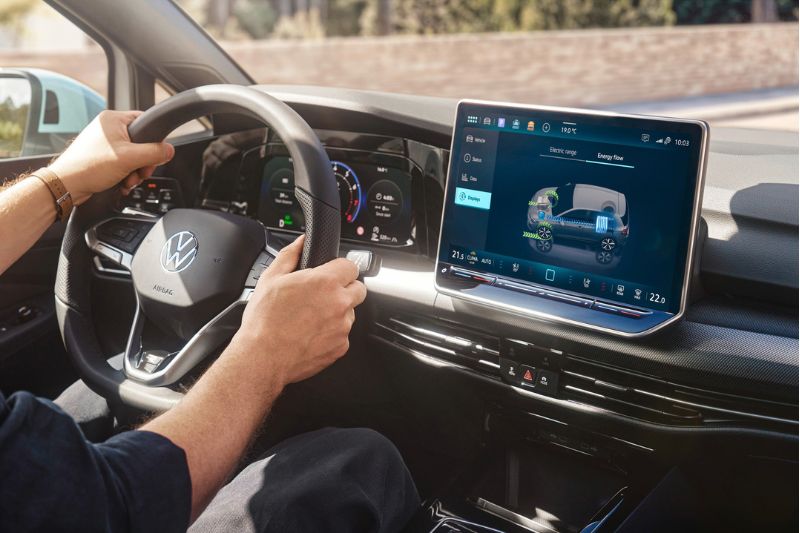
Jumping right into the meat of the matter, the powertrain in both the models combines the 1.5-litre TSI evo turbo-charged petrol engine–seen on the higher-spec variants of the Virtus and Taigun, on sale here–with two electric motors, producing a combined output of 125 kW (170 hp) and 309Nm, besides a 0-100-km/h time of just 7.5 seconds. And, as the name suggests, they do not need to be plugged into a charger, as the 1.6-kWh battery, located under the floor at the rear, is recharged both by the petrol engine, as well as during braking.
The powertrain can automatically switch between three operating modes–fully electric, series hybrid, and parallel hybrid–depending on the driving conditions. Fully electric, as apparent, is the default mode at lower speeds, where the petrol engine remains switched off. Series hybrid, too, is aimed at lower speeds, and though it activates the petrol engine, it uses its propulsion only as a generator, to only recharge the battery. And finally, parallel hybrid mode, which activates past a claimed 60 km/h, brings the petrol engine front and centre, and uses the electric motor providing additional boost during acceleration.
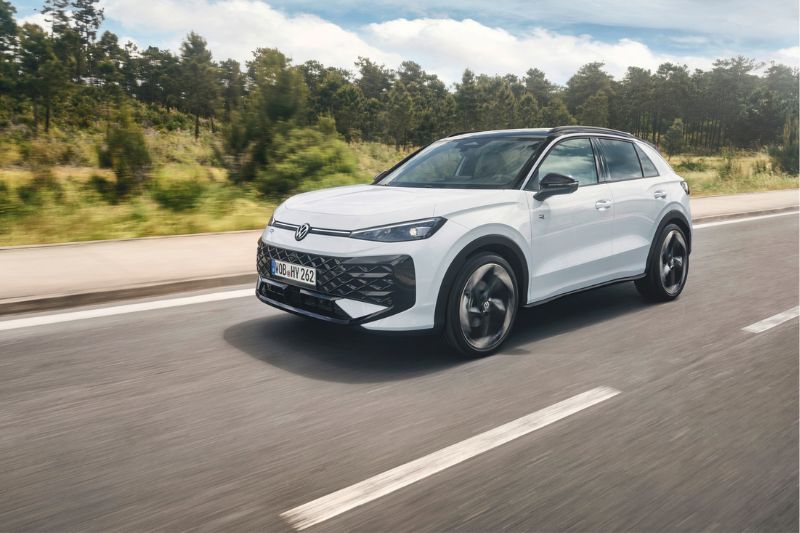
But that’s not all; drivers can also tailor the hybrid system using three selectable driving modes: Eco, Comfort and Sport. Here, Eco mode limits maximum system output to 70 per cent, while disabling the boost function, to prioritise efficiency. Next, Comfort mode provides unrestricted system output while retaining electric assistance, and Sport mode keeps more energy in reserve by switching to series operation earlier, allowing maximum performance to be delivered as and when needed.
And finally, we get to the part that matters: the moolah. Prices in Germany, for the Golf Hybrid in R-Line trim, start at €41,400 (Rs 45.4 lakh, excluding taxes), while the T-Roc Hybrid, in Style specification, is available from €44,470 (Rs 48.8 lakh, excluding taxes).
Summing up, both these cars make quite a bit of sense in our market: not only are they both well-known monikers, but also that the 1.5-litre TSI evo is manufactured locally. However, there’s more to bringing the Golf and T-Roc Hybrid duo to India than just tacking on a battery to the existing petrol engine. Yes, hybrid vehicles get a noteworthy reduction in taxes under the India-EU FTA (Free Trade Agreement). However, any benefits they accrue will be offset by the fact that both these vehicles are over four metres long, putting them in a higher tax bracket. And then there’s the matter of product positioning, as even in a heart-over-head scenario, spending premium amounts makes sense on a sporty offering, rather than a fuel-efficient/eco-friendly product.








Leave a Reply