


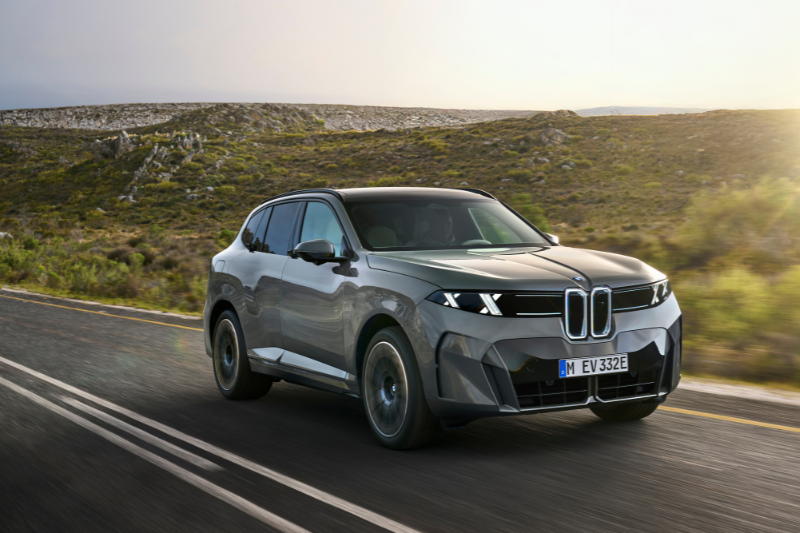
BMW has unveiled the latest-generation X5 SUV, developed in line with the brand’s modern Neue Klasse design philosophy.
Story: Salman Bargir
Now marketed by BMW as a Sports Activity Vehicle (SAV), the X5 made its debut at the 1999 Detroit Auto Show as the German marque’s first-ever SUV. It was among the first luxury SUVs to adopt a rigid unibody construction instead of a traditional body-on-frame architecture and was engineered to deliver the driving dynamics of a sports sedan. An icon, in 2024 BMW celebrated its 25th birthday, with a limited-run X5 Silver Anniversary Edition.
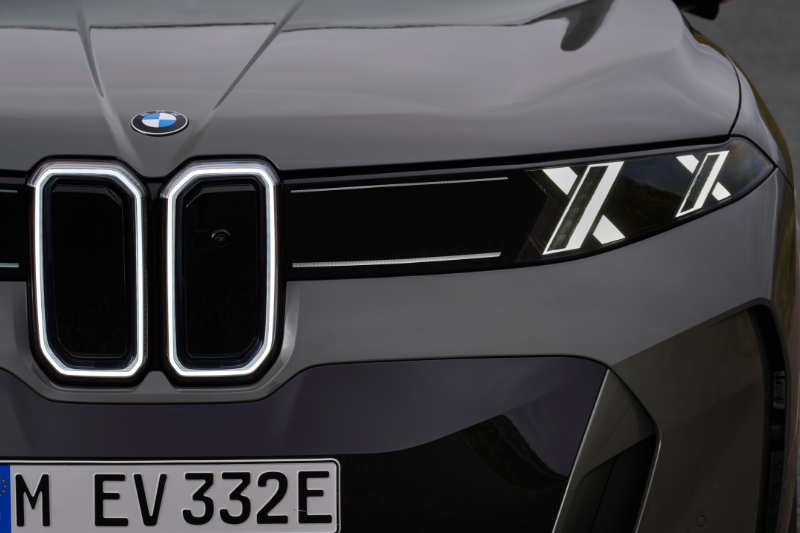
This latest-generation X5 has grown significantly in size and looks thoroughly different from its predecessors. Its front fascia is defined by double-X lighting signatures within the headlights, complemented by smaller, vertically oriented kidney grilles with illuminated surrounds. Horizontal light elements that vary across the lineup visually link the headlamps to the grille.
Further, the lower front apron features sharply angled geometric elements, and while the X5 50e xDrive, M60e xDrive, the X5 40 xDrive and X5 40d xDrive feature larger air intakes to enhance cooling, the all-electric iX5 replaces them with gloss-black, aerodynamically shaped air-deflecting panels to improve efficiency. Common to all variants is a heavily sculpted bonnet with long contours that flow into a pronounced V-shaped centre section, with the BMW roundel positioned at its leading edge.
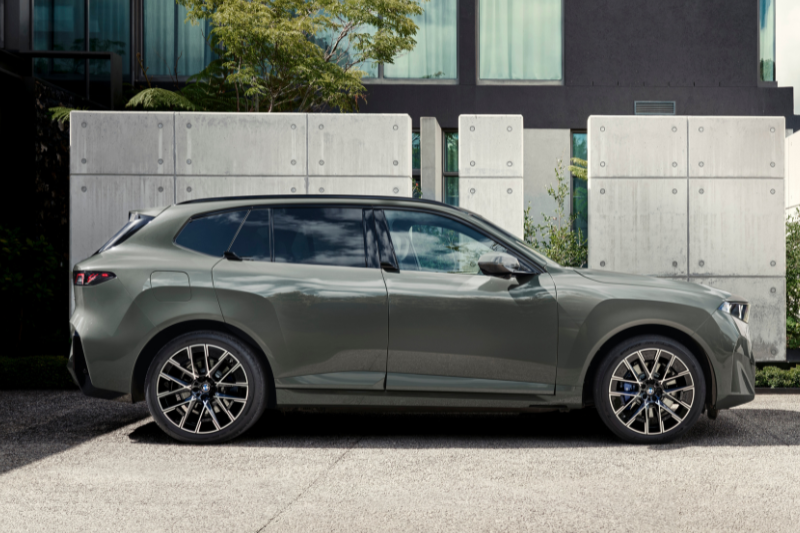
In profile, the new BMW X5 has a flat, monolithic stance, accentuated by a prominent sculpted shoulder line. One of its most distinctive functional updates is the adoption of Ferrari Purosangue-style winglet door handles, which are mounted along the beltline integrated into the B- and C-pillars. The wheel designs and sizes range from standard 21-inch alloy wheels to optional 23-inch units.
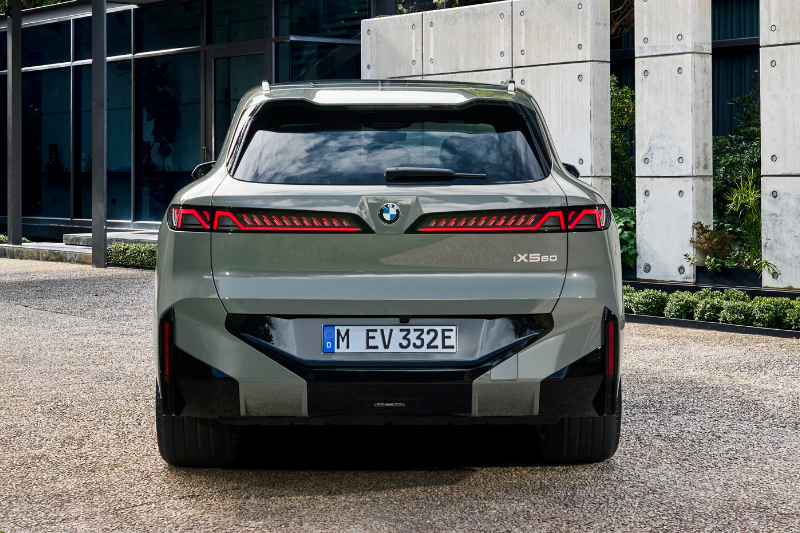
At the rear, the X5’s iconic split tailgate has been replaced by a conventional one-piece design. Slim tail-lights stretch inwards from either corner, converging around a recessed section that houses the BMW roundel.
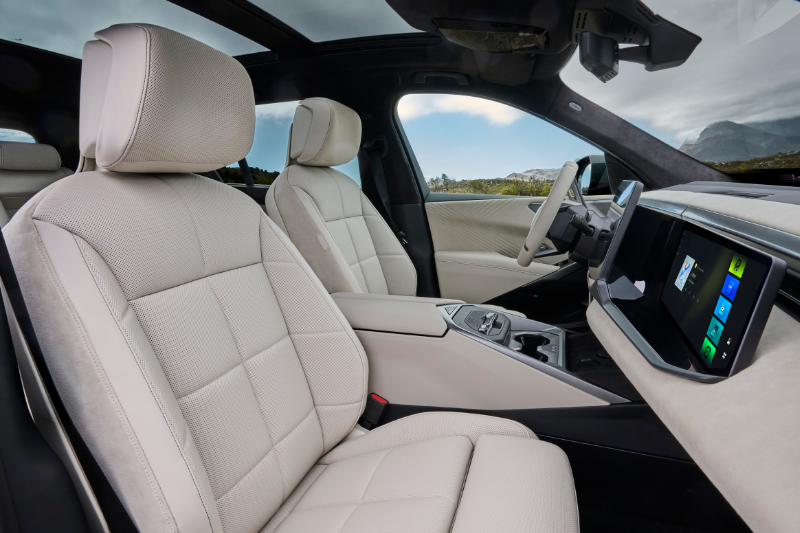
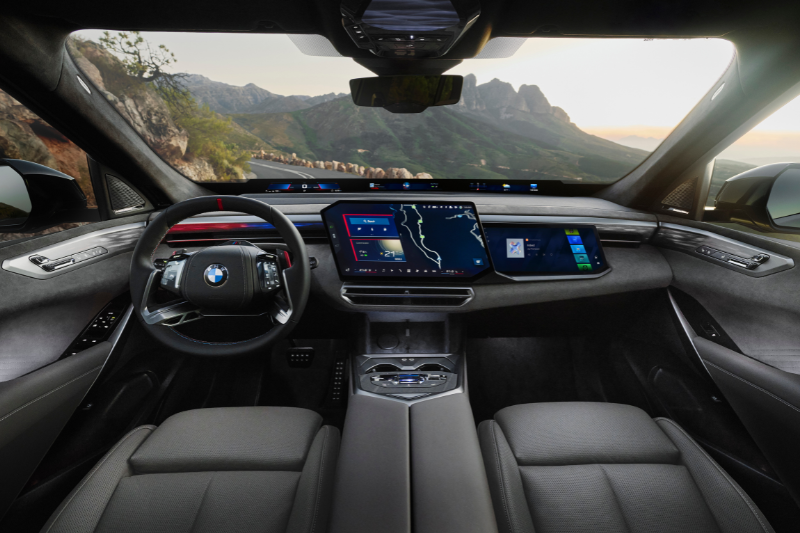
Inside, the X5 features a 17.9-inch central touchscreen powered by a central computer running the latest BMW Operating System. Most vehicle functions are accessed through the touchscreen, steering-wheel controls, or voice commands. Enthusiasts will also notice the all-new steering wheel, which incorporates “shy tech” controls. A natural slate decorative trim is also offered as an option.
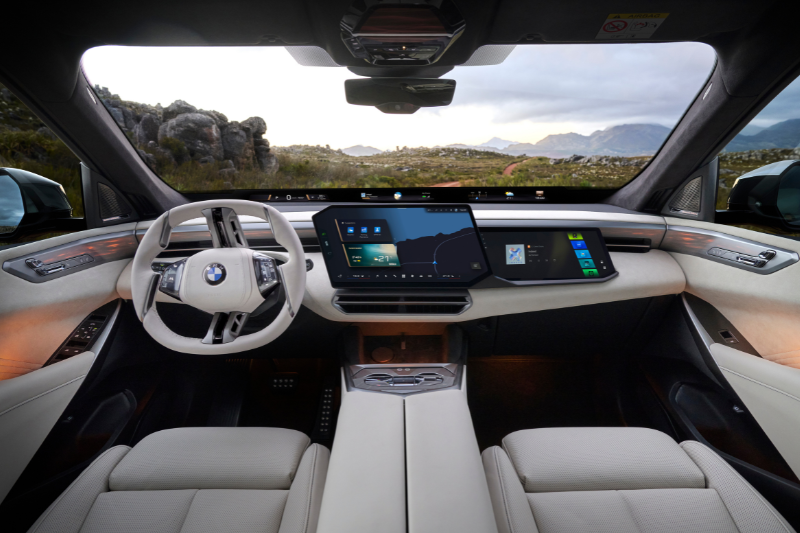
Replacing the conventional instrument cluster is BMW’s Panoramic Vision display. This projects key driving information across the base of the windscreen from pillar to pillar. Complementing it is a three-dimensional Head-Up Display that projects navigation guidance, driver assistance alerts, and other essential information directly into the driver’s field of vision. Moreover, a 14.9-inch front passenger display can also be opted for.
Built on an 800-volt electric architecture, the all-electric iX5 is equipped with a 141-kWh battery pack that delivers a claimed driving range of up to 845 km and supports DC fast charging at up to 460 kW. Power is supplied by a dual-motor setup producing 578 hp and 800 Nm.
The BMW X5 40 xDrive is powered by a turbocharged 3.0-litre inline-six petrol engine producing 400 hp and 580 Nm, while the X5 40d xDrive features a turbocharged 3.0-litre in-line six-cylinder diesel engine delivering 313 hp and a substantial 670 Nm. Both are 48-volt mild-hybrids with 13-kW starter-generators adding 18 hp and 200 Nm.
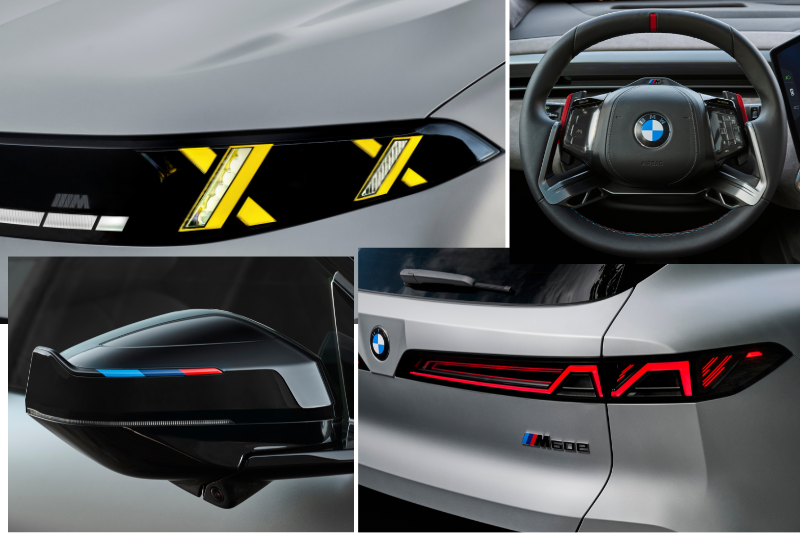
Bridging the gap between mild-hybrid combustion and pure-electric propulsion models are two plug-in hybrid variants, both powered by a turbocharged 3.0-litre in-line six-cylinder petrol engine and an electric motor. The first is the X5 50e xDrive with a combined output of 489 hp and 700 Nm. The second, and arguably the most exciting model in the line-up, is the range-topping X5 M60e xDrive. Drawing inspiration from the BMW M Vision Neue Klasse concept, it features exclusive yellow double-X daytime running lights linked to the kidney grilles by three thick segmented light bars. As expected, it also receives M-specific styling cues including a quad-tailpipe setup with two outlets on either side.
While the X5 M60e xDrive shares the same plug-in hybrid architecture as the X5 50e xDrive, it benefits from an M-tuned powertrain producing a formidable 612 hp and 800 Nm of torque. Paired with an eight-speed automatic transmission, it accelerates from 0 to 100 km/h in a claimed 4.2 seconds before reaching an electronically limited top speed of 250 km/h. In pure-electric mode, it can attain speeds of up to 140 km/h. And while both are equipped with a 26.5-kWh battery pack. The former offers a claimed pure-electric driving range of up to 98 km, and the latter up to 102 km. Additionally, their claimed combined driving ranges stand at 1,105 km and 1,211 km, respectively.
All variants come equipped with adaptive suspension as standard, with their ground clearance ranging from 199 mm to 226 mm depending on the model. Furthermore, buyers can opt for the Adaptive Chassis Control package, which combines adaptive two-axle air suspension with Integral Active Steering.
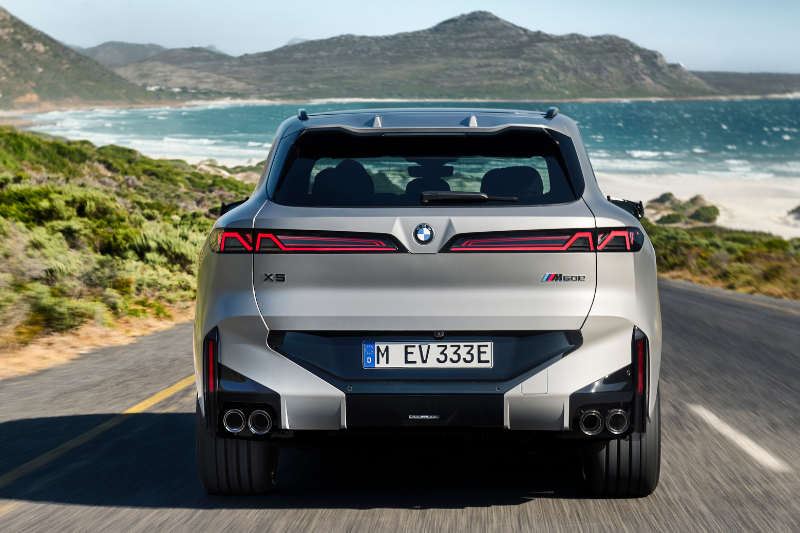
The all-new BMW X5 marks a radical departure from its predecessor, not only in terms of design but also with its diverse range of powertrains. For the first time, the X5 will be offered with five powertrain options, including a hydrogen-powered iX5, which is slated to join the line-up in 2028. While BMW has yet to announce plans for an India launch, we expect select variants of the fifth-generation X5 to eventually make their way to the Indian market.
Also Read: BMW Neue Klasse Concept Kicks Off The Brand’s Electric M Revolution








Leave a Reply