


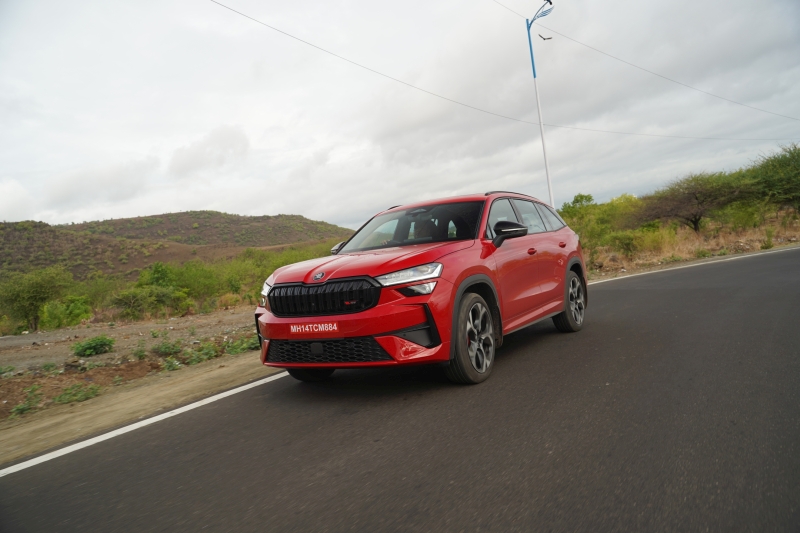
The Kodiaq RS is the most potent form yet of Škoda’s flagship sport utility vehicle (SUV) in India. We got to sample it ahead of its launch, and just hours before hearing it was already sold out.
What does “RS” mean to you? Of course, it’s “Rupees” for many. Money. Moolah. Dinero. But in terms of cars? A special edition with a bunch of stickers? Or a badge? Two turbos? A really fast Audi? This last one is rather close in terms of DNA.
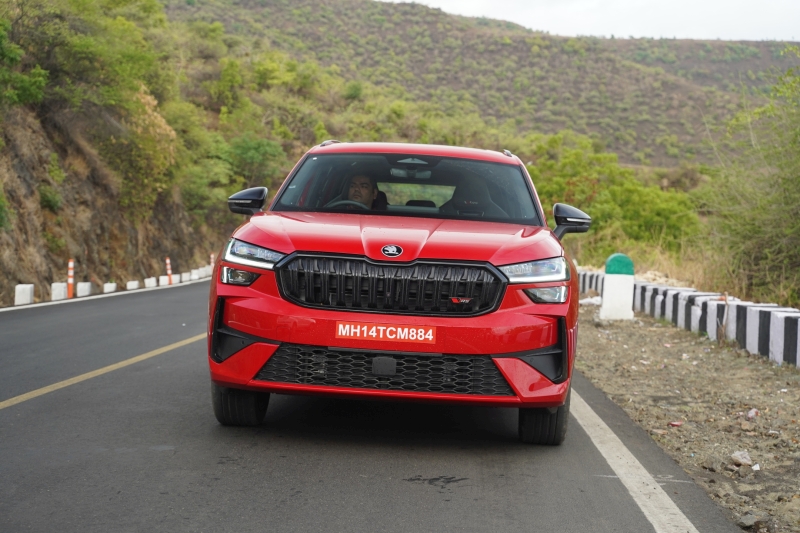
The Kodiaq RS, or Rally Sport, is the most powerful version of Škoda’s all-wheel-drive Kodiaq SUV. It packs 30 per cent more power and 25 per cent more torque than the “normal” 2.0 TSI variants. This is essentially the latest spec of the engine. Yes, it has 30 Nm more than even the Octavia RS, which has the same base engine tuned differently for the front-wheel-drive set-up. And the signature seven-speed DSG automatic makes it smooth yet super-quick. What that means is it’s faster, sharper, and more engaging. Like Škodas weren’t quick and engaging enough already. The RS turns things up a notch further.
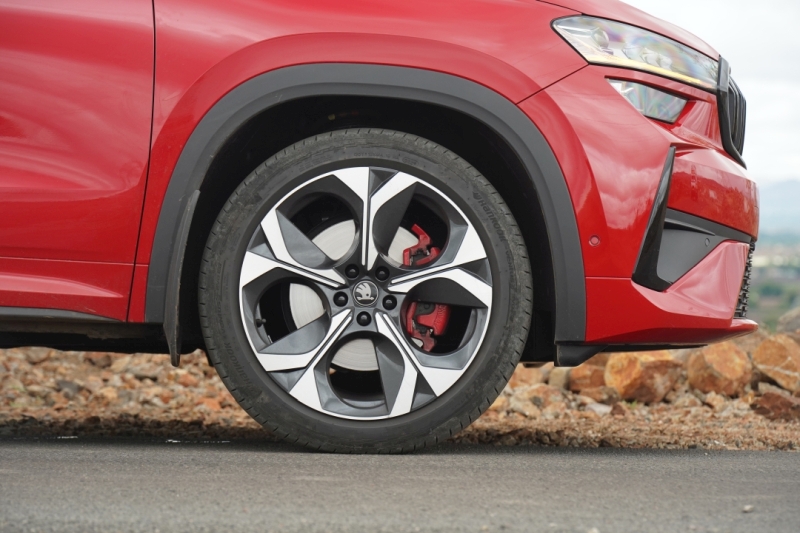
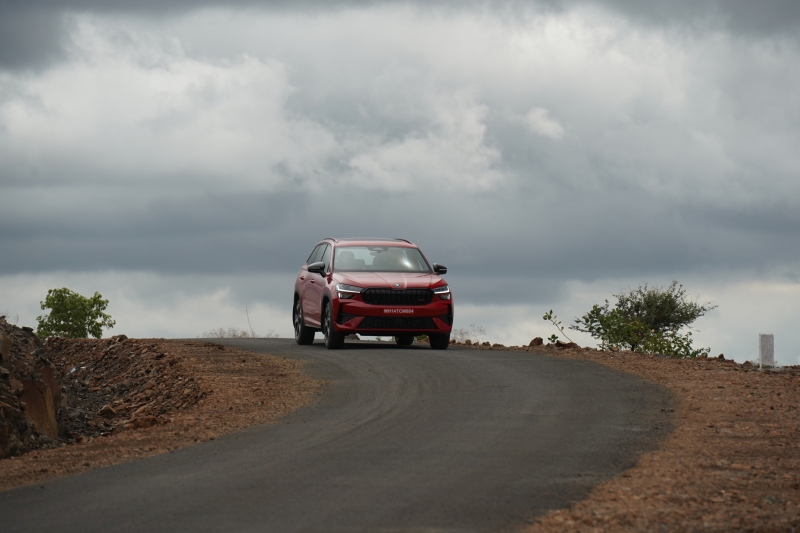
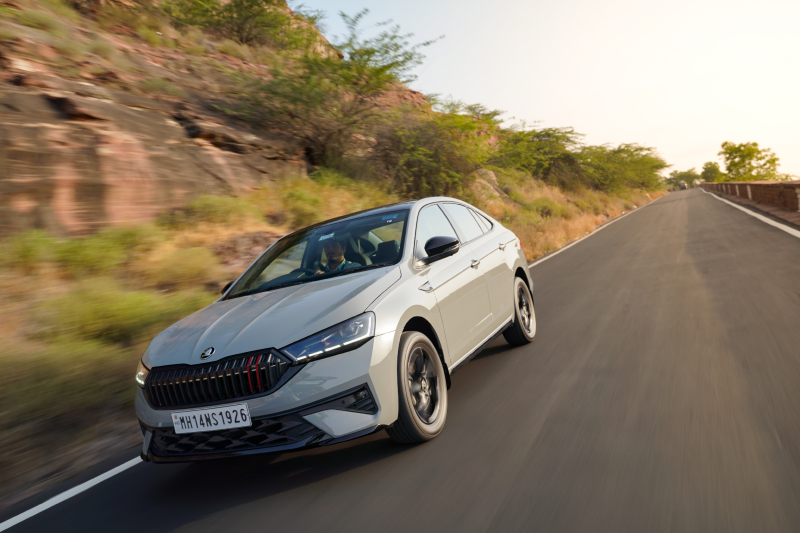
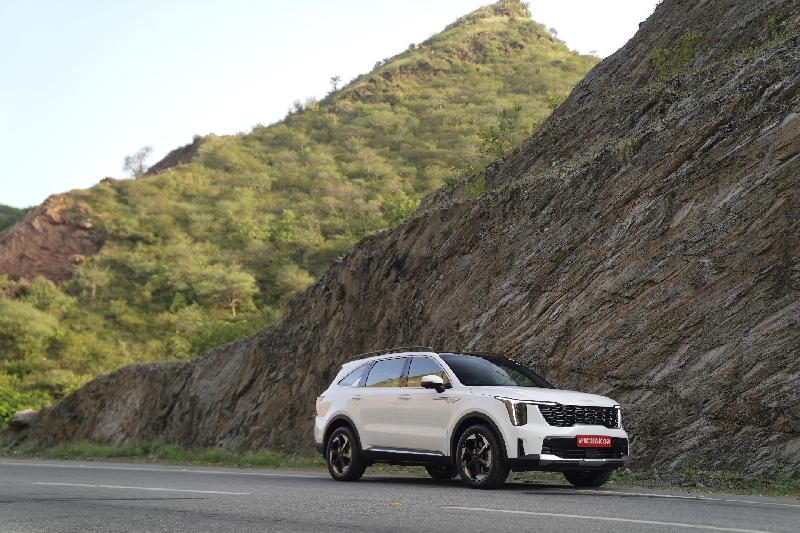
The shade of red it came decked in was in itself quite a stunning piece of the puzzle. Add the sharp LED lighting design, the 20-inch wheels with 235/45 R20 low-profile rubber, and the red brake callipers biting huge steel discs, and it becomes quite an attractive package. It has a big, premium stance which is more posh than butch or intimidating—though that last bit is debatable. The face is quite aggressive, as it should be. Behind the moustache-like grille sits the updated engine with more power and torque than ever before. But first, the interior.
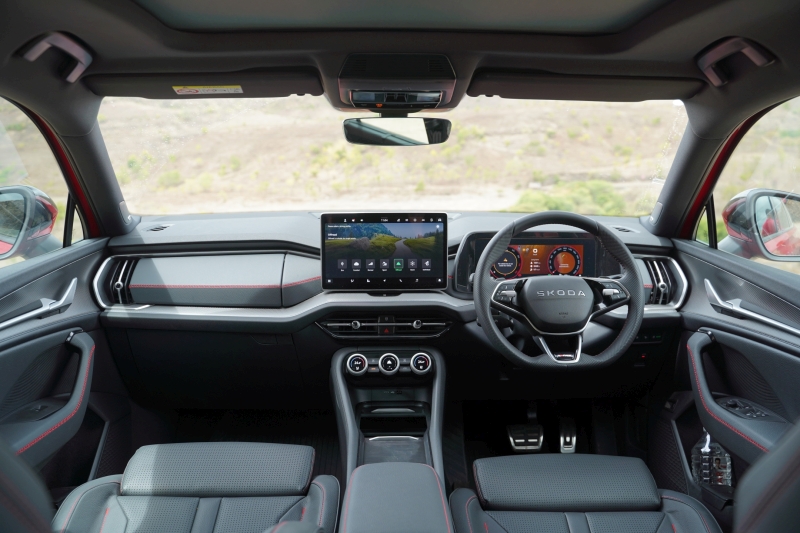
The RS sports seats feel straight out of Ingolstadt, honestly. Black leather upholstery adorned with red contrast stitching goes well on the seats, which have multiple contoured edges that simply hold one in place perfectly. Not only do these seats offer supreme comfort and support, but they feel far more premium than what the price tag may suggest; compared to the questionable faux leather that many other luxury brands offer in that price and more. There is a balance of controls in terms of touch ones and physical buttons and knobs, and combinations of the two. The three centre dials have a push function to toggle between functions, while the dials help cycle through the actual settings. The huge 12.9-inch centre screen offers many more options and responds quickly, with a crisp resolution for the interface. Two small issues: the screen heats up quite a bit, and the resolution of the reverse camera could be far better. There is a 360° surround view display alongside, so it’s easier to forgive. But these are tiny niggles, like an ill-painted bird out of eight drawn as part of a child’s stereotypical scenery painting—you know, the mountains and a sun rising between them, trees, grass, a house, maybe a river and a blue sky with the aforementioned birds. The point is, like the scenery, the whole package just works like a charm.
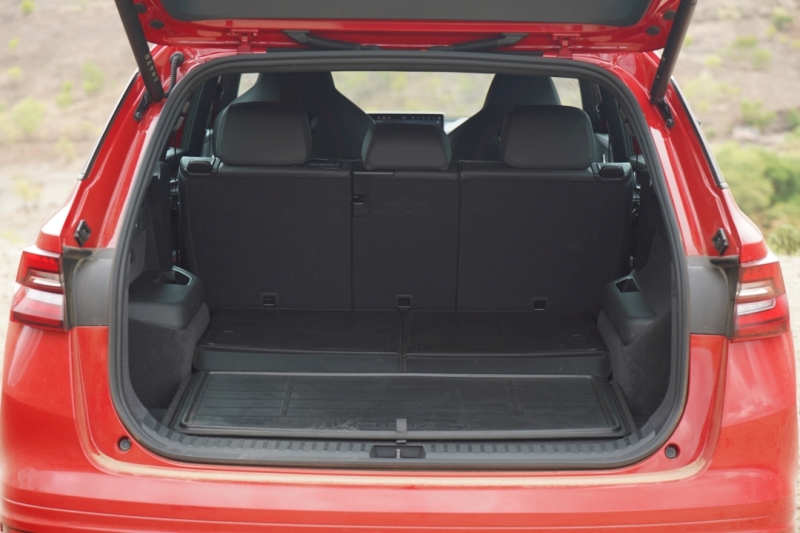
The comfort is good even at the rear. Space for two occupants is aplenty. There is a centre armrest as well as a removable floor unit over the centre tunnel, providing more storage space as well as two additional cup-holders. Remove that, and it provides the space for one more minor occupant. The RS is sold as a seven-seater, so there are two third-row seats if needed, too. The boot is also quite cavernous—true to its Škoda genetics—and, with split-folding seat options, it is very versatile, too.
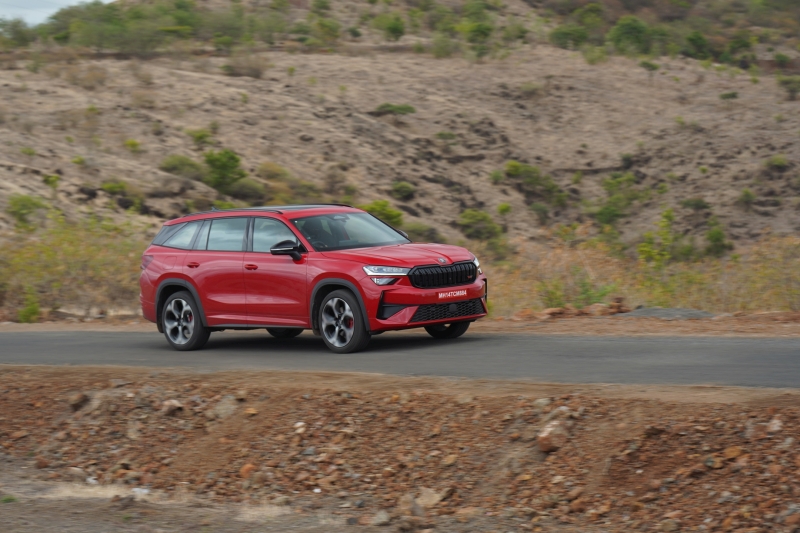
There is one thing about this Škoda that particularly impresses, though, and that’s the way it drives. Yes, all Škoda cars are great to drive, they feel more planted and engaging, and the responsiveness and overall connected feel—not with the gadgets but with the road—is what sets them apart. So, believe me when I say the RS raises the bar.
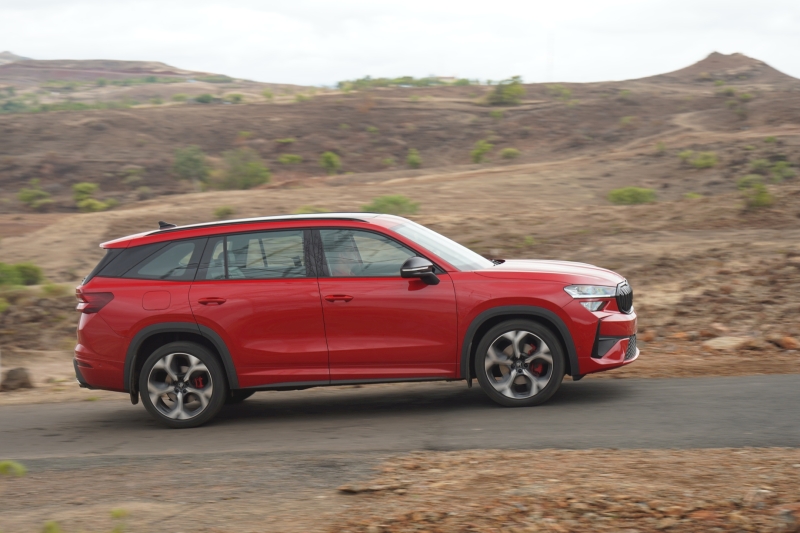
One of the key factors that makes the RS much more driveable lower down the rev-range is the additional torque. It’s not that the peak is stretched; the whole torque curve seems to have shifted left and up. There is a better low-end response and a significantly punchier mid-range compared to the Kodiaq L&K that I sampled some time ago. The other factor is the suite of drive modes that arrive with the Dynamic Chassis Control function. From Eco to Sport and Comfort to Offroad, the feel of everything from the engine and input latency and response all change, well, dynamically, and, more importantly, quite evidently. And, while the engine may be a 1,984-cc four, Škoda has used some tricks to give the Kodiaq RS a distinct burble to go with the twin exhaust pipes, which makes it sound—almost—like a V8.
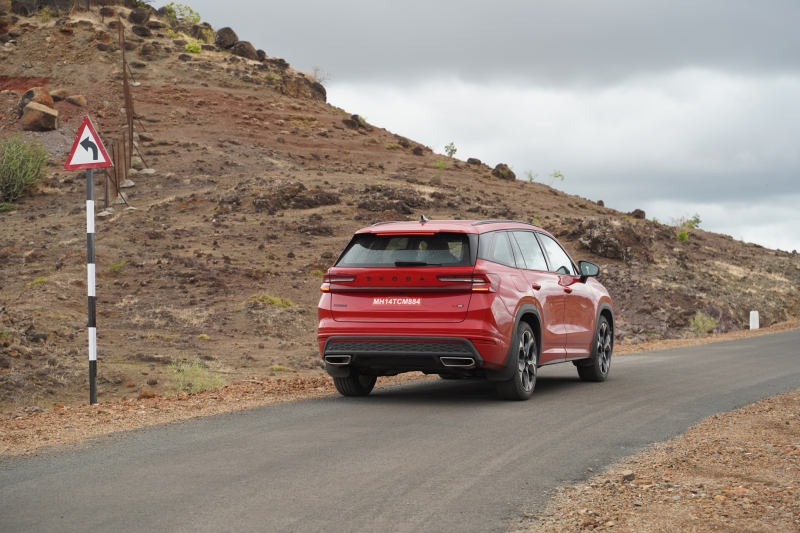
The drive selector stalk on the right-hand side behind the steering wheel is my least favourite bit on the car; something that takes a little getting used to, I guess. That said, I quickly realise the steering wheel has a nice and tight set-up, making for easier manoeuvring and snappy changes of direction that belie its size. On the move in traffic, it feels quick and agile, and the 1.9-tonne heft doesn’t feel pronounced whatsoever. The 235-sec tyres are more than enough to deliver the grunt from the shafts to the road, but are a seriously low 45 profile for what is a full-size SUV that can dare venture off the beaten path, which it can, and with relative ease thanks to its near 200-millimetre ground clearance.
We left the city behind and headed to the hills, going up one way on a narrow ribbon of tarmac, hitting the highway to see what it could eke out at best using the seventh ratio of the fine DirectShift Gearbox with its intelligent all-wheel-drive system trying its best to balance power delivery, grip, and fuel efficiency. The city drive and climb didn’t help that cause, with the RS registering seven kilometres to the litre. However, with the open road and the early morning seeing low traffic, it helped get that up to 12, a fair double-digit figure.
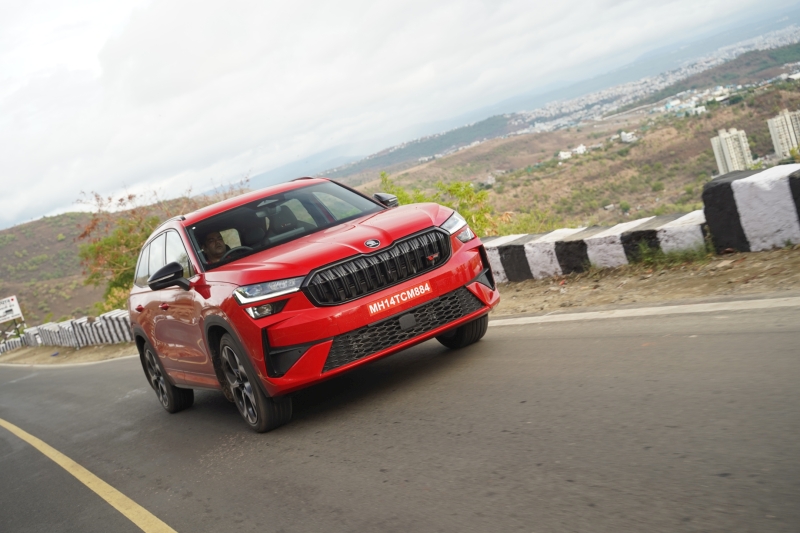
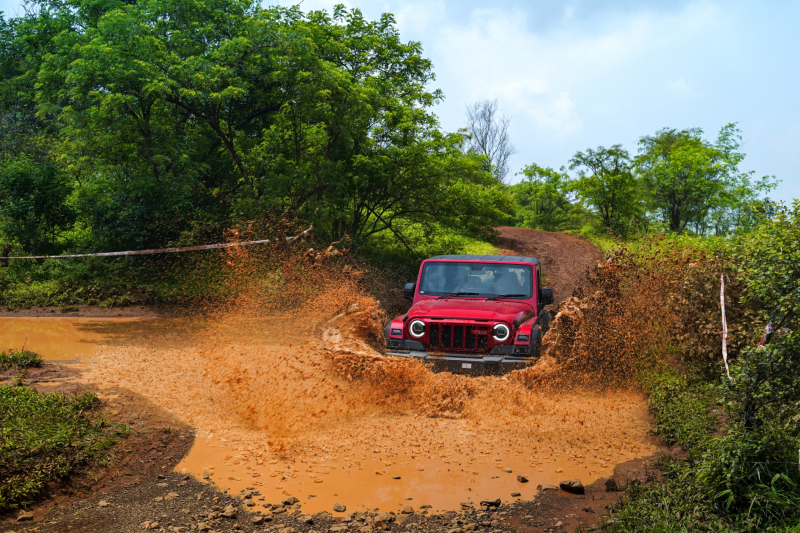
Our route back was via a different road. And I say “road” very loosely. A rocky dirt path along the mountain leading back down gave us dips, ditches, mounds of stones and mud, a mix of irregular straights and sharp hair-pins, including a dog camped smack dab in the middle of the way at a hairpin outside a makeshift restaurant. The dog refused to budge, and I had to go further and take a tighter turn on the edge of the cliff side, which was less daunting thanks to the quick steering response and rather tight turning circle. My only real worry was slitting the tyre sidewall on a sharp, pointy rock, of which there were plenty. It’s important to note that while I started in the “Offroad” mode when I hit this path, the automatic hill-descent control applying the brakes to keep me below double-digit speed was annoying enough to make me switch to “Comfort” and let my right foot manage movement. It worked just fine. And, glad to say, the Kodiaq RS came away unscathed and reinforced the “Rally Sport” credentials. It would do very well in a Rallycross scenario, that’s for sure.
The beauty of the Kodiaq RS is that it is a proper SUV that can work as an everyday car for the daily grind, just doing everything a little bit faster. It has an excellent ride quality and can tackle more than its fair share of obstacles. Plus, it has some commendable features such as the Canton 13-speaker premium audio system, a huge dual-pane panoramic sunroof that is a joy to watch the rain from, with the electric sunblind retracted and glass panes in place, of course. The ventilated front seats help cope with the heat well, and, while it handles well and has a doubtless five-star safety-rated MQB-platform body, it also has nine airbags.
The price was not announced at the time of writing, but Škoda reps say it will be between Rs 65 and 70 lakh; a given considering that it is imported as a completely built-up unit (CBU). Also interesting to note is that only 50 units are—were—available and are now sold out. So there. The fast and furious big bear found all the takers the Czech giant hoped for. Now, if only I had some more, um, rupees/korunas/euro/dinero…
Story: Jim Gorde
Photography: Chirayu Gijare







Leave a Reply