


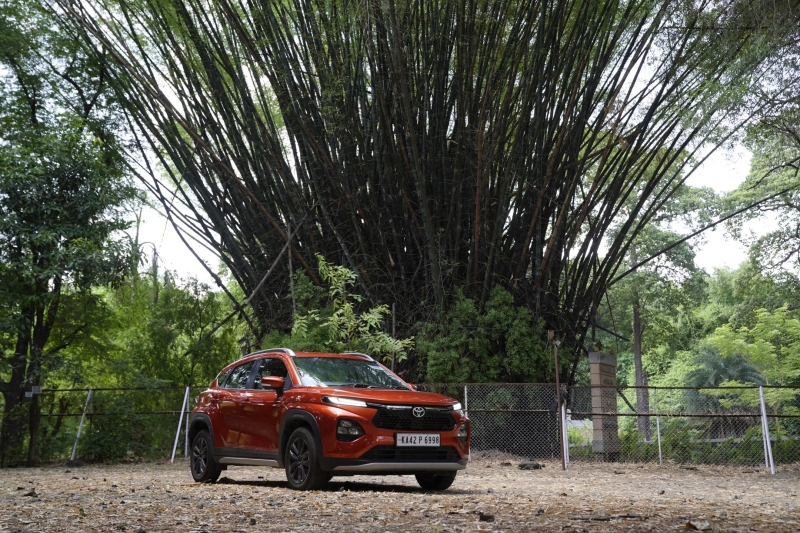
The Toyota Urban Cruiser Taisor is the “T”-badged compact crossover sport utility vehicle (SUV) based on the popular “Heartect” platform, and it is armed with the “Boosterjet” turbocharged engine, too. And we get to drive it in its entry guise
Whenever we get a car for a test, it’s always the top-end variant with a load of optional equipment also bundled into it for the best experience. So, when we received the entry “Turbo G AT” variant of the Taisor, we were quite surprised. And pleasantly so.
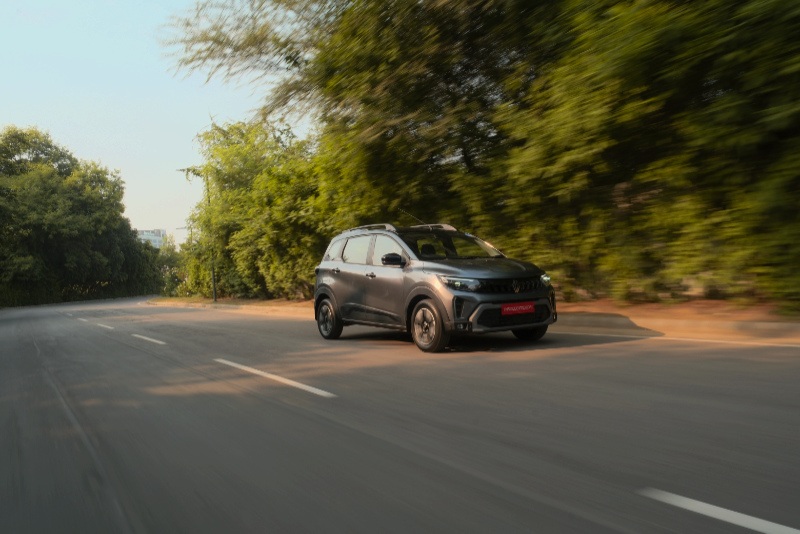
The Toyota Urban Cruiser Taisor is directly related to the Maruti Suzuki Fronx and, like its counterpart wearing an “S” badge, it is quite a sharp-dressed car. Thankfully, that’s not all that’s sharp about it. But more on that later.
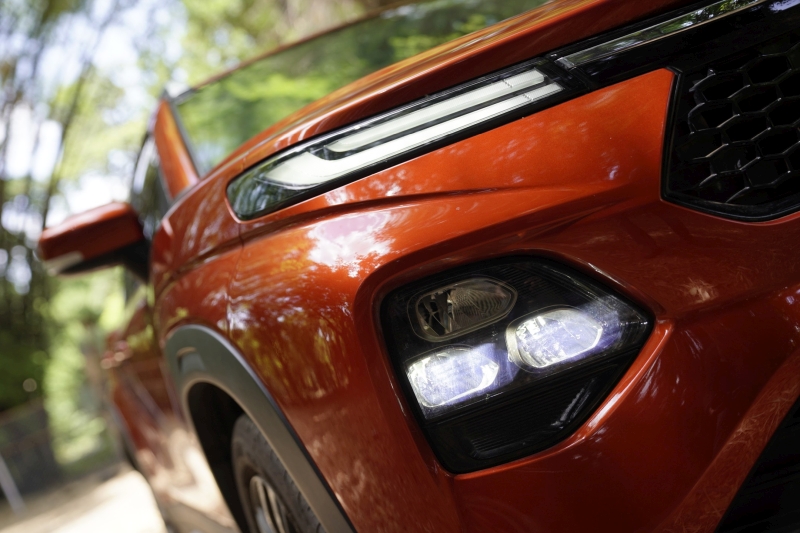
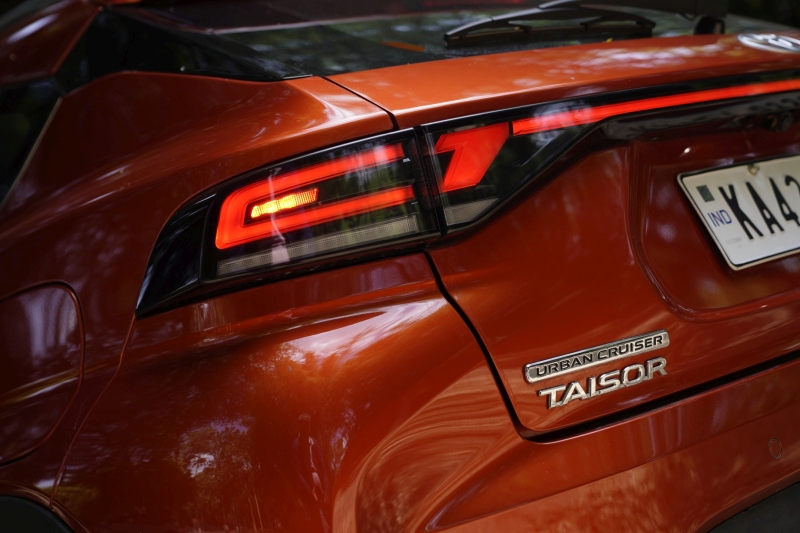
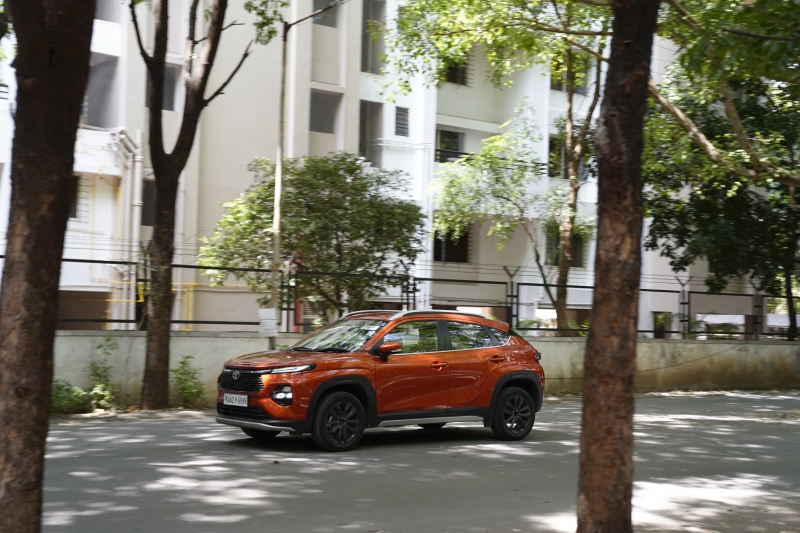
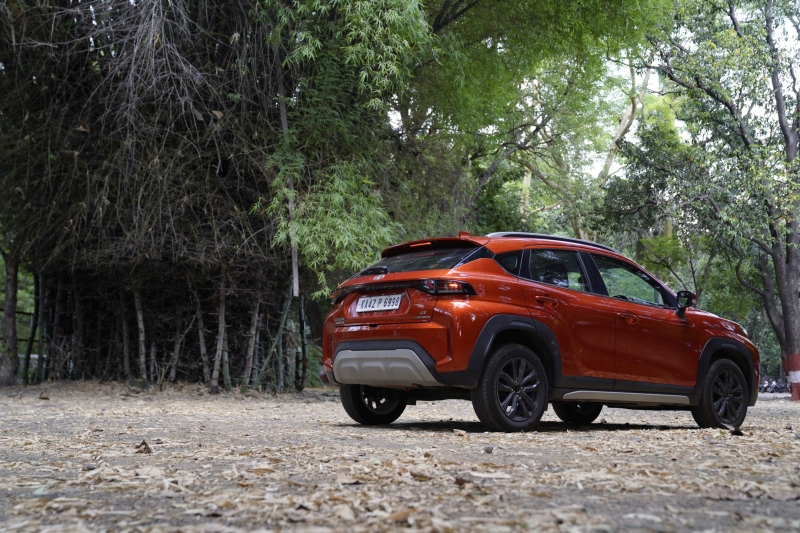
The Taisor came by in its monotone “Lucent Orange” colour, which helps it stand out from the crowd mostly dressed in one of the 256 shades of eight-bit greyscale. And it’s great for the pictures. The sharp face, pronounced lines, and sleek form, complete with a coupé-style sloping roof, make it quite the stylish offering. The slim daytime LEDs above and triple-beam main headlight clusters below make for a dazzling display of illumination, especially after hours. The sharp styling continues at the rear with a striking tail-light design. Since we’ve already tested the manual version of the Turbo about two years ago, let’s get to the differences with the automatic.
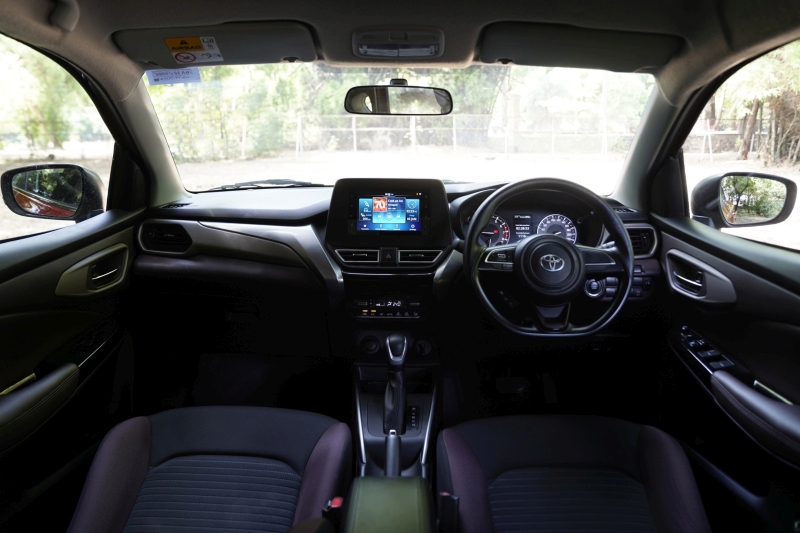
Get inside, and the interior in this “G” trim is vastly different, with fabric upholstery and dark plastic—works, and like a Toyota. Everything that’s needed is there and in place. The controls for the climate, mirrors, and seat adjustment are exactly where one expects them to be. The space is decent, and the seats are accommodating enough. The steering wheel is mostly round but features a flat-bottom finish. The controls on there are simple: audio only. And that works fine for me.
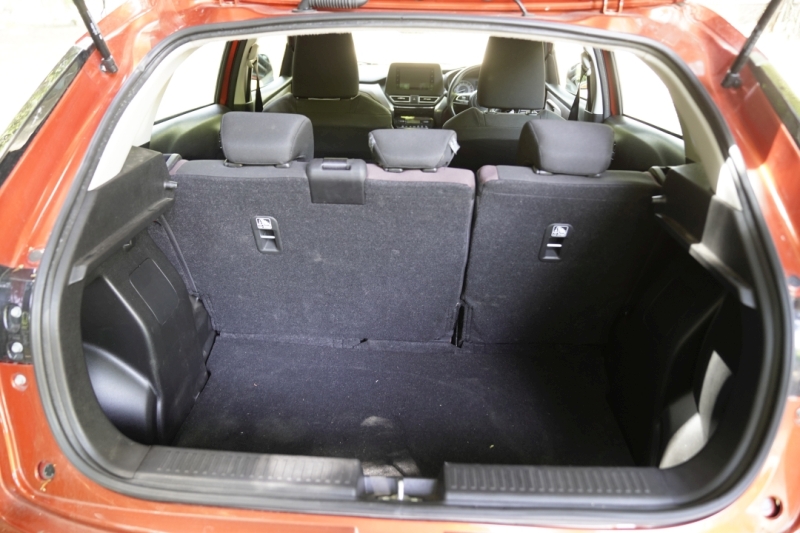
The rear cabin area actually has plenty of room for average-sized adults, with even taller occupants accommodated quite well in terms of headroom. The rear seatback is also 60:40 split-folding, making it versatile enough to pack larger or odd-shaped objects in what starts off as a 308-litre boot. All in all, the level of functionality is a high point considering that the shape and styling are what bring most buyers to commit. Of course, there’s the powertrain to consider as well.
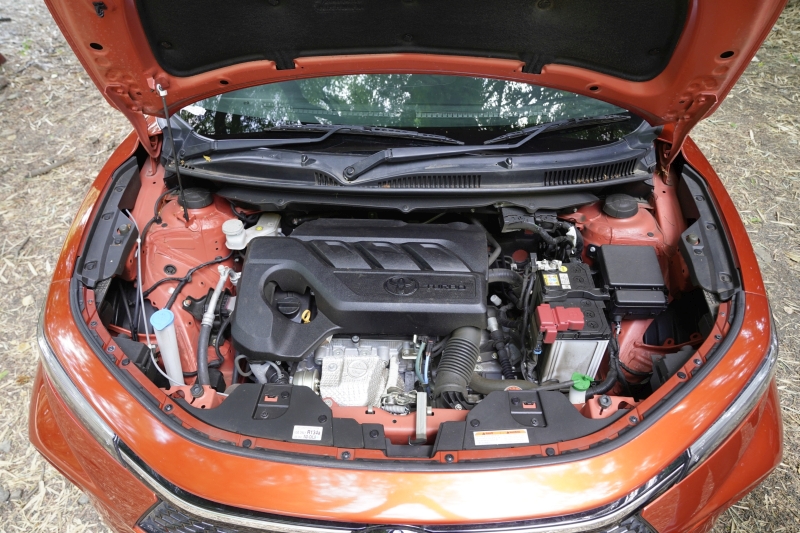
Under the bonnet is the “K10C” series “Boosterjet” turbo-petrol engine. It may just displace 998 cc across three cylinders, but it packs quite a wallop with commendable low- and mid-range delivery. The peak 100 horsepower comes in at 5,500 rpm with a considerable 147.6 Nm of torque maxing at 2,000 rpm and staying strong till 4,500. Yes, there is some initial lag in a few cases, on and off, but helping that cause is the 12-volt mild-hybrid system that plays an undeniable role in tackling any issues in response time. The integrated starter-generator (ISG) motor assists with up to 2.2 kW (3.0 hp), but there is a heftier 50 Nm of peak torque available instantaneously. This helps in the crucial stage of getting a move on from standstill—where a lot of energy is otherwise spent—and eases the load on the engine, thereby benefiting fuel economy. Speaking of which, in stop-go city commutes, with traffic and multiple speed-breakers along the way, the Taisor Turbo still delivered double figures, 10 km/litre, but stretched the litre much further on the highway, thanks to the torque assist while coasting, registering 18 km/l. That’s an overall 12 km/l, considering three-fourths of the drive in the city and a range of about 450 kilometres with all 37 litres in the tank.
Remember, the Taisor employs a six-speed torque-converter automatic transmission from Aisin Warner, which is smooth and rather efficient across the power delivery range. Overall performance and efficiency are good across a wide band, but, in compliance with the laws of physics, they tend to be mutually exclusive at both the ends of that spectrum. That said, the six-speed automatic does a fine job of harnessing the power and putting it down to the road. That bit’s also helped in part by the 195/60 rubber—up from the 55 profile on the hatchback iteration. There is decent grip, and they also contribute to the slightly higher ground clearance of 190 millimetres; not bad for a 2.5-metre wheelbase. That also means greater peace of mind when negotiating obstacles without any belly rubs.
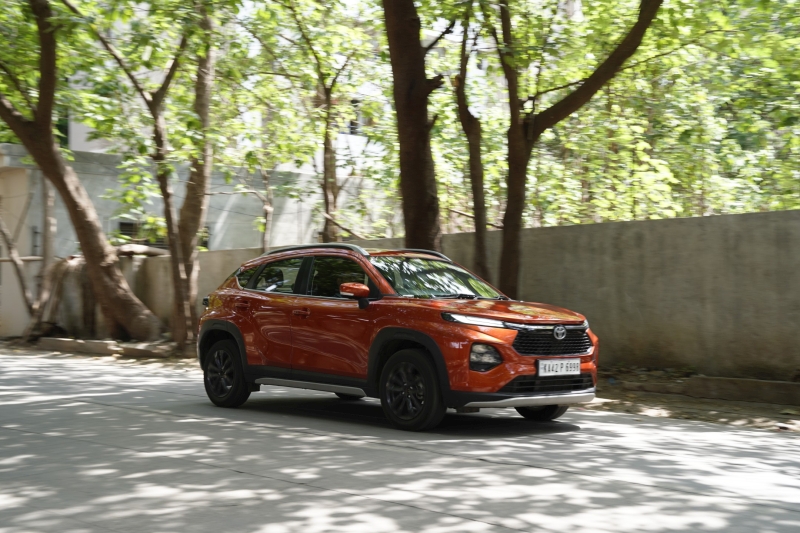
The ride quality is also sorted, with bad patches of road and irregularities dealt with well. The suspension is on the softer side and the steering response is not the most engaging, but it does the job of a comfortable and stylish commuter quite well.
This entry automatic variant with the Turbo engine still costs a somewhat hefty Rs 11.57 lakh (ex-showroom). For that price, however, there are a fair bit of goods outside and in. Those seeking a sleek urban runabout with style, with a nice engine, good punch and an engaging soundtrack, plus the convenience of a quick and responsive automatic transmission, would do well to take a look at the Toyota side of all things small. That’s just it. Add small and boost together, and it’s always a fun formula and result.
Story: Jim Gorde
Photography: Sanjay Raikar









Leave a Reply