


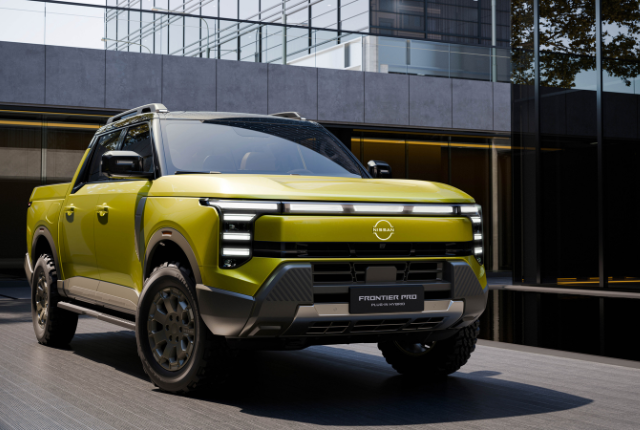
Nissan under its joint venture, Zhengzhou Nissan Automobile, has launched its all-new Frontier Pro and Frontier Pro Plug-in Hybrid Electric Vehicle (PHEV) pick-up trucks in China, for the global market.
Story: Salman Bargir
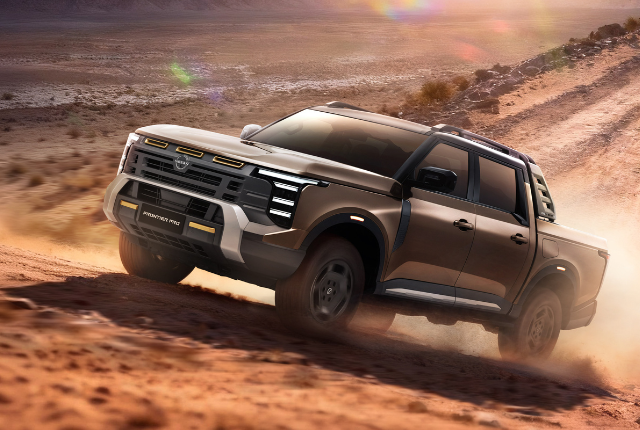
The Nissan Frontier Pro PHEV is not only the brand’s first plug-in hybrid but also its first electrified pick-up truck, making it the brand’s most advanced model to date. While both the Internal Combustion Engine (ICE) and PHEV variants follow Nissan’s “rugged tech” design philosophy, the PHEV receives a more futuristic front fascia.
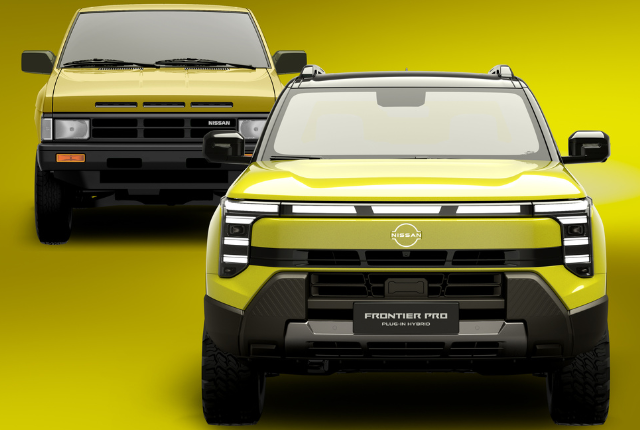
Paying homage to its 1980s’ ancestor, the PHEV’s three central elements within the full-width segmented light-bar echo the three-slot hood opening of the 1980s D21 Hardbody, one of Nissan’s most iconic pick-up trucks. A thick panel with an illuminated “Nissan” logo replaces the traditional grille, further emphasising the truck’s electrified identity. The bumper designs differ between the ICE and PHEV variants as well, although both retain identical vertical headlamps with horizontal LED elements.
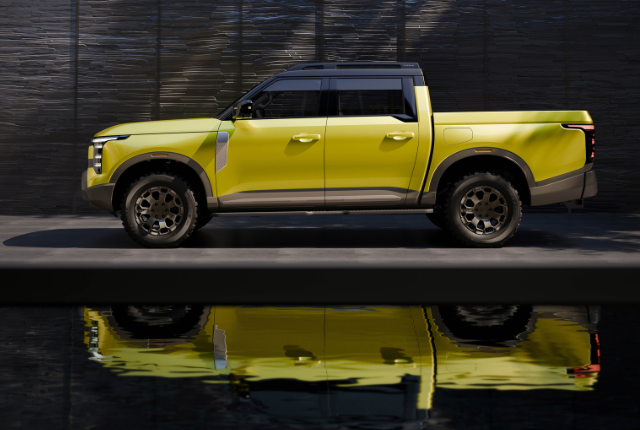
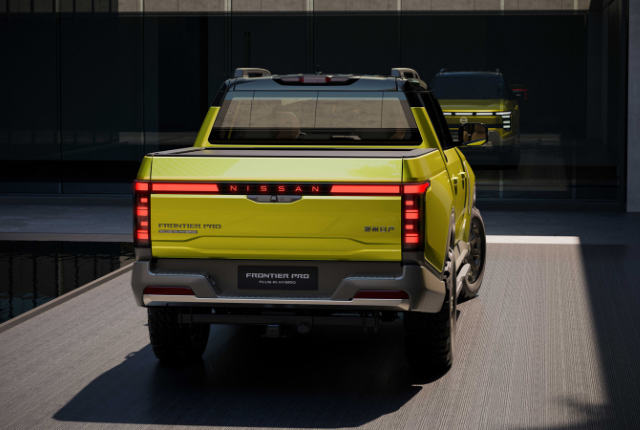
In profile, the two variants appear largely similar, apart from the different design of the otherwise standard 18-inch alloy wheels wrapped in 265/65 tyres. At the rear, both share the same bumper design, although the PHEV features a tail-light connecting LED light-bar with illuminated Nissan lettering positioned at the centre.
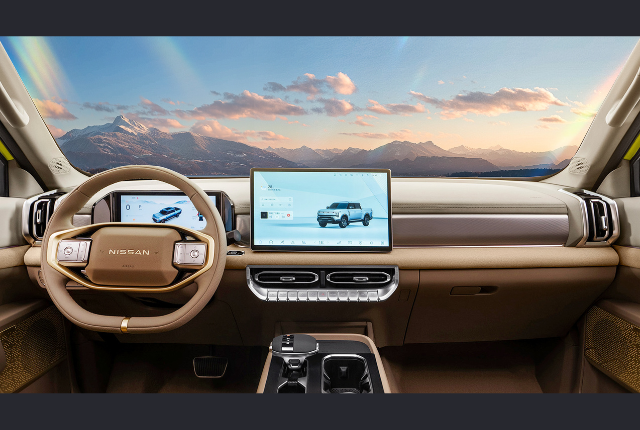
Among the other features inside, both pick-ups get a panoramic sunroof, a 10-inch instrument cluster and a 14.6-inch infotainment display. The front seats offer heating, ventilation and massage functions. The trucks also feature roof rails and an electronically retractable cover for the cargo bed. The PHEV’s 33-kWh ternary lithium battery can also be used to supply up to 6.0-kW of power through Vehicle-to-Load (V2L) functionality. This system allows the PHEV to power external equipment at campsites or during emergencies
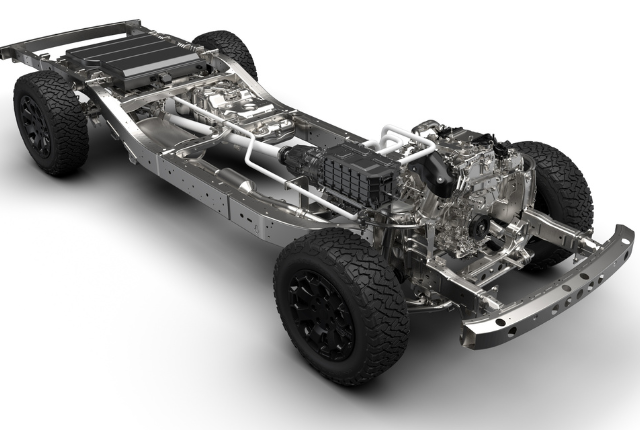
The body-on-frame pick-up is available with three powertrain options, including the plug-in hybrid. The first is a 2.0-litre turbo-petrol engine producing 258 hp (190 kW) and 400 Nm, while the second is a 2.3-litre turbo-diesel delivering 190-hp (140 kW) and 500-Nm. Both engines are paired with a ZF-sourced eight-speed automatic transmission.
The third option, the Nissan Frontier Pro PHEV, is the most powerful of the lot. It combines a 1.5-litre turbo-petrol engine producing 105 kW (143 hp) and 220 Nm with a permanent magnet synchronous motor generating 156 kW (212 hp) and 350 Nm. The combined system output stands at 320 kW (435 hp) and 800 Nm, delivered through a four-speed Dedicated Hybrid Transmission (4DHT).All variants feature an all-disc brake setup and a four-wheel-drive system with selectable 2H, 4H and 4L modes, along with an Auto mode.
The Nissan Frontier Pro PHEV has a claimed pure-electric range of 131 km under the New European Driving Cycle (NEDC). With the battery depleted, the petrol-only claimed fuel efficiency stands at 13.89 km/l. Based on this figure and the 67-litre fuel tank, the estimated petrol-only driving range works out to roughly 930 km.
However, the combined fuel consumption claim is an impressive 77 km/l, translating to a theoretical full-tank range of about 5,159 km. In real-world conditions, these figures will inevitably vary, but the numbers still point towards an exceptional potential range for the significantly large proportioned vehicle.
The Nissan Frontier Pro is priced between RMB 169,900–199,900 RMB (Rs 22.77 lakh and Rs 26.78 lakh) in China, while the Nissan Frontier Pro PHEV is priced from RMB 189,900–249,900 (Rs 25.44 lakh to Rs 33.48 lakh). All variants of the Frontier Pro, including the PHEV, are expected to be exported to other markets.
Considering the growing demand for pick-up trucks and hybrid vehicles in India, Nissan could consider being bold and introducing both the Frontier Pro and its plug-in hybrid iteration here. If that happens, an extensive Car India special one-tank range test of the PHEV would certainly be worth attempting.
Also Read: MG Majestor Revealed For India








Leave a Reply