


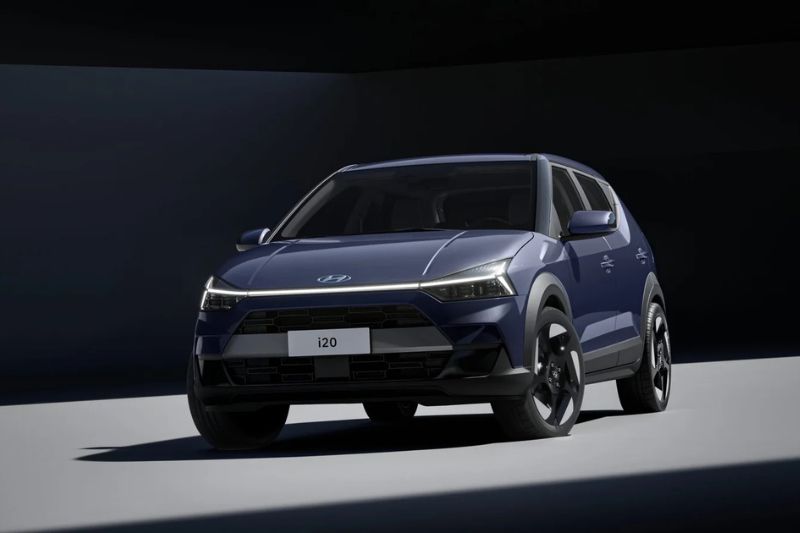
The next-generation i20 has been thoroughly revised and gets a host of new safety features too
Hyundai has launched the all-new i20 in Brazil. Based on the third-gen evolution of the K3 platform, it features a revised modular architecture aimed at maximising safety by lowering the centre of gravity, to better accommodate future electrified powertrains. The overall layout has been reinforced with ultra-high-strength and high-rigidity steel alloys in specific areas, including the A- and B-pillars, the floor, and the roof structure, to better handle torsional stress, and provide enhanced safety in the event of severe collisions.
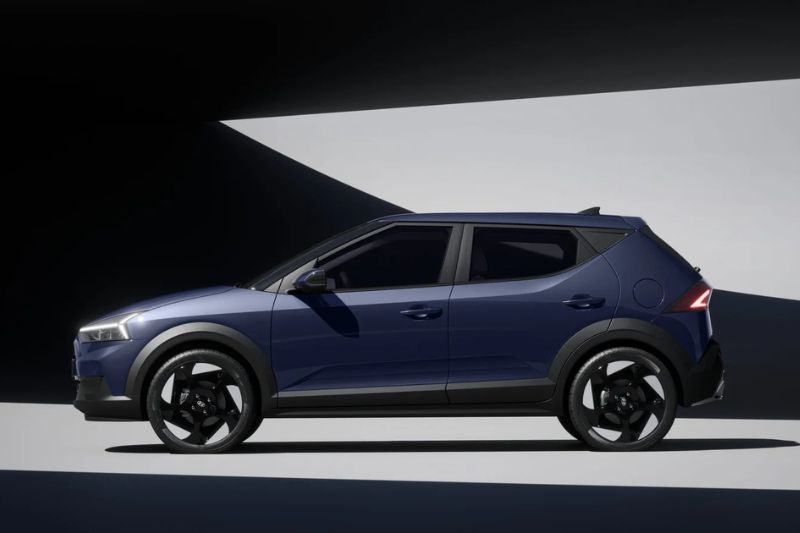
The new i20 debuts a new exterior design, which the brand calls “Art of Steel”, for a sporty, angular outline–apparent by the sharp angle between the roof and A-pillar–with a high beltline sloping steeply from the C-pillar, for an elegant, premium image. It gets a gloss-black grille with a metallic gray centre strip, new side mouldings, and prominent wheel arches with 17-inch wheels. The new iteration also features Hyundai’s “H-Architecture” lighting signature (a modern reinterpretation of the classic Hyundai logo) with projector headlights, and a horizontal LED strip at both the front and rear. One point to note, though, is the Brazil-spec i20 is 1,495 mm tall, 1,780 mm wide, has a wheelbase of 2,580 mm, has a trunk capacity of 346 liters (expandable to 1,152 liters with the rear seats folded), but crucially is 4,130 mm long. So keeping with the Indian sub-four-metre rule, we will see alternations to the grille and bumpers on the India-spec model. As an aside, this correspondent feels that quite a few of the elements on the new i20 seem “borrowed” from Kia, Hyundai’s sister brand.
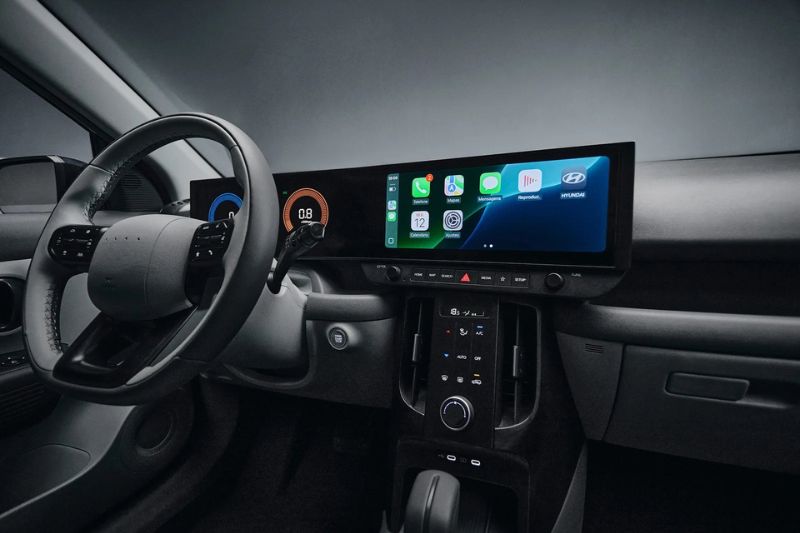
Back to the Brazilian model: its interior sports an expansive, minimalist digital dashboard, and vertical air vents maximising interior space, allowing for a large 12.3-inch multimedia display integrated into the instrument cluster, as well as various storage compartments. Moreover, the 12.3-inch infotainment screen now gets OTA (over-the-air) update capability, with wireless Android Auto and Apple Carplay on offer, and Hyundai’s Bluelink connected car system available as standard. The revised steering wheel features the “H” logo in Morse code (four dots in a horizontal row), and the two-tone leather seats—including a split-folding rear bench. Interior space–particularly at the rear–is another strong point of the new Hyundai i20, with 917 mm of legroom, 961 mm of headroom, and 1,391 mm of shoulder room for three occupants.
Moving now to the safety suite, the new Hyundai i20 comes standard with six airbags, including side curtain airbags, besides the usual complement of ABS with EBD, electronic stability and traction controls, emergency braking signals, and Hill Start Assist. Also on offer are ADAS features such as Adaptive Cruise Control with Stop and Go, Lane Keeping and Lane Centering Assist, Driver Attention Warning, Autonomous Emergency Braking, Blind-Spot Collision Avoidance Assist, and Adaptive High Beam, which detects oncoming traffic and adjusts the light beam to avoid impairing other drivers’ visibility. A standout feature is Rear Cross-Traffic Assist, which helps prevent collisions when reversing out of a parking space; it uses radar to detect approaching vehicles, issuing an audible warning and even applying the brakes if necessary. Another key feature is Safe Exit Warning, which prevents accidents caused by opening doors when other vehicles are approaching. The system issues a warning if an approaching vehicle is detected from the rear just as an occupant opens the door to exit.
In terms of powertrain, the new i20 features the Kappa 1.0 and Kappa 1.0 TGDI engines, with a 3-cylinder, 12-valve configuration. The Kappa 1.0 TGDI turbo-petrol engine makes 115 hp (on either ethanol or gasoline) at 6,000 rpm. However, its strong point is the 172 Nm of torque available from as low as 1,500 rpm, which is maintained up to 3,500 rpm. The Kappa 1.0, meanwhile, is a naturally aspirated flex-fuel ready powertrain, making 80 hp and 100 Nm from Ethanol, and 75 hp and 94 Nm from petrol.
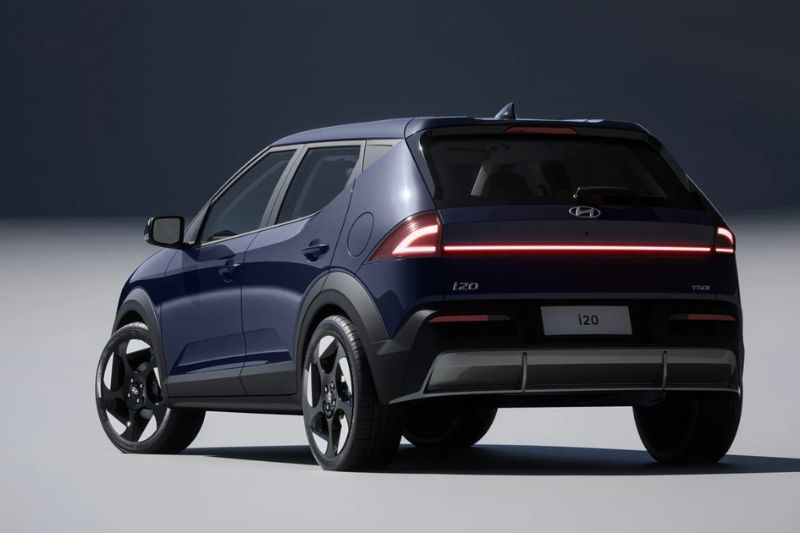
The Brazil-spec i20 is available in Atlas White, Onyx Black, Brisk Silver, Sand Silver, Sapphire Blue, Shadow Gray, and Silk Gray, with prices starting from R$ 99,990 or about Rs 18.16 lakh, excluding taxes. Now, though the price tag will be a good deal lower when Hyundai launches it in India, it will still be a significant hike from the Rs 5.99 lakh to Rs 11.73 lakh (ex-showroom) bracket that it currently occupies.









Leave a Reply