


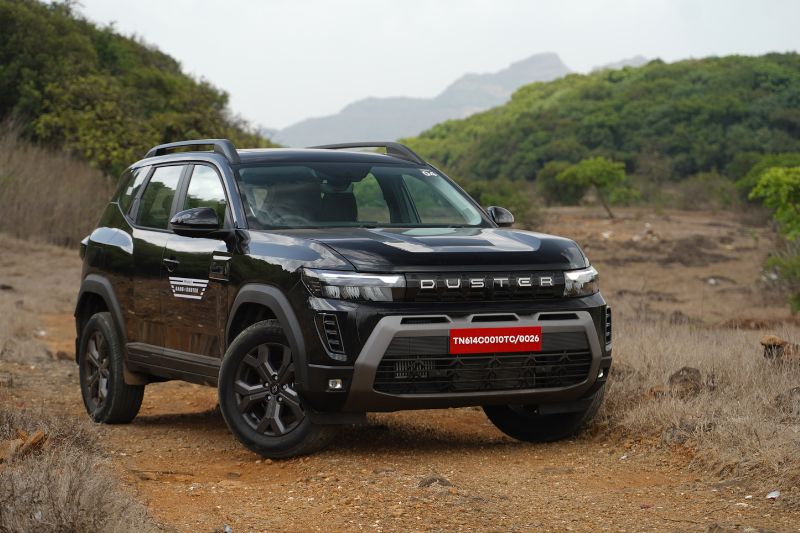
After shaking up the mid-size segment a few months ago, Renault’s next target is the sub-four-metre SUV space
After a near-ten-year reign in the Indian market, and then being off the shelf for about four years, Renault reintroduced the Duster in an all-new avatar earlier this year. This time around, though, the brand had another trick up its sleeve: an additional, smaller-engined variant line, or “version” in Renault-speak. christened the Duster TCe100, with which we spent a few hours on the Mumbai-Lonavala circuit. So who is it for? Read on…
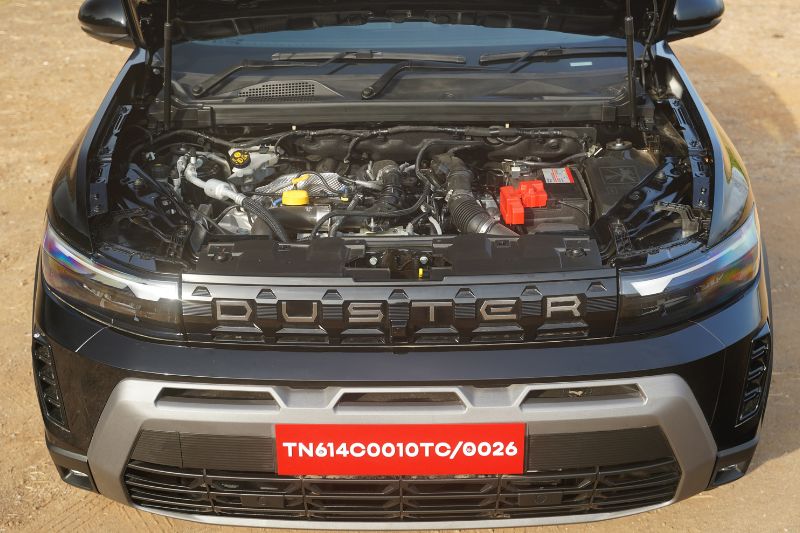
Starting with the exteriors, where most first impressions start, the TCe100 looks identical to its larger, TCe160, sibling. Hey, wait, what are those alpha-numeric codes? Well, the “TCe” stands for “Turbo Control efficiency”, representing Renault’s line of turbocharged direct-injection petrol engines, while the “160” and “100” refers to the engines’ horsepower figures. Also, while the 160 has a 1.3-litre in-line-four, the 100 is a 1.0-litre in-line-triple.
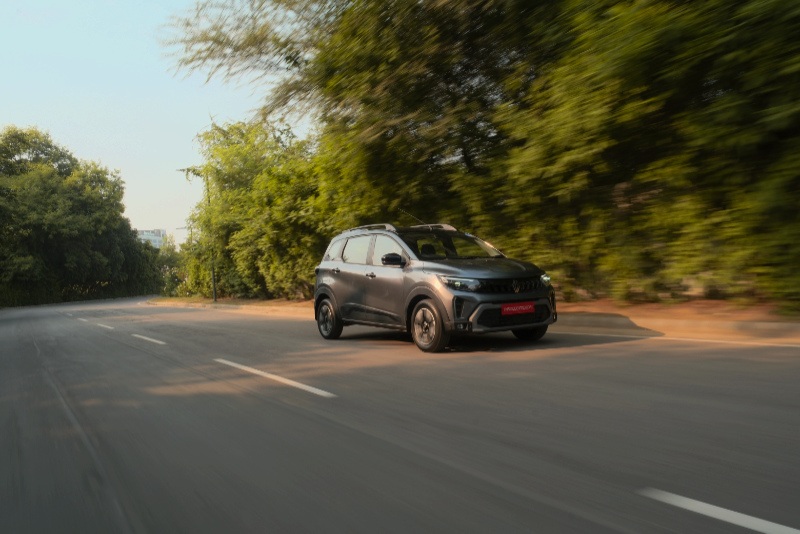
That settled, we move back to the car in question which, as mentioned, sports the same rugged SUV styling and generous 212-mm ground clearance. Moreover, since our test vehicle was in the top “Techno” trim, it also sported LED illumination, a powered tailgate, a panoramic sunroof, and 17-inch alloys. But doesn’t the Duster’s top variant get 18-inch alloys? Well, yes, but that’s for the 160. You see, while the larger engined-car can be had in five versions (Authentic, Evolution, Techno, Techno+, Iconic) as well as a limited-production Iconic Launch Edition, the 100 gets only three versions, hence the Techno being the range-topper.
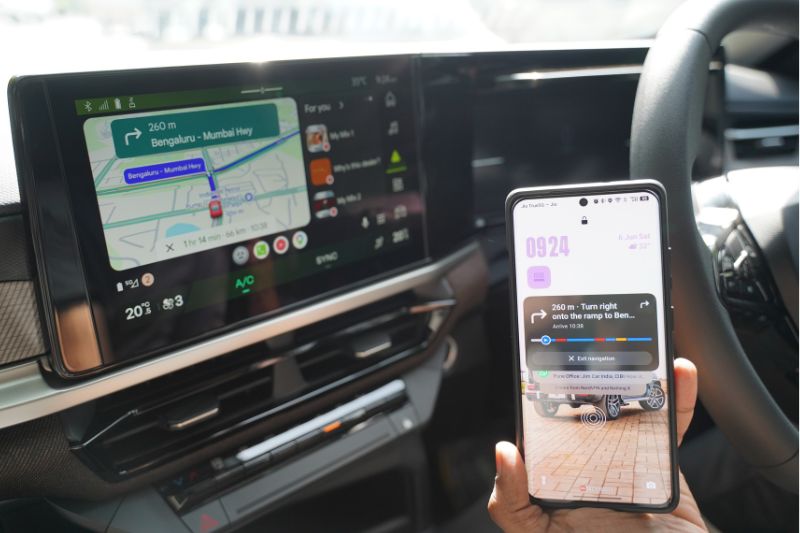
We now briefly touch upon the interior, which, once again, has the same fitments as on the Techno. That means fabric inserts on the dashboard and doors, with a seven-inch TFT instrument console, and a 10.1-inch touchscreen infotainment display with wireless Android Auto and Apple CarPlay. The steering wheel has controls for both music control and telephony as well as the cruise control and speed limiter. The centre console gets a USB-C charging port as well as a switchable wireless charging space, with another storage slot above. The glovebox, too, though not wide, is cavernously deep.
The seats get two-tone upholstery and are supportive, though manually adjustable, with the driver getting height adjustment as well. Ditto with the steering, manually adjustable for rake and reach. That said, there are two niggles here: First, the lid for the central storage that doubles as an armrest which, though capable of sliding back, still gets in the way of operating the handbrake, and second, the sunroof, which makes very little sense considering India’s tropical weather.
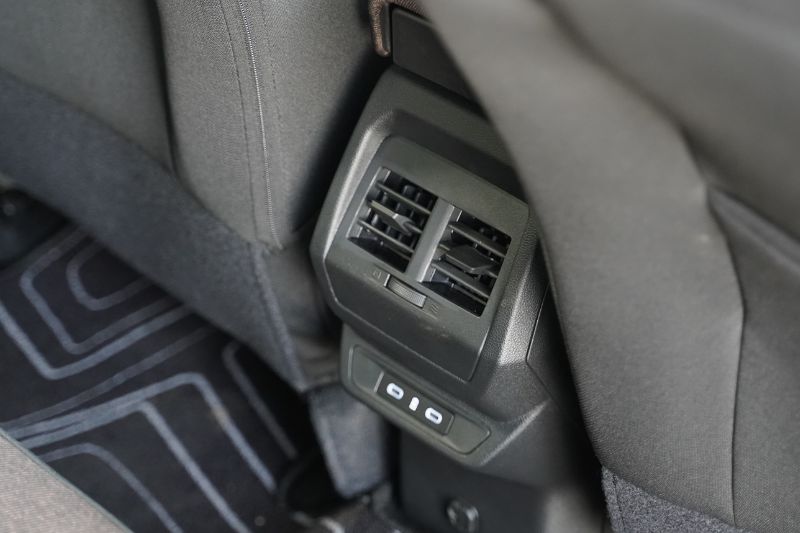
Moving now to the rear seat. It can fit two in complete comfort, with the Duster’s 4.3-metre length meaning there is no shortage of legroom even for tall occupants, That said, the third (middle) rear-seat occupant may need to splay their legs over the central tunnel, that hosts the rear A-C vents as well as two USB-C charging ports.
Buckle up and get moving, and the first thing you notice is the excellent visibility, courtesy the upright driving position. As mentioned, there’s a 1.0-litre three-cylinder turbocharged petrol engine making 100 horses and 160 Nm here. Now, though it’s the same lump as on the Kiger, Renault has retuned it to offer a steady push from as low as 1500 rpm, with the turbocharger making it feel more responsive than the power figure suggests. Besides, the light clutch means pulling away from traffic lights, as well as frequent modulation in bumper-to-bumper situations, is easy. The steering, too, stays adequately weighted even as the speeds rise. Moreover, there is negligible hesitation during quick direction changes, commendable considering the Duster’s upright stance and over 1300-kg heft.
Even on the open road, the TCe100 is no slouch. Yes, it’s noticeably behind in all-out grunt as compared to the TCe 160. However, the all-new six-speed manual gearbox means it’s easy to keep on the boil. So not only are there no “flat spots” while getting to or cruising at close to triple-digit speeds, but you also won’t necessarily need to plan ahead for quick overtakes. Nevertheless, you may need to downshift, when overtaking on inclines.
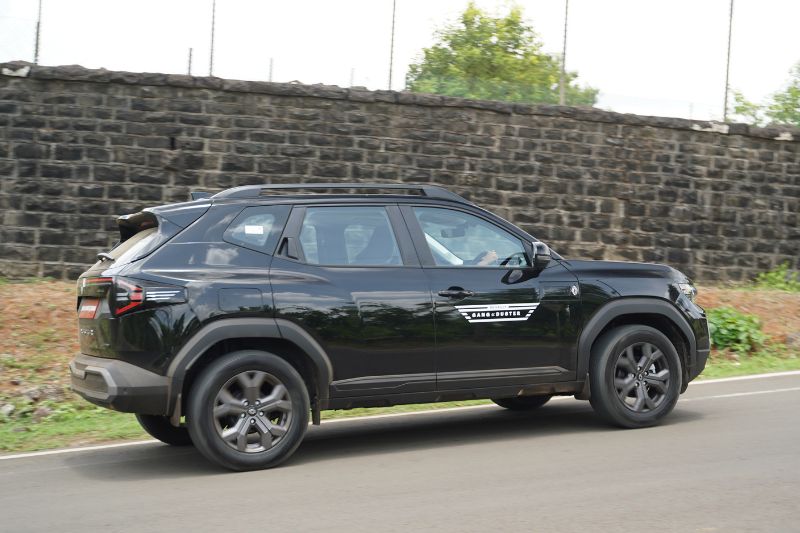
And finally, another strong point of the Duster, along with the handling, is its ride quality. Now, looking at its high ground clearance, you’re right to think it’ll stay insulated from all manner of imperfections, potholes, and speedbreakers. And yes, they’re all handled commendably. However, while the suspension feels forgiving over bad surfaces, it’s surprisingly composed during sudden direction changes with none of the characteristic wallow mostly seen on correspondingly high and heavy SUVs.
So, should you buy the Duster TCe 100?

Well, if you regularly travel long distances with your entire family or you’re an enthusiast who especially enjoys putting their vehicle through the paces, the TCe 160 will make more sense. But if you’re looking for practicality, comfort, and simplicity–over your daily commute, school runs and occasional road trip–all without sacrificing excitement, then the TCe100 would be the one worth considering.







Leave a Reply