


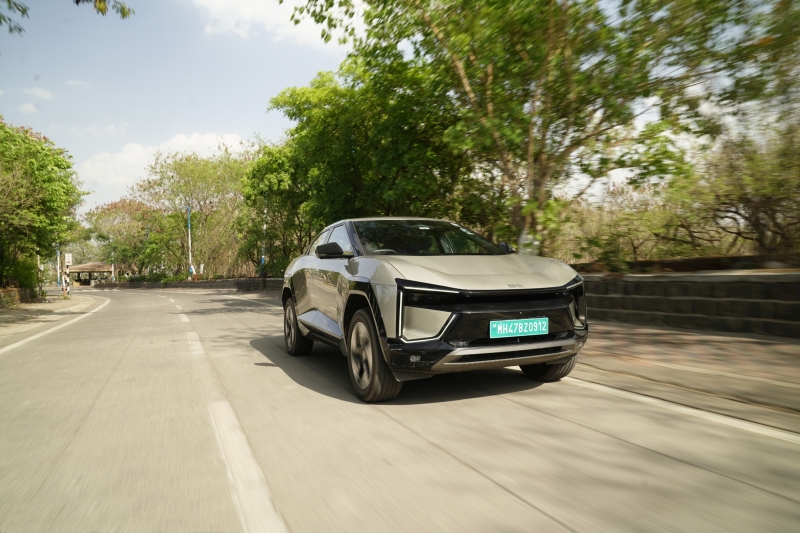
Starting from a clean slate and bringing a concept to life is truly a glorious time to be alive. And Mahindra has done just that to bring us an electric SUV like no other.
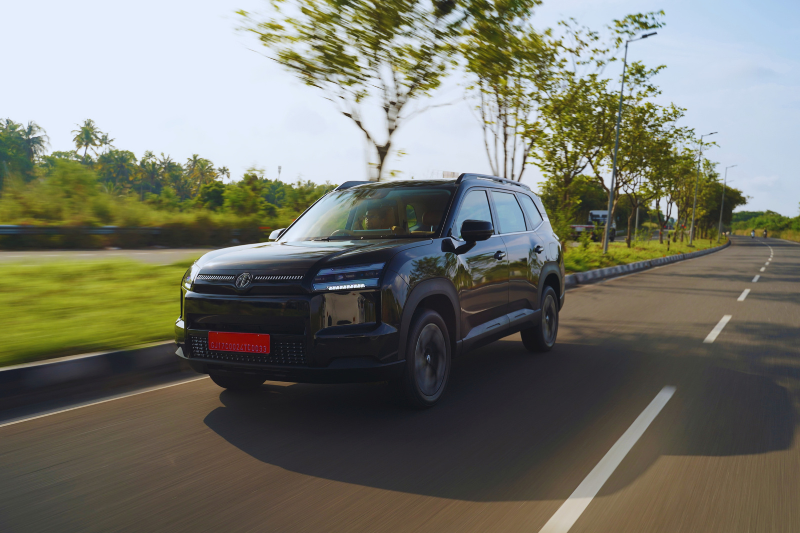
A bold design is one thing, but starting from scratch and creating an all-new model that looks space-age, given the obvious free rein to the design team, speaks volumes about who embraced what at Mahindra Electric when it conceptualised the BE 6 electric vehicle (EV). The striking concept has stayed true to its form like few others, which, in itself, is a step towards creating a winner. The looks, I have to say, have polarised opinion, but it’s radical, and I like it; more from some angles than others. But, admittedly, it’s a striking design whichever way one looks at it.
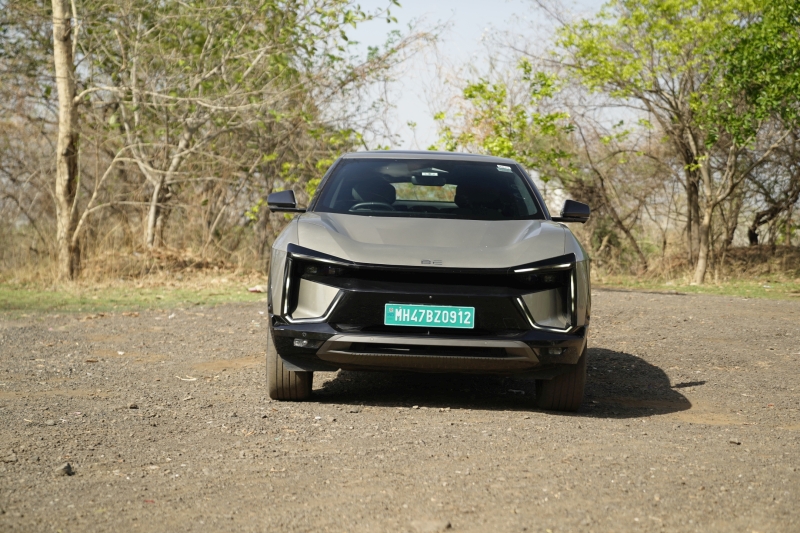
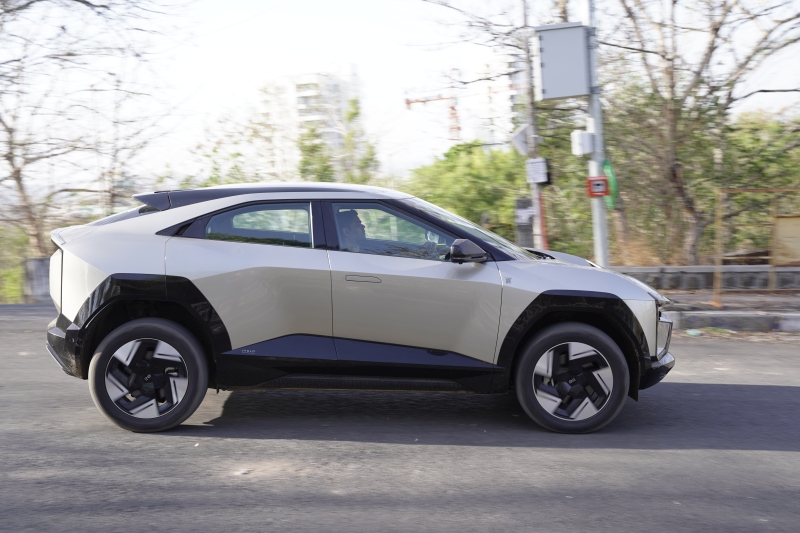
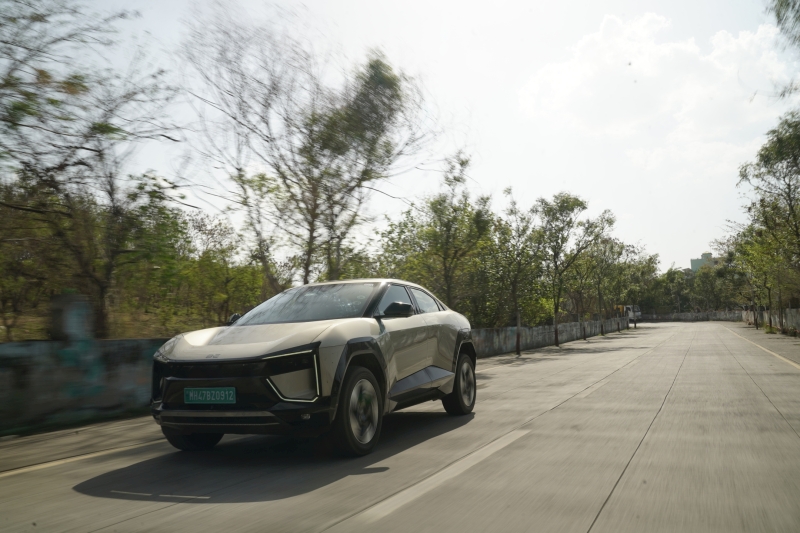
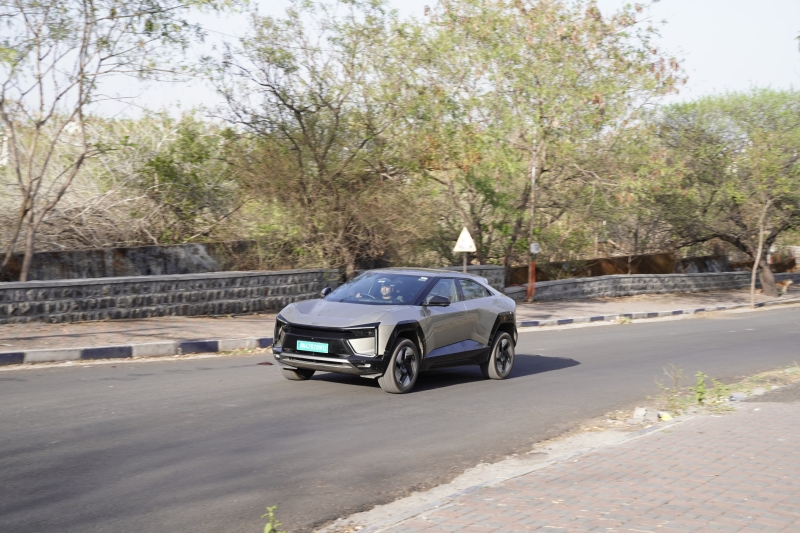
The front-end design looks like a performance car with the attached wing, and the Italian supercar-like channel screams attention to aerodynamic efficiency and the fact that the need for downforce is strong with this one. The LED daytime light strip signatures are boldly large and unlike many others. They somewhat conceal the headlights when viewed at normal height, but those are powerful after dark and have smart adaptive management systems. It’s the side profile that looks utterly jaw-dropping.
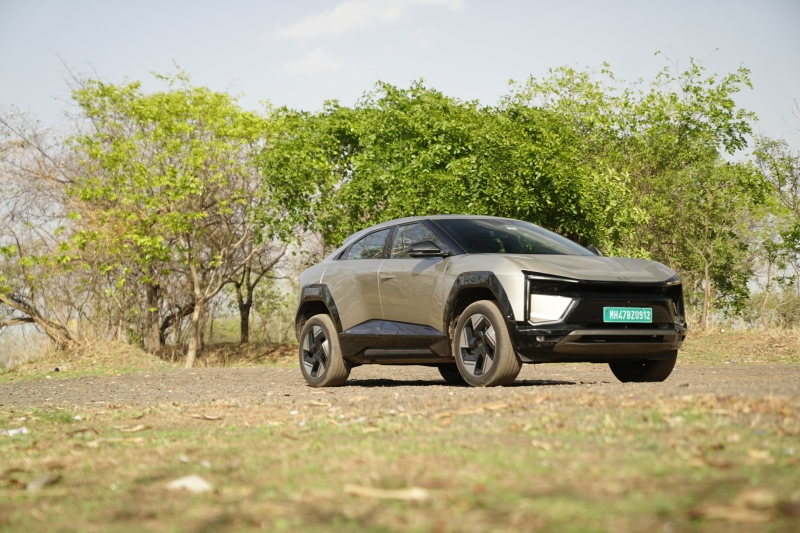
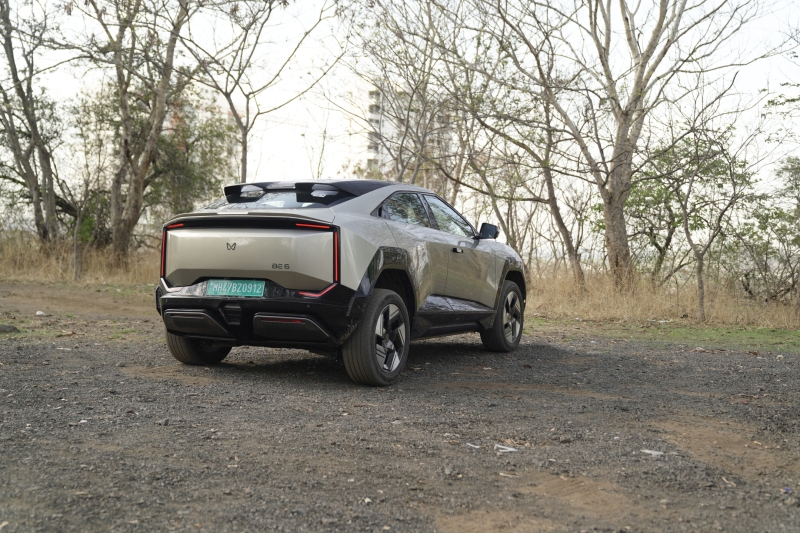
A clear clay-concept shaped to be aggressive and dominating with distinct wedge-like surfaces is punctuated by minimal glass side-windows and huge 19-inch aero-optimised wheels with 245/55 R19 EV-special tyres. The BE is only available as a single-motor, rear-wheel-drive model, for now, so it needs that sort of grip for useful traction. And even that seems just about adequate, but more on that later. The rear end is a straight slab with two split roof-spoiler type elements in a contrast finish, wrapping things up in style, and a rather small rear windscreen. The tail-light clusters are LED as well, with a connecting bar displaying equaliser-like graphics and “Unlimit India” in scrolling text after the lock button is pushed. Not short on party tricks, this one.
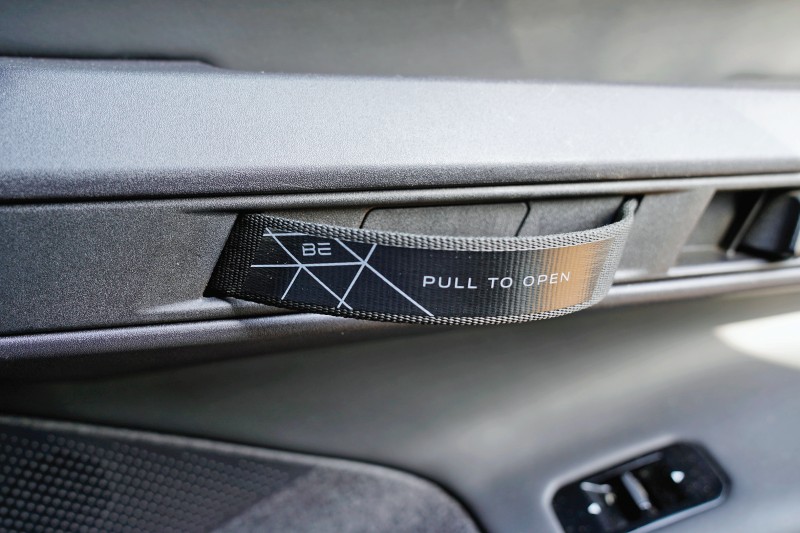
Tap the door-handle outside, and it pops out—useful, unlike the fiddly non-pop-out versions thoughtlessly equipped on several other cars across a vast region of the pricing spectrum. The door opens wide, to almost 90°, and that makes it easy to get in and out. One element that immediately stood out for me was the strap for the inner door “handle”—very racecar-like! The cabin managed to drop my jaw when I saw it for the first time. The seat moves back to make room to climb in. The cockpit-like frame around the driver’s seat is again like a racecar, but without the tubular roll-cage. An audio-visual welcome sequence prepares me for the experience as I get settled in and shut the door. The wheel itself is a rounded rectangular unit with a flat central surface with an illuminated logo with up-down-push toggle-switch controls neatly integrated on both sides of the two spokes.
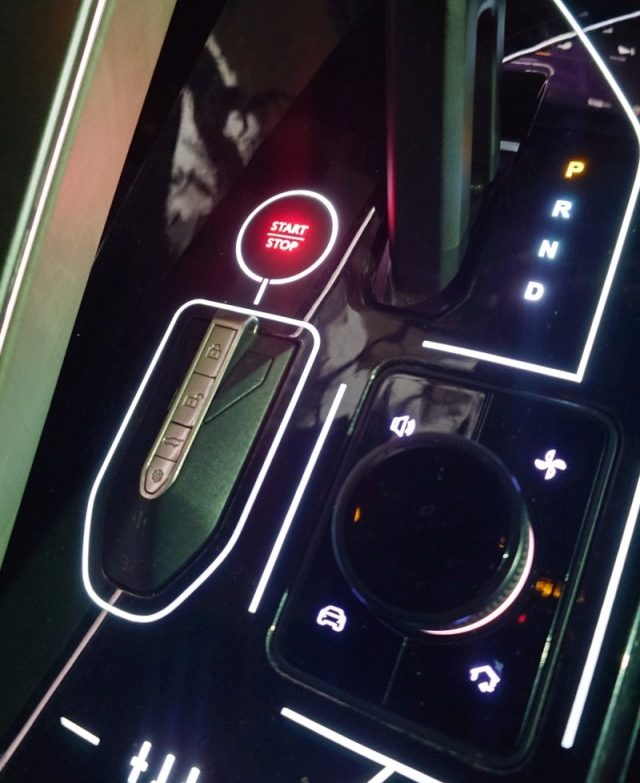
There is a dedicated key-shaped slot on the centre console—a very neat touch. Ahead are two wireless charge bays for two Qi-compliant smartphones as well as more storage space next to them, plus below the console and even more under the centre arm-rest. The drive selector is a tall-ish aircraft-style lever that feels nice to grip and is easy to operate. However, one must first pull down and then push up to select reverse. That said, overall ergonomics are excellent, and the cabin feels thoughtfully laid out. The door-panel controls are within easy reach, and there is plenty of room for one-litre bottles and other knick-knacks. Then I look upwards and see another set of controls—for the sunroof, hazard lights, and emergency services. The sun-blind is one huge fabric expanse which opens to reveal the panoramic glass sunroof. But this is no ordinary sunroof, oh, no.

There are optical channels sandwiched between two panes that have some brilliant light patterns and visuals—noticeably unique after dark, in harmony with the ambient light themes. There is definitely no shortage of drama in here. The glass sections used for the windscreen, side windows, and sunroof all offer a reduction in 200-400-nm UV ray penetration of up to 95 per cent. This means better cabin temperature and insulation on the move, and also less intense heat when parked in the open on a sunny day.
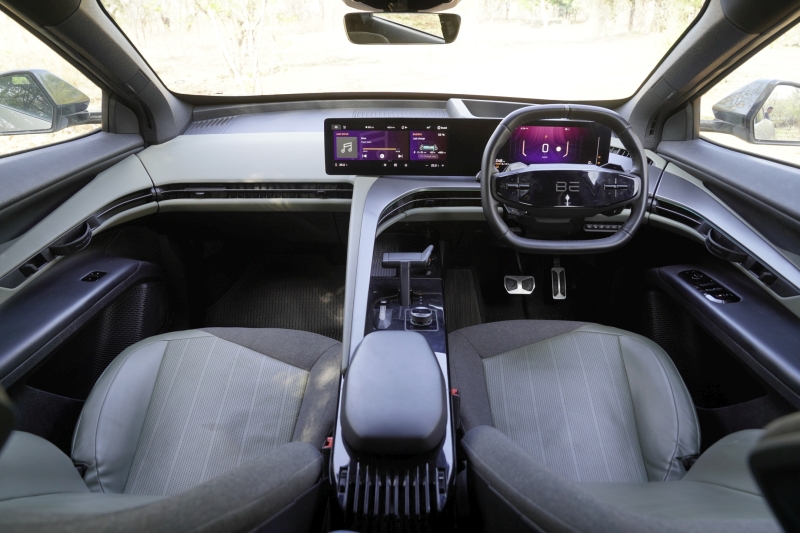
The space inside is quite generous with enough elbow-room all round. Another element that fascinated me was the asymmetric upholstery on the seats. The front seats offer plenty of room, although the floor, as part of the INGLO platform, is quite high, owing to the reasonably large 79-kWh battery pack under there. The rear seats, too, offer generous shoulder-room and occupant space in general. Unlike what the sloping roof-line may communicate, the rear head-room and knee-room are not particularly limited, unless one is over six feet tall.
The start-stop button brings the console and the wide dual screens to life. A booming audio message warns that it is an electric vehicle with immediate torque, and it must be driven carefully. Sure. Yes, like a friend who’s bought the top-spec BE 6 already asked me, “Who else gives you 286 hp and 380 Nm for under Rs 30 lakh?” Pertinent question and, as I was about to find out, justification as well.
I thought the BE 6 would rocket off the line and require me to stand on the brake to slow down before taking a corner, but no. It stuck to the road and held its line well. The steering set-up is sublime, offering impressive feel and feedback with precise operation—a rarity in EVs; most feel vague or even disconnected. The brakes, paired with the regen, are good, too. The BE 6 feels sharp, agile, and, importantly, eager. It is quite fun to drive. To be fair, I first drove it at the Car India Awards recently and was very impressed; enough to call for it for a longer period, so I could actually spend some quality time with it. And it does work well.
The acceleration is quick, with a sprint from zero to 100 km/h done in just over six seconds. The top speed—when it was tested at NATRAX earlier—was over 200 km/h. The suspension uses variable damping, and that leads to better control. The compression is not too soft, nor is the rebound too quick and aggressive. Yet, the wheels stay planted, and the car holds the road well. The ride quality is good on smoother surfaces, whereas alternating bumps and broken roads may lead to some lateral jostling at times. Pick up the pace, however, and it flattens these inconsistencies.
On to the driving range. The claimed range is 680-something kilometres, but it must be understood that there are several variables involved—as with any EV—including traffic, driving style, regeneration rate, ambient temperature, cabin and occupant load, and type of road, apart from the climbs and drops from up- and down-slopes on the way. During the past few weeks of use, I have seen a low of 5.3 km/kWh, which, with the 79-kWh battery pack, translates into 419 km. However, in normal city use, I saw a high of 8.5 km/kWh, which is very impressive for a two-plus-tonne futuristic tank-like SUV, and translates into 671 km—close to the claimed range. So, given a slightly cooler climate and straighter roads with less stop-and-go traffic, it could deliver that figure. Then again, the regen modes help there. I spent most of my time in level one or two; there is also a level three, with a more pronounced “engine braking” effect, as well as free-wheeling and one-pedal mode. Yeah, level two works best for me. There are drive modes, too, but somehow the default mode, called “Default”, showed the highest potential range. The “Range” mode drops a few, the “Everyday” mode is not as sharp as I’d like, then there was “Race” mode, which pretty much shed a quarter from what it showed initially.
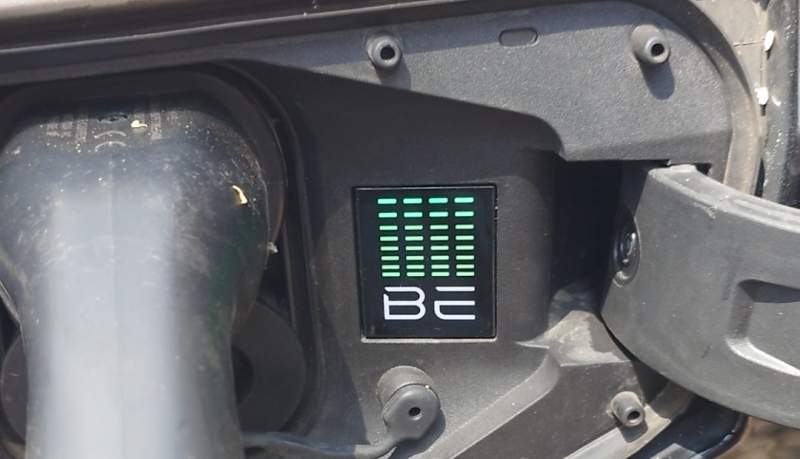
When it comes to charging, there aren’t any DC fast-chargers on my route; yes, the infrastructure is more highway-biased than urban-focused. Using the 11-kW AC charger at the office, it recovered 30 per cent state of charge or 220 km in just two hours. At 85 per cent capacity, it indicated 500 km of range; parked in direct sunlight on a hot early-summer day, mind you. The charging socket has some neat animations that clearly show the state of things—from “plugged but not charging” in red to “charging” in moving green squares, and white when everything is normal with the flap open; or so I noted.
Pune witnessed unseasonal heavy rainfall at the start of April, and the state of the roads was abysmal. Dirt, mud, sand, and slippery surfaces require more judicious right pedal use, as the instant chunk of torque delivered when one puts their foot down with even a little authority is enough to break traction and induce a slide if the front wheels are pointing anywhere other than straight. Our car came with over 16,000 kilometres on the clock with fairly worn tyres, so this is something more applicable to this particular one, and other BE 6s with worn tyres. That said, the electronic nannies work well, some of them being quite intrusive for more seasoned drivers.
The blind-spot monitor and alert make for a juddering steering wheel—something that can get annoying when I want to go left but a two-wheeler rider who wants to go straight remains annoyingly on the left side, while not making any attempt to pass. The door-open warning is also quite a booming experience, causing my co-passenger to panic rather than respond, while I was too preoccupied with the flashing red lights in the info-display ahead of me. However, there are plenty of features that work well, from the adaptive cruise control with vehicle distance presets, vehicle ahead start alerts, forward collision warning and autonomous braking, park assist together with the 360° view and a rear camera, and a lot more. It’s an interesting offering in many ways and one that still throws a pleasant surprise or two my way even after spending weeks with it.
At Rs 26.90 lakh (ex-showroom) without the wall-box charger, the BE 6 Pack Three offers commendable equipment and many sensible bits, from the hazard-light view enhanced by blinkers on the rear panels even with an open hatch, a generous boot, several storage spaces, a magnificent 16-speaker Harman surround-sound audio system, and many more useful additions from voice-controls to ventilated seats with memory; everything adds to the experience.
The BE 6 is one EV that truly captivated me. The only other one that did that was the VW ID. Buzz, but that isn’t heading this way any time soon, nor will it be priced anywhere close to the BE. The thing with the BE 6 is that it isn’t pretending to be a normal car nor trying too hard to be conventional. It just is. And that’s why it won me over. As Lennon said, let it BE.
From the Manual
The BE 6 does indeed have a manual, but it’s not a stick-shift. It’s a good ol’ book, and it has some interesting advice… and warnings.
1) Never allow the high-voltage (HV) battery to be fully discharged; discharging the HV battery to zero per cent may cause damage to vehicle components and permanent battery degradation. If you let the battery discharge to zero, other components may be damaged or need to be replaced. In these cases, you are liable for repair and/or transport costs. The warranty does not cover discharge-related expenses.
2) Do not leave the vehicle at 100 per cent state of charge (SOC) for prolonged periods, as it may reduce battery longevity.
3) Always charge in a well-ventilated area, away from flammable materials.
4) Do not use the HV battery as a stationary power source, as it will void the warranty.
5) Do not expose the vehicle to very high or freezing temperatures for a long duration.








Leave a Reply