


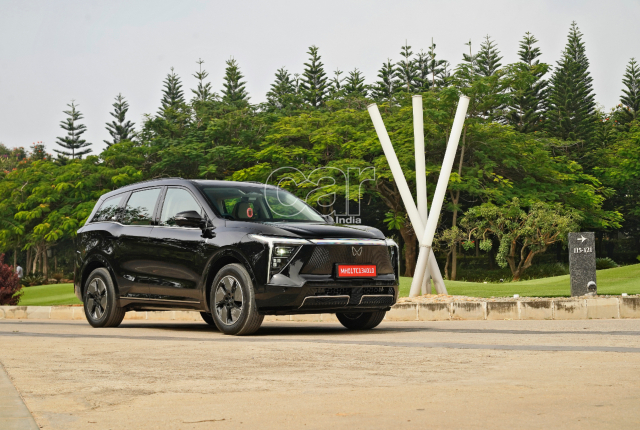
With a lot of familiarities under the skin, to the Mahindra BE 6 and XEV 9e, can the Mahindra XEV 9S continue Mahindra’s positive momentum in the EV space? We sampled it in Bangalore to find out
Story: Gaurav Davare
Photography: Sanjay Raikar
Last year, Mahindra brought the BE 6 and XEV 9e to the electric vehicle space, marking a shift in being loud about the EV revolution, rather than boasting it in silence, with their futuristic designs, a packed feature list and potent powertrains. Fast forward to the end of 2025 and Mahindra is aiming to make an even bigger splash with their latest offering, the XEV 9S, which is also India’s first seven-seater electric SUV. Things are a little different this time however, as there’s a lot of things in the 9S that are familiar to the other Electric Origin SUVs in Mahindra’s line-up. The question is, can the Mahindra XEV 9S stand out, while also making a case of being a serious seven-seater electric SUV to consider? We got to spend some time with it around the outskirts of Bangalore to find out exactly that.
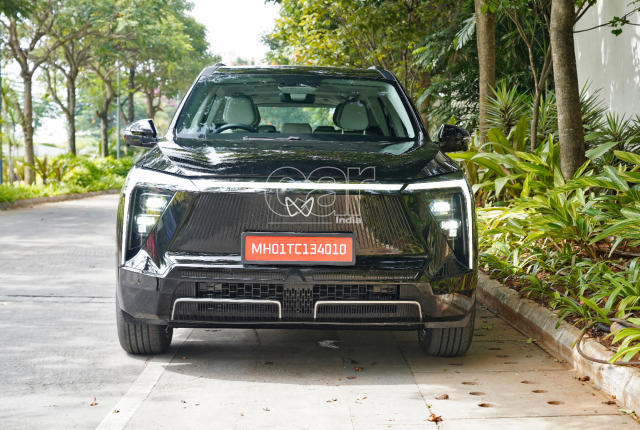
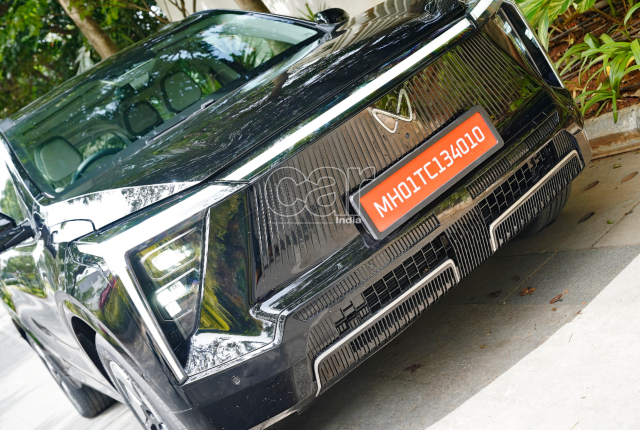
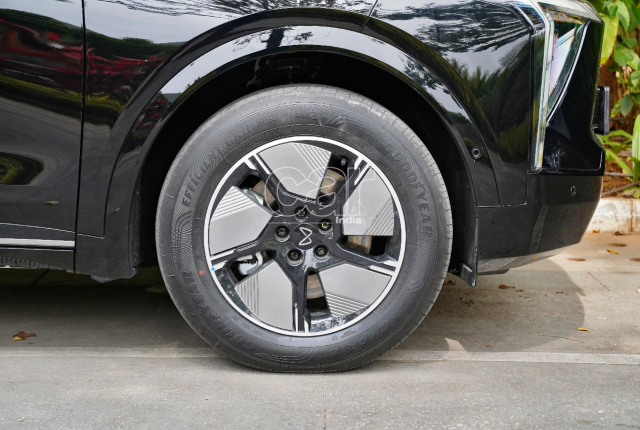
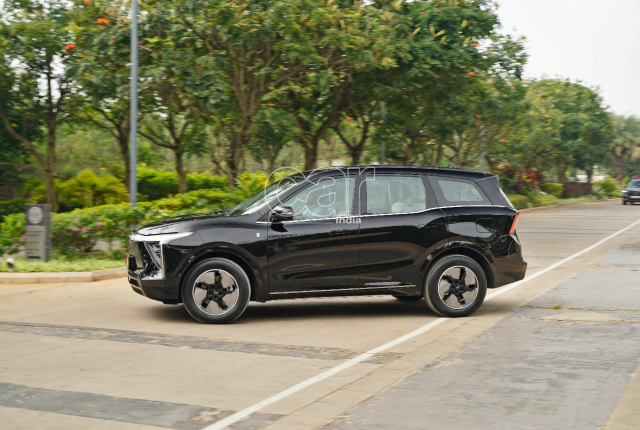
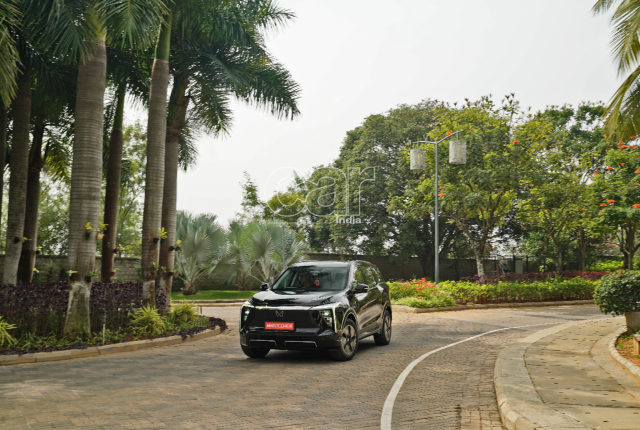
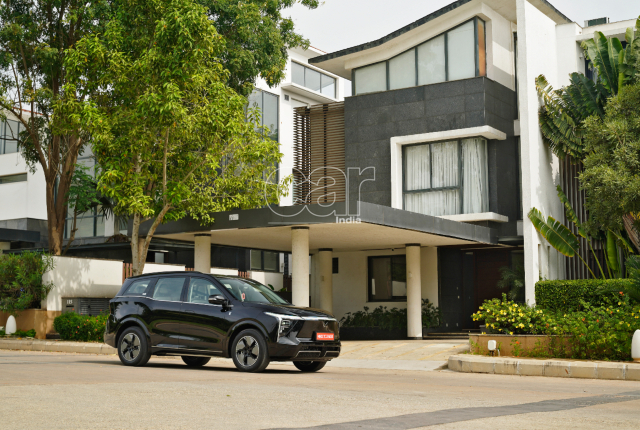
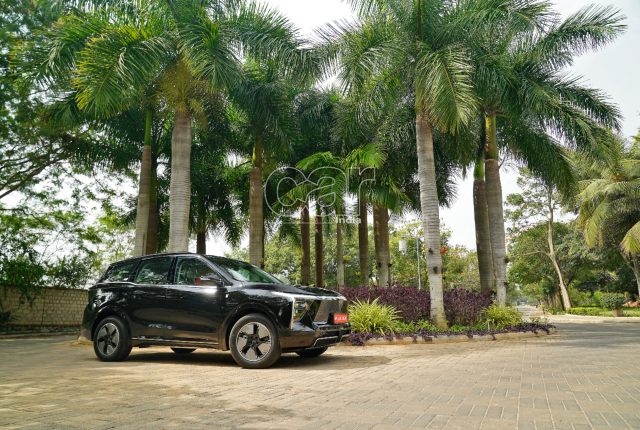
If you view the XEV 9e and XEV 9S side by side from a frontal view, you’d be hard pressed to find any differences as both have a high stance, sharp creases around the bonnet, and a near-identical connected LED DRL strip and stacked headlight setup. There is a small difference in the XEV 9S but you’ll need to pay attention to the fine details as the LED DRL strip takes up a little more real estate from the bonnet. View the XEV 9S from the side profile, and up until the start of the C-pillar, it is very similar too with the relatively sleek silhouette complemented by flush-fit door handles. The 18-inch alloy wheel design is different, but it doesn’t quite gel with the overall design that well.
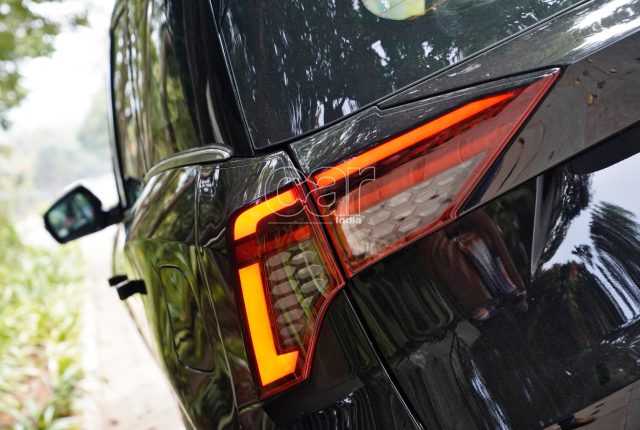
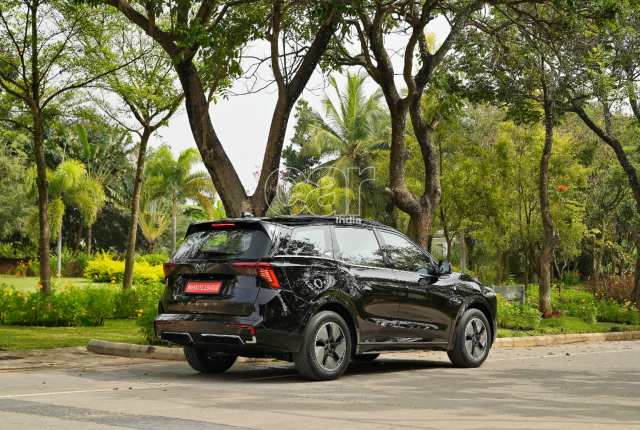
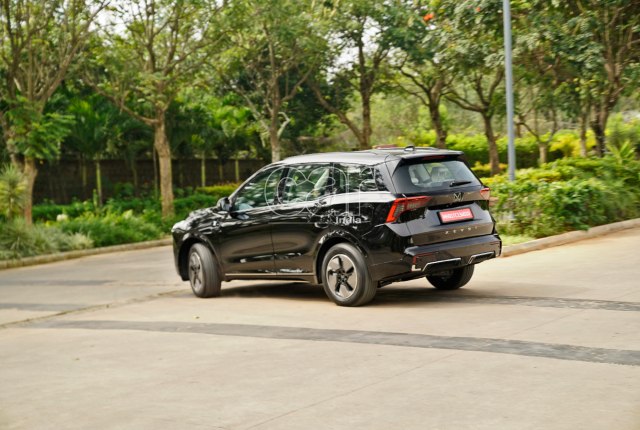
It is from the C-pillar onwards where the XEV 9S actually gains its own identity over the XEV 9e as instead of a sloping roofline, you get a proper rear-quarter section, with a fairly muscular haunch that flows into a fairly aggressive rear design, ticking off the requirements of an SUV with a strong presence. The boomerang LED-tail lights are a nice little bowtie to the rear-end. In fact, the overall silhouette of the XEV 9S is actually very similar to the XUV700 especially from the side and rear profile, with the tail light design perhaps giving us a clue on what to expect when the XUV700 does get updated. Overall, the XEV 9S has a commanding presence, fitting for a seven-seater SUV and also looks modern without trying too hard.
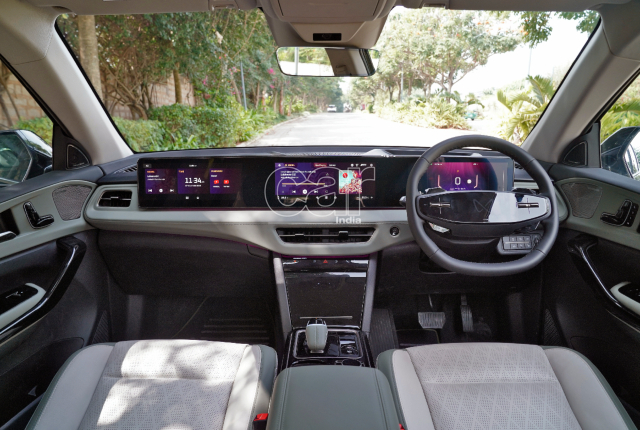
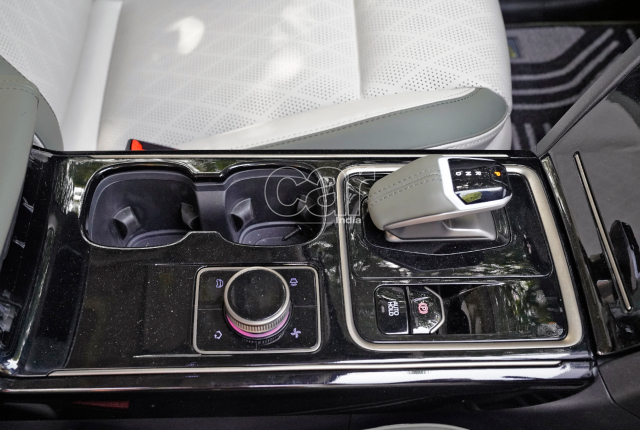
The familiarities from the exterior are even more apparent when you step inside the Mahindra XEV 9S, as the dashboard layout is pretty much identical to the XEV 9e, right down to the beige theme, the two-spoke steering wheel, the triple-screen layout as well as the ergonomics. Naturally, it retains all the premium bells and whistles from its coupé-SUV sibling too, like wireless smartphone connectivity, Alexa assistance, 5G connectivity, powered and ventilated front seats, wireless phone charging pad, Type-C charging ports, an augmented reality head-up display, and a 16-speaker Harman and Kardon audio system with Dolby Atmos. Unsurprisingly, the experience is pretty much identical, but it’s not exactly a bad thing as the material quality is relatively decent and operating the three screens feels slick thanks to a Qualcomm Snapdragon chipset.
The Mahindra XEV 9S hasn’t skimped out on the safety feature list as there’s things like seven airbags, ISOFIX, ABS, ESP, a rear defogger, washer and wiper, all-wheel disc brakes, a 360-degree camera and Level 2+ ADAS. While our time testing out the ADAS features like lane-changing assist, adaptive cruise control and blind spot monitor was limited, they feel well calibrated for Indian roads.
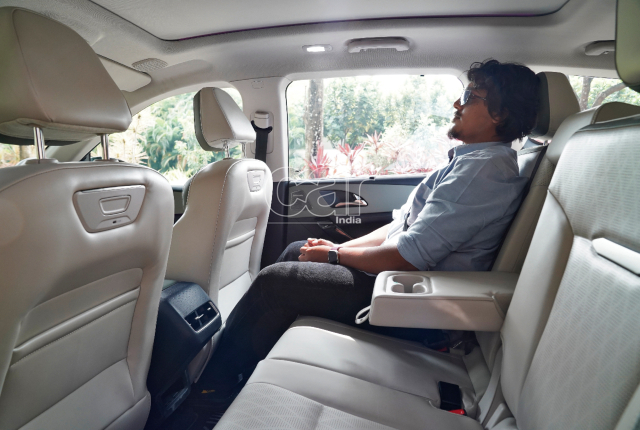
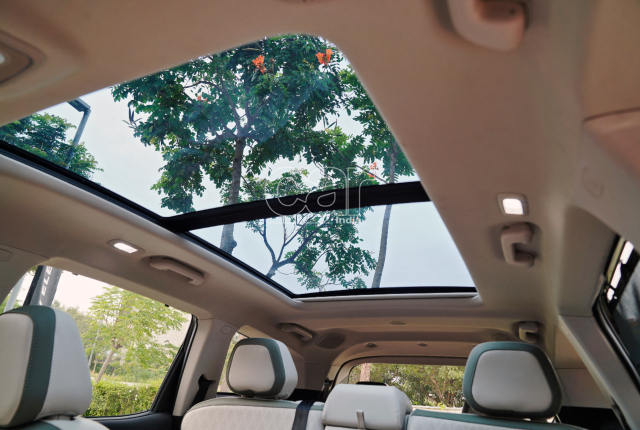
Since this is a seven-seater SUV, the evident focus will be on space, practicality and the seating experience. Starting with the second row, it feels like a nice place to be seated in as there’s a decent bit of bolstering to keep you comfy on long distance journeys. Headroom, legroom and kneeroom is plenty and you really feel the sense of space, especially with the large windows. Good news, the panoramic glass roof can be opened so one can enjoy the winter sun, further complementing the airyness in the second row. There’s a decent bit of amenities too as you get rear AC vents, a wireless phone charging pad, Type-C charging ports, sunshades, cupholders, table trays, sockets to plug in your tablets, and the seats are slide-adjustable and have a ventilation function to keep you cool on hot summer days. Rounding things off here is the powered Boss mode so the chauffeur driven don’t have to disturb their drivers while on the move.
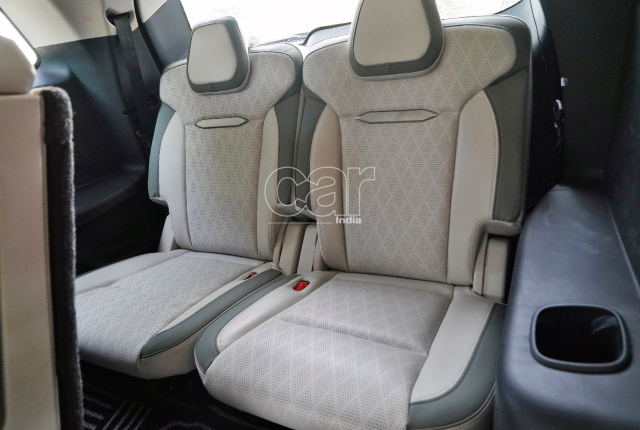
Access to the third row is relatively simple with a one-touch tumble down lever for the seat behind the front passenger. Are the third-row seats usable? Well, due to the high floor height, and suboptimal space, an average-sized person is better suited for short journeys being seated here, so it’s a better option to have children seated there. Nevertheless, Mahindra have given this area some creature comforts such as dedicated AC vents with a fan regulator, a 12v socket and cupholders. Also, with this seven-seater body style, you can actually get a decent view out of the rear windshield, unlike the XEV 9e.
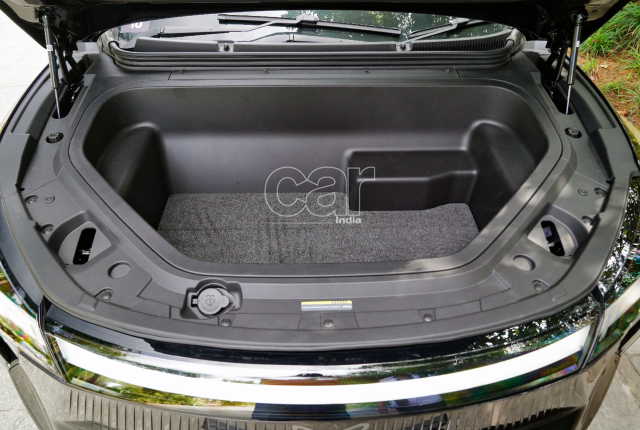
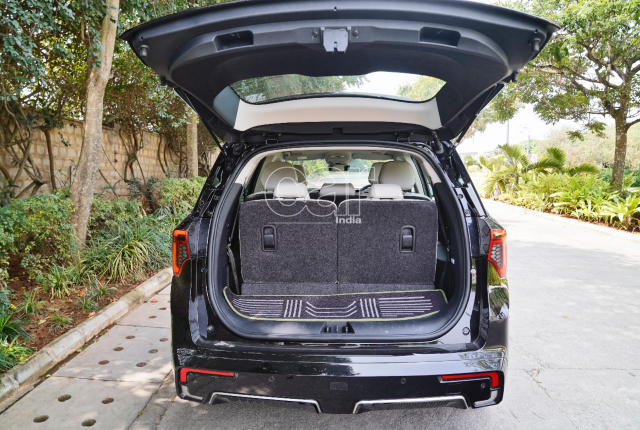
As far as practicality is concerned, there are many large door pockets and a decently-sized cubbyhole around the centre console. This being a seven-seater SUV, with all three rows of seats up, you’ll have to get a little creative even with duffle bags as boot space isn’t the most useful. But if you put down the third-row seats, you get up to 527 litres of space which is more than enough for airport runs. If that’s not enough, there’s actually a usable 150-litre frunk with a loading capacity of up to 60 kg to comfortably store small bags. Not everything is sunshine and rainbows with the XEV 9S as the beige theme will make maintenance that little bit harder and the HVAC controls being limited to the touchscreen infotainment screen can be distracting.
Getting truly underneath the skin of the Mahindra XEV 9S, since it is based on the INGLO platform, it doesn’t come as a surprise that it retains the 59 kWh and 79 kWh battery pack options as well as the 170-kW (231-hp) and 210-kW (286-hp) rear-wheel drive electric powertrain options from the other EVs based on this platform. That being said, the XEV 9S debuts a 70 kWh battery pack paired to a 180-kW (245-hp) electric motor on the Pack Two above variant. Does the seven-seater layout and the different body style make a difference to the driving dynamics? We drove around the outskirts of Bangalore to find out.
Our test car was the 79 kWh battery pack option equipped with the 210-kW (286-hp) rear-wheel drive electric powertrain and fortunately, the driving experience is quite familiar. Despite it being a rear-wheel drive setup, acceleration isn’t like flipping a light switch, instead it’s linear so you’re in full control. Nevertheless, if you demand serious performance especially while executing overtakes, the XEV 9S responds accordingly.
A key difference however does come in how it rides. Yes, the semi-active suspension does help keep the ride relatively plush and absorb bad bumps like its nothing, owing to a soft-bias setup. It also feels decently planted while attacking high-speed bends, with the feedback from the steering wheel light, yet responsive. That being said, while tackling undulated roads in a straight line, there is a bit of a wobble during post-bump recovery, which can get a little annoying for occupants with motion sickness. What I was most impressed with in the XEV 9S was the NVH levels as any road or background noise was largely silenced which is what you need for a peaceful luxury experience inside.
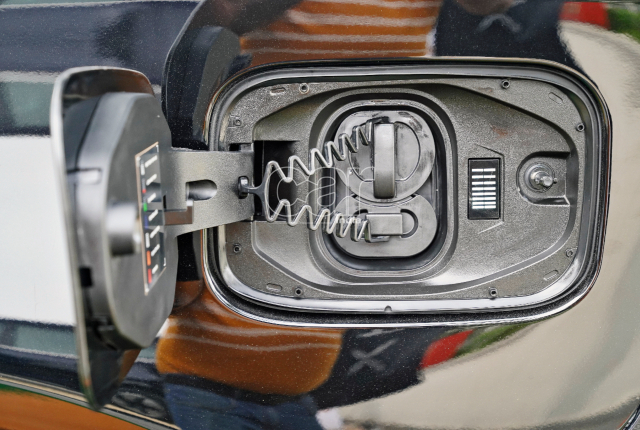
Mahindra claims an MIDC Part 1+Part 2 range of up to 679 km and real-world range of up to 500 km on a single charge with this setup. Unfortunately, we didn’t really get to properly test out its range capabilities since our time with it was short, so stay tuned for a future road test.
With prices ranging from Rs 19.95 lakh to Rs 29.45 lakh (ex-showroom), it’s hard to not consider it a good deal for a seven-seater electric SUV. It is an all-rounder in the sense that it has a strong presence and looks modern without losing a rugged charm of a Mahindra SUV. Yes, it has all the bells and whistles of the XEV 9e, but it retains all the good parts of that coupe-SUV while also gaining the sensibilities and practicality of a seven-seater SUV. On top of that, it is the more affordable alternative too. Nevertheless, if you are one who prefers something radical to stand out, then the XEV 9e is the one to pick, and if you’re looking for something more conventional and sensible, then the XEV 9S is a better selling point for a family-friendly seven-seater SUV. Right now, it doesn’t have any true rivals, but it can be considered an alternative to the likes of the Tata Harrier.ev.









Leave a Reply