


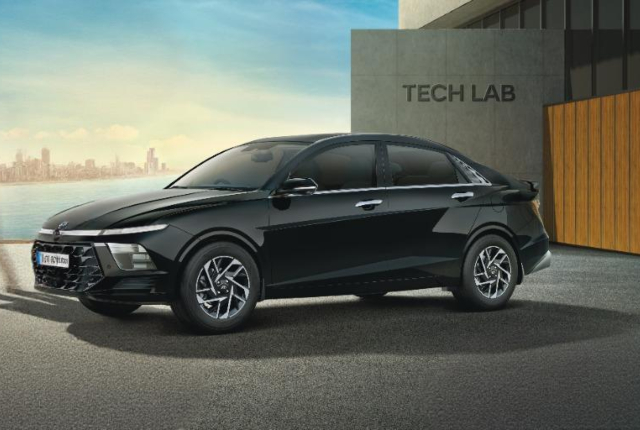
The updated Hyundai Verna is priced from Rs 10.98 lakh to Rs 18.25 lakh (ex-showroom) with a fair number of changes that is hard to notice from the naked eye
The Hyundai Verna has soldiered on quite nicely as one of the few mid-size sedans in a country that is dominated by SUVs. Nevertheless, a proper update was due and it’s here with prices ranging from Rs 10.98 lakh to Rs 18.25 lakh (ex-showroom). From a first look, it doesn’t seem like much has changed but dive deeper into the details, and there are a fair bit of additions, like for starters, the variant lineup being rejigged, with the nomenclature now ranging from HX2 to HX10.
| Variant | Petrol | Turbo-petrol | ||
| MT | CVT | MT | DCT | |
| HX2 | Rs 10.98 lakh | – | – | – |
| HX4 | Rs 12.25 lakh | – | – | – |
| HX6 | Rs 13.19 lakh | Rs 14.40 lakh | – | – |
| HX6+ | Rs 13.81 lakh | Rs 15.02 lakh | – | – |
| HX8 | Rs 14.88 lakh | Rs 16.09 lakh | Rs 16.28 lakh | Rs 17.62 lakh |
| HX10 | – | Rs 17.15 lakh | – | Rs 18.25 lakh |
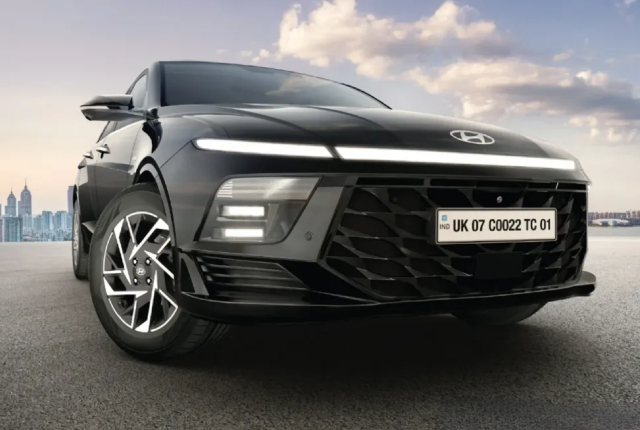
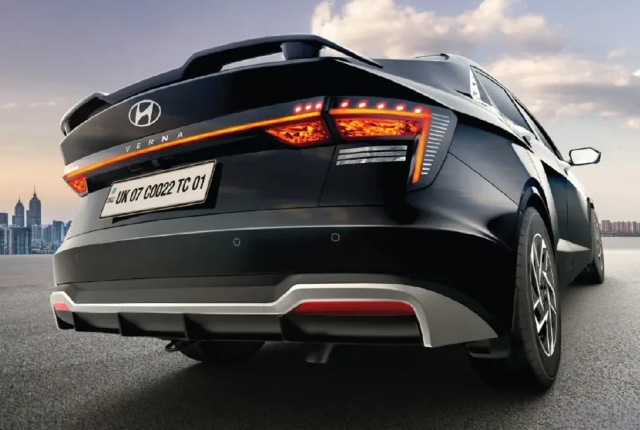
On the outside, the updated Verna looks largely identical to the model it replaces, but at the front there are some revisions to the front bumper and you now get LED projector headlamps. From the sides, the coupe-ish silhouette remains, apart from a new design for the 16-inch alloy wheels. Rounding off the exterior changes are minor tweaks to the rear bumper and new Classy Blue and Titan Grey Matte body shade options added to the Verna’s colour palette that already includes Starry Night, Atlas White, Titan Grey and Titanium Black.
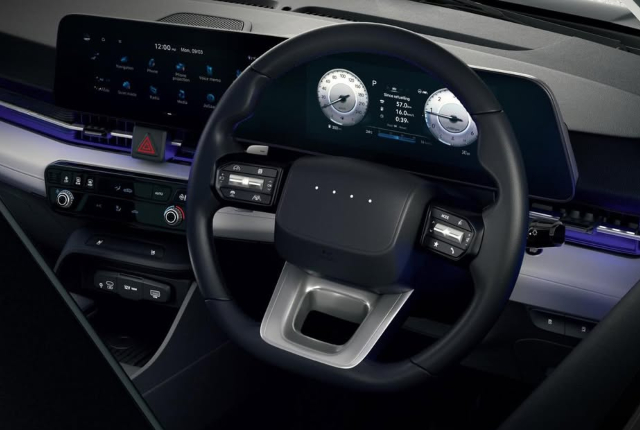
Inside, the most visible change is to the steering wheel that now sports four dots that mean ‘H’ in morse code, like is the case on the Venue. Elsewhere you still get the large slab that houses the 10.25-inch touchscreen infotainment system and 10.25-inch digital instrument cluster, leatherette upholstery as well as the dual-tone black and white cabin theme.
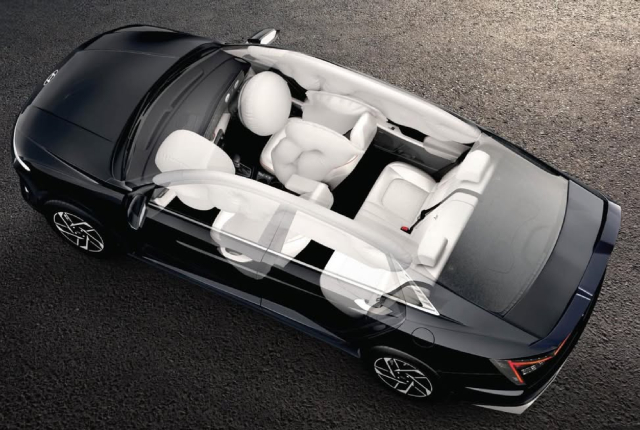
There’s more kit onboard the updated Hyundai Verna starting with a memory function for the eight-way powered driver’s seat, a four-way powered co-passenger seat, rear window sunshades and a powered tail gate. These are fine additions to an already expansive features list that includes wireless smartphone connectivity, automatic climate control, and electric sunroof, ventilated front seats, an eight-speaker Bose sound system, and multi-colour ambient lighting. In the realm of safety, there are important additions like a 360-degree camera, seven airbags, a blind spot monitor and a dashcam.
What remains unchanged are the powertrain options, which include the 115-hp 1.5-litre naturally aspirated and 160-hp 1.5-litre turbo-petrol engines. Both get a six-speed manual gearbox as standard, with the naturally aspirated petrol motor getting a CVT automatic option, with the turbo-petrol engine getting the choice of a seven-speed DCT.
All these updates to the Hyundai Verna, is proof that Hyundai won’t hesitate to give its sedans updates to try and regain their mojo in an SUV-dominated environment. The Verna should be better equipped against its competition that includes the Skoda Slavia, Volkswagen Virtus and the Honda City.







Leave a Reply