


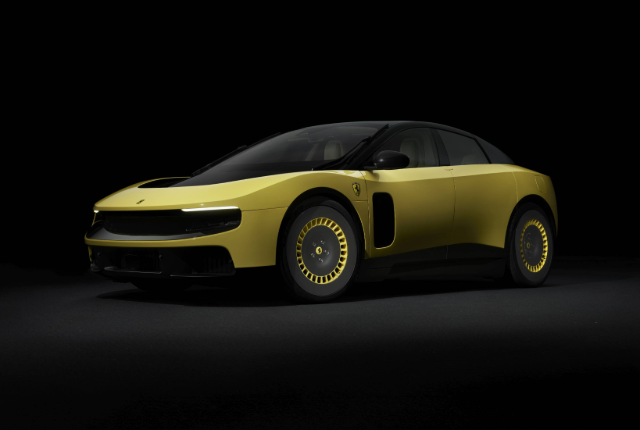
Having showcased its chassis and key components in October 2025, followed by the interior in February this year, Ferrari has finally taken the wraps off its first all-electric car, the Ferrari Luce (pronounced “loo-chay”).
Story: Salman Bargir
On May 25, 1947, Ferrari secured its first-ever race victory with the Ferrari 125 S at the Gran Premio di Roma held at the Baths of Caracalla circuit. Seventy-nine years later, once again in Rome, Ferrari has unveiled its first-ever all-electric model – the Ferrari Luce.
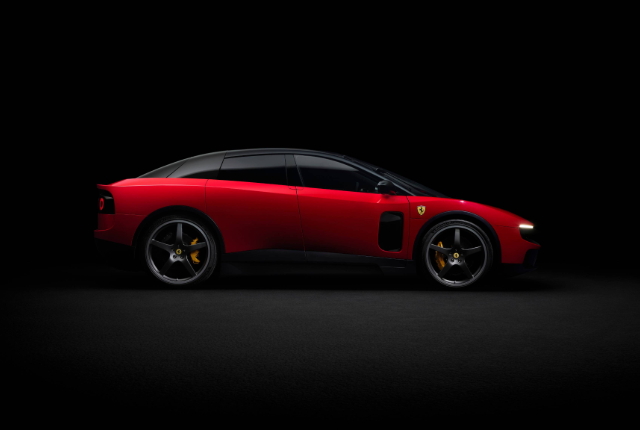
Departing from its conventional lineup, Ferrari sought to establish an entirely new design language with the Ferrari Luce, one that would redefine what a Ferrari could be in the electric era. To achieve this, the project was entrusted to LoveFrom, the creative collective led by Sir Jony Ive, former Chief Design Officer at Apple and the designer behind iconic products such as the iPod, iPhone and iPad.
Developed from a blank slate, the Ferrari Luce was conceived free from the legacy and constraints of previous Ferrari designs, marking the first time a Ferrari has been engineered entirely around electric technology.
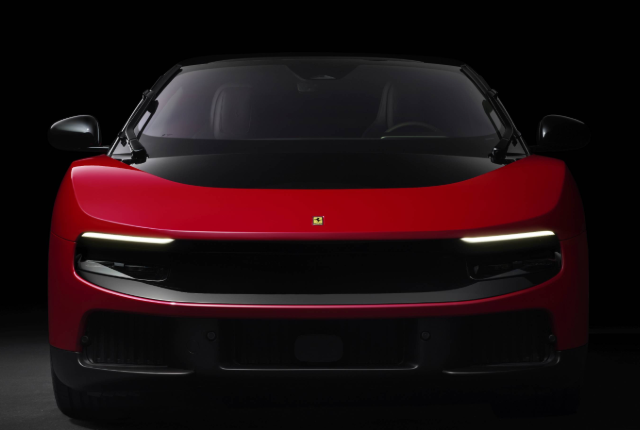
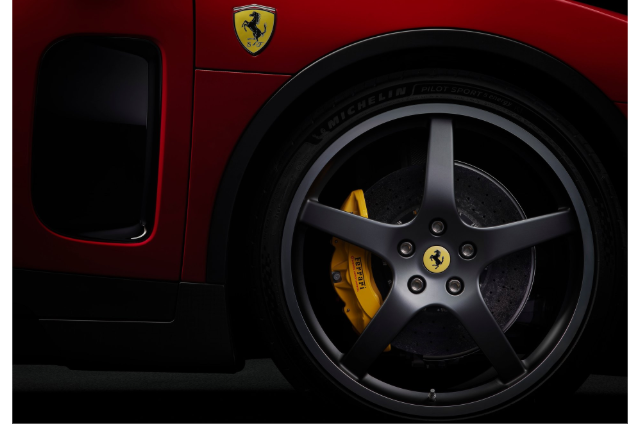
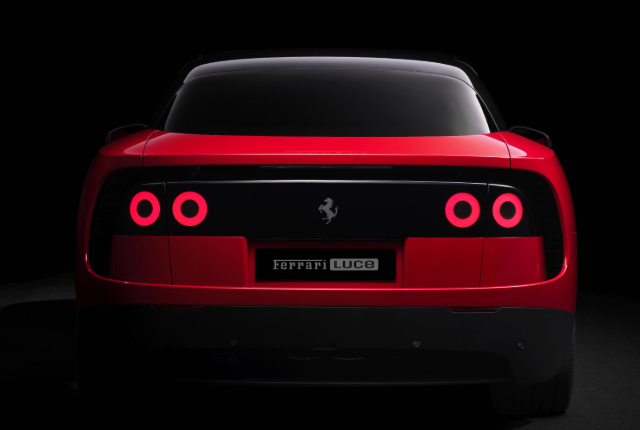
On the outside, the Ferrari Luce features a large glasshouse with a shell-like form that extends below the beltline and stretches towards the extremities of the car. Floating above and around this glass silhouette are the front and rear aerodynamic wing elements. The headlamps, along with the halo-style tail-lights inspired by the Ferrari 360 Modena and Ferrari 458 Italia, are seamlessly integrated into the primary body surface with a transparent finish. Along the sides sit two active grille sections for the water radiators, aiding the vehicle’s thermal management system. There is a choice of two alloy wheel designs: a forged open five-spoke layout or an aerodynamically optimised turbine-style design.
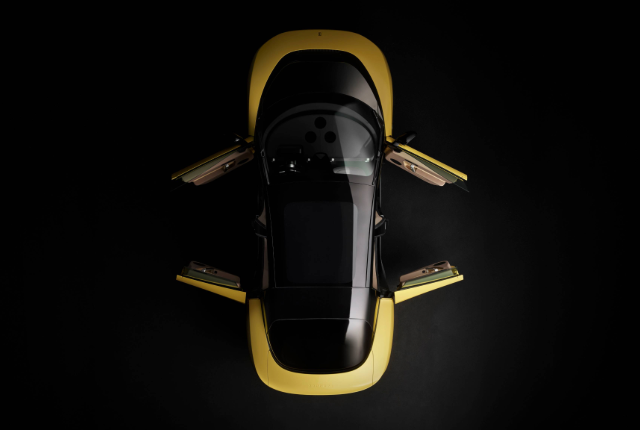
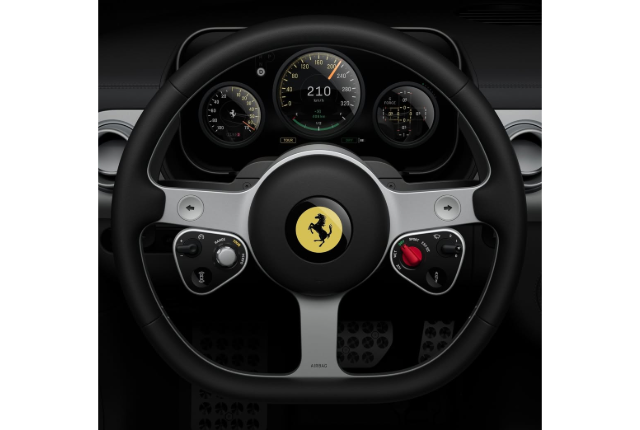
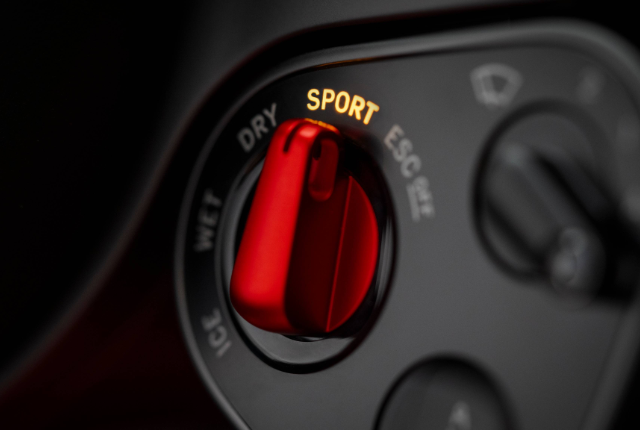
Ferrari says the interior of the Ferrari Luce has been designed around the principles of input and output, with a strong focus on functionality and intuitive interaction. Mechanical buttons, dials, toggles and switches have been integrated with multifunctional digital displays, with the controls and screens –three in total– arranged so that the most essential commands and feedback remain directly within the driver’s line of sight. The steering wheel, torque-control paddles and binnacle – a multi-layered display unit combining digital and mechanical instrumentation that moves along with the steering wheel – collectively form the steering assembly. The three-spoke steering wheel features analogue control modules and is crafted from machined and hand-finished 100 per cent recycled aluminium with an anodised finish, complemented by glass elements and a leather-wrapped grip. It also incorporates Ferrari’s signature five-position Manettino drive-mode selector, offering settings ranging from “Ice” to “ESC Off”, while introducing a new “Dry” mode for the first time.
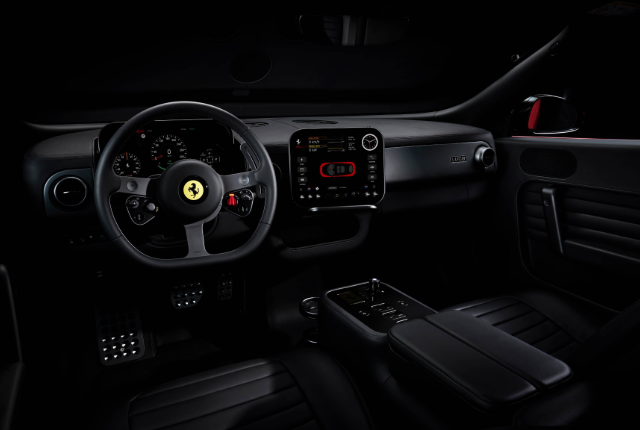
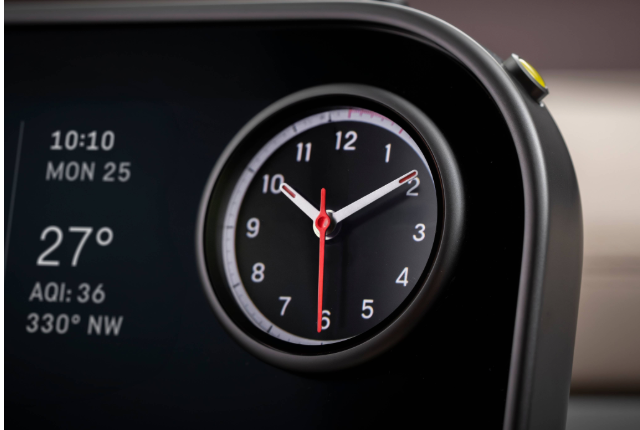
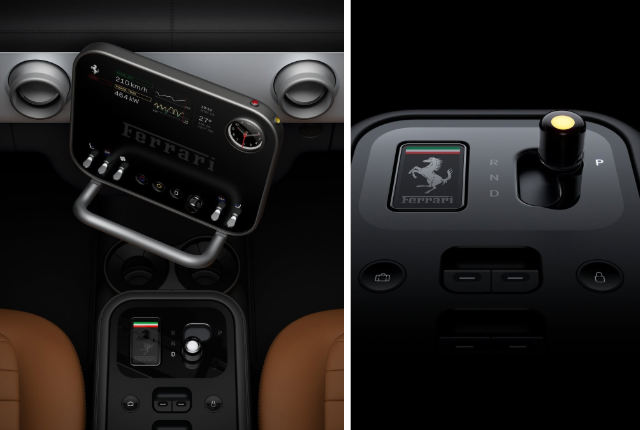
At the centre of the dashboard sits a control panel that combines physical buttons with a digital touchscreen interface. An anodised aluminium bracket extends from the rear to form both a handle and a palm rest, allowing the panel to pivot towards either the driver or co-driver.
Core functions such as climate control, vehicle settings, seat heating and ventilation can be operated through the physical controls, while the touchscreen provides access to more detailed climate functions, media and navigation settings.
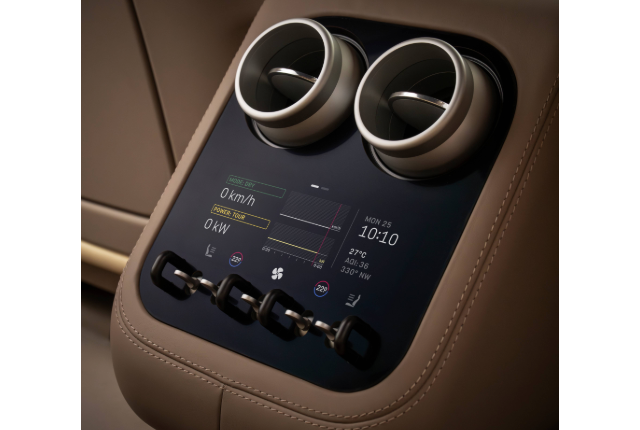
The central tunnel integrates the key housing, drive-mode selector, armrests, storage compartment and rear-seat controls into a single cohesive unit. The start-up sequence begins with the insertion of the key, which is crafted from Corning Gorilla Glass — claimed to be the first automotive application of the material, engineered for enhanced durability and scratch resistance. The key also features “E Ink” technology that allows it to change colour, marking a world-first application in the automotive industry. Docking the key into its designated slot powers up the vehicle and unlocks the shifter, signalling that the car is ready to drive.
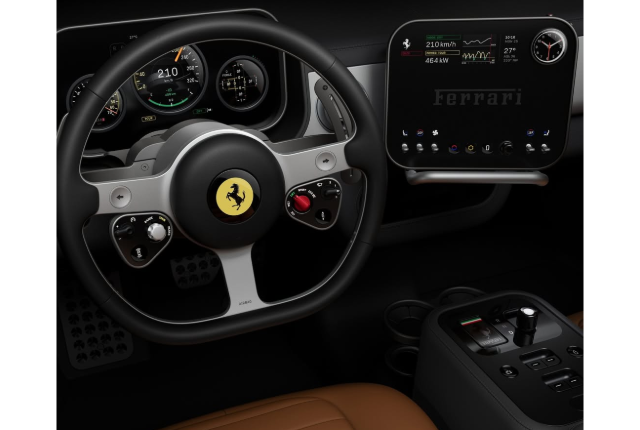
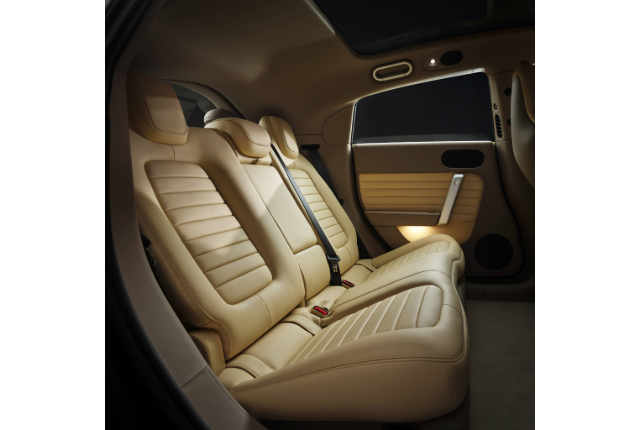
All seats are independently power-adjustable and can be specified with a choice of two upholstery patterns, four fabric options and multiple colourways. The front seats are heated and can also be optioned with a massage function. The cabin is equipped with a 21-speaker audio system powered by Ferrari Audio Signature, a new software-driven sound platform featuring five presets — “Studio”, “Concerto”, “Immersive”, “Opera” and “Electronic” — along with a dedicated “Solo” mode.
The project encompasses more than 60 patents and, staying true to tradition, Ferrari has developed and manufactured the main components in-house. The 122-kWh battery pack, comprising 210 cells, supports DC fast charging of up to 350 kW and can replenish 70 kWh of charge in just 20 minutes. Power comes from four independent electric motors; two mounted on each axle, with every wheel benefiting from its own dedicated motor and torque actuator. Combined, the setup produces 1,050-hp and 990-Nm of torque (11,500 Nm at the wheels). This enables the nearly five-metre-long, two-metre-wide and 2,260-kg Ferrari Luce to accelerate from 0 to 100 km/h in a claimed 2.5 seconds. The sprint from 0 to 200 km/h is claimed to take 6.8 seconds, while top speed is rated at over 310 km/h.
Mechanical highlights include an independently steering rear axle and an active suspension system derived from the Ferrari F80. The Ferrari Luce also debuts a new Vehicle Control Unit (VCU) designed to integrate powertrain and vehicle dynamics systems. The unit is said to update actuation targets 200 times per second, to coordinate efficiency strategies alongside Ferrari’s new Side Slip Control System X (SSCSX) traction-control technology.
With long driving range being a key objective, minimising aerodynamic drag played a crucial role in shaping the architecture of the entire Ferrari Luce. The car’s convex surfaces have been sculpted to remain smooth, continuous and largely uninterrupted in order to optimise airflow efficiency. To further reduce aerodynamic disturbance, the windscreen wipers are parked along either side of the windshield rather than at the base. The result, according to Ferrari, is the lowest drag coefficient ever achieved on a Ferrari road car.
Driving dynamics are further enhanced by advanced torque vectoring and torque-shift management systems. Torque vectoring is divided into two key functions. The first is a virtual differential (vDiff) operating on the rear axle. The second is Ferrari Lateral Optimisation Wheeltorque (FLOW), an active torque-vectoring system functioning across both axles. When exiting a corner, FLOW manages the rear torque differential to maximise traction while simultaneously adjusting the front differential to naturally balance understeer and oversteer characteristics. During corner entry, the system distributes negative torque to stabilise the car while also optimising energy recuperation.
Torque management, meanwhile, automatically adjusts the available torque based on driving conditions, driver inputs and five selectable levels. The right-hand steering-wheel paddle controls power delivery, simultaneously maintaining progressive acceleration, while the left-hand paddle increases regenerative braking and deceleration intensity.
Thermal management has been optimised through an integrated ecosystem based around three architectures and three primary mediums — coolant, water and air. The system employs an advanced control logic that minimises overall energy consumption by balancing aerodynamic drag against the electrical load generated by pumps and compressors.
Ferrari has attempted to equip the Ferrari Luce with the best available technological advancements across every aspect of the vehicle. The battery cells are integrated into a cell-to-body structure to optimise weight distribution and overall structural rigidity. Another first for the brand is an elastically mounted rear subframe; a structural framework connected to another base using flexible, compliant components like springs, rubber bushings, or dampers instead of rigid fasteners, featuring Ferrari’s largest-ever hollow monobloc casting made from recycled aluminium. As a result, the chassis, body and battery function as integral elements of a unified system engineered to maximise both mechanical performance and energy efficiency.
The Ferrari Luce comes with a dedicated eight-year warranty covering key electric powertrain components, including the front and rear drive axles, battery pack and charging system. Like other Ferraris, it can also be availed with the brand’s seven-year maintenance programme. Connectivity features include a dedicated MyFerrari Luce app, based on the existing MyFerrari platform, but enhanced with a redesigned interface and additional functionality tailored specifically for the Luce.
While the design of the Ferrari Luce has proven polarising and drawn mixed reactions from automotive enthusiasts, it is unlike any Ferrari before it — perhaps exactly as intended. The Luce departs significantly from the styling and character traditionally associated with Ferrari models, embracing an entirely new identity shaped around electric mobility. Bookings for the Ferrari Luce have already commenced in select international markets, with prices starting at €550,000 (approximately ₹6.12 crore before duties and taxes). Launch colours for the Ferrari Luce include Azzurro La Plata, Giallo Luce, Rosso Dino, Bianco Artico and Rosso Fiammante.
The Ferrari Luce marks the culmination of the Maranello-based manufacturer’s multi-energy strategy. “Luce”, which translates to “light” or “illumination” in Italy, reflects Ferrari’s vision for the future — one the company hopes will help light the way forward.
Also Read: All-new Mercedes-AMG GT 4-Door Coupé Unveiled In an Electric Avatar





Leave a Reply