


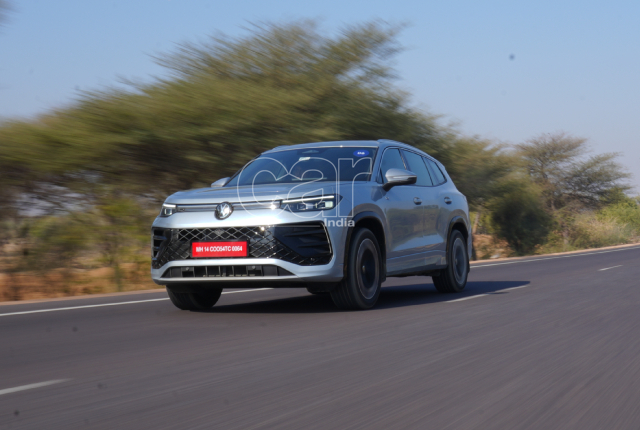
Is the Volkswagen Tayron R-Line a worthy return to the full-size flagship SUV segment for the carmaker in India, or is this just a stretched Volkswagen Tiguan R-Line? We sampled it in Jaisalmer to find out
Story: Gaurav Davare
Photography: Siddharth Dadhe
Full-size seven-seater sport utility vehicles (SUV) is not something new for Volkswagen in India. We’ve seen the Touareg, and the most recent example was the Tiguan Allspace. But the latter has been absent from the VW showrooms since 2021, so there was a void in this space, from Volkswagen’s perspective. Well, that looks set to be filled with Volkswagen bringing in another new nameplate to India after the Golf GTI, the Tayron R-Line.
Now, what is the Tayron R-Line? Consider it a seven-seater alternative to the Tiguan R-Line, effectively replacing the Tiguan AllSpace in India. The question is, is this new nameplate worthy to be considered as a seven-seater full-size SUV, or is this nothing more than a stretched Tiguan R-Line? Well, we got a fantastic opportunity to test out its credentials around the desert-studded scenic routes of Jaisalmer, the golden city.
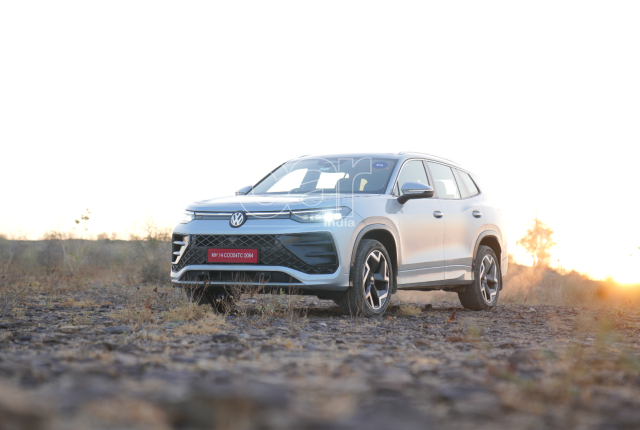
If you put the Tiguan R-Line and the Tayron R-Line side-by-side, you’d be hard pressed to find any significant exterior differences between the two, because both have the sporty R-Line theme that comes with a smattering of badges, blacked-out elements all over, and an aggressive set of bumpers. Fortunately, the finer details reveal the Tayron R-Line’s unique identity, starting with a nose that has a bit more of a boxy notch around the bonnet, giving off a boxier SUV stance. Of course, this is helped by the menacing Matrix LED headlights, the connected daytime running lights (DRL), and the Volkswagen logo, as well as the strong character lines running along the sides of the Tayron R-Line.
Speaking of the sides, the big boxy SUV persona is retained, and the swanky 19-inch alloy wheels from the Tiguan R-Line have also been retained. The most obvious and biggest difference lies in the longer rear three-quarter area, which has been done up nicely, with the roof line now flowing with the chunky haunches. Dimensionally, it is 253 millimetres longer, with its wheelbase 109 mm longer than the Tiguan R-Line’s, the effect being spaciousness inside, but we’ll get to that a little later. A particular change I appreciate at the rear is in the form of revised internals for the connected LED tail-lights that certainly look more modern, nicely complemented by the illuminated logo. Also, you can choose from up to three different themes for both front and rear lighting.
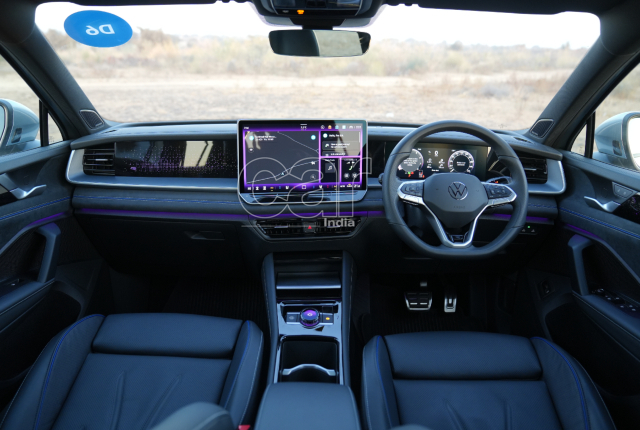
Step inside and, unsurprisingly, the overall layout is very similar to that of the Tiguan R-Line, which isn’t a bad thing, as that classic European car theme of a sorted build quality and fit-and-finish with soft-touch materials around the dashboard and the door pads is very much evident, and it matters for the premium factor. Adding to this premium experience is that very reassuring thunk while shutting the door.
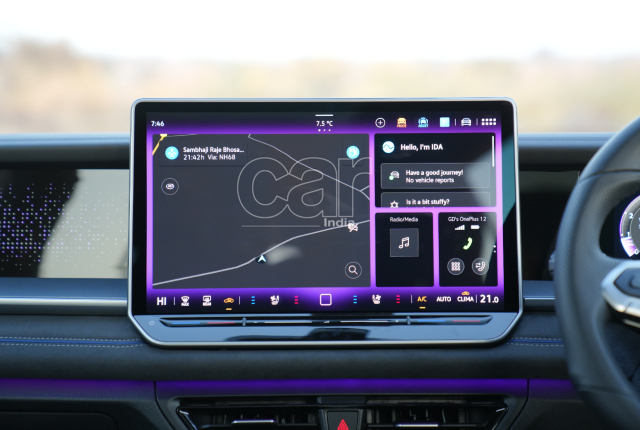
The bits that have been retained also include features such as the 15-inch touchscreen infotainment system, with wireless smartphone connectivity that has lag-free operation with crisp colours and high resolution. Unfortunately, like the Tiguan R-Line, it controls too many functions of the SUV. I would’ve preferred a balance of physical controls, plus the touch-sensitive climate and volume controls don’t feel tactile to use. Other retained bits include the 10.25-inch digital driver’s display, two wireless mobile charging pads, Type-C charging ports, plenty of storage spaces, three-zone climate control, and a head-up display.
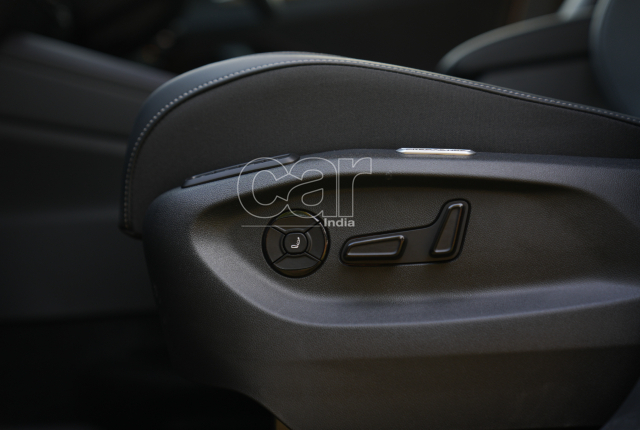
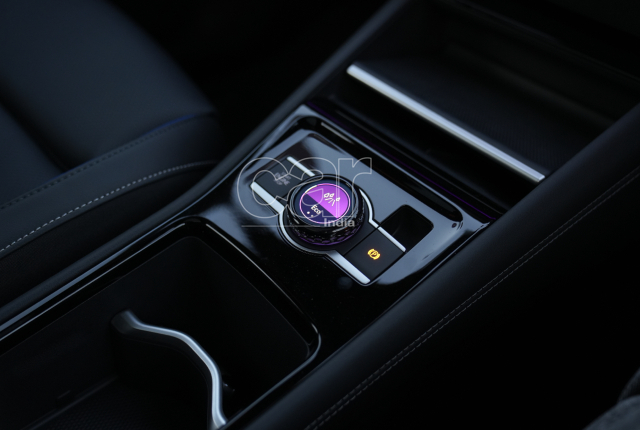
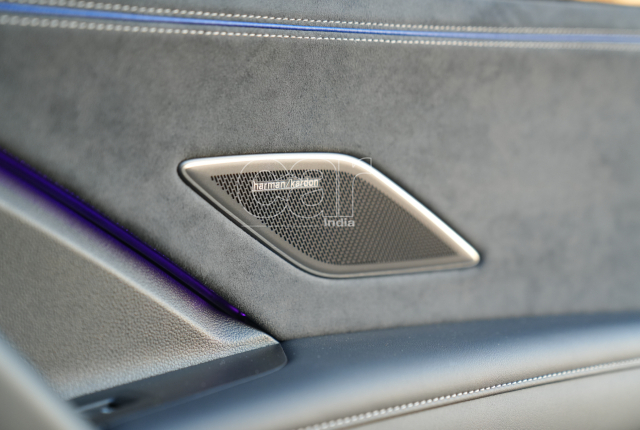
The Tayron R-Line, being a flagship Volkswagen SUV, offers more kit as compared to the Tiguan R-Line, some of them being sensible additions. For example, the front seats get 12-way powered adjustment, and, apart from having a massage and heated functions, you now get a ventilated function that makes far more sense for Indian conditions, although here in Jaisalmer, at this time of the year, the heated seats do come in handy. There’s now a more premium 11-speaker Harman Kardon audio system that will soothe the audiophiles, and we finally have a multi-view 360-degree camera with a fairly decent resolution. Another fundamental feature addition is a powered tail-gate.
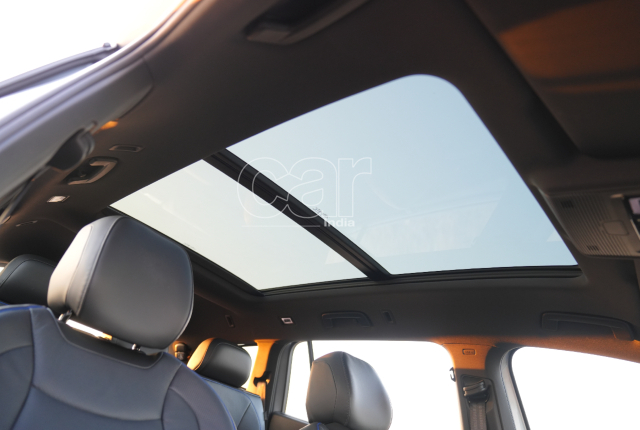
A flagship seven-seater SUV experience isn’t complete without a comfortable seating experience, and the Tayron R-Line ticks that box at least so far as the front row is concerned. There’s now leatherette upholstery that looks and feels more premium, and the seats themselves have a nice and snug side bolstering to accommodate multiple body styles. They’re also decent enough to keep you comfortable on long journeys.
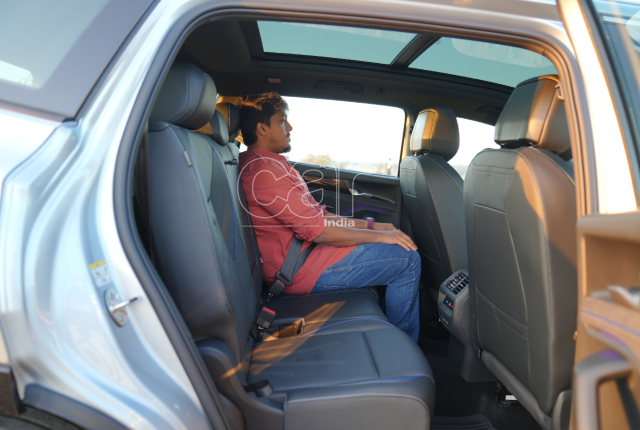
The second-row seats also feel similarly comfortable, and, with the driver’s seat set to my position, there’s adequate leg-room, knee-room, and head-room for my height (5’ 9”). Taller occupants can also be accommodated easily. Fitting in three individuals here, however, can become a little uncomfortable. That said, these seats have a sliding and reclining function to help ease things. To further add to the sense of space inside, the large panoramic sunroof and the 30-colour ambient lighting nicely spruce up the ambience. There’s also the added convenience of sunshades, a nifty cupholder, a centre headrest, plenty of storage spaces, gesture-controlled cabin lights, and a-c vents with dedicated climate controls.
A key point in this flagship SUV is the third-row experience. Unfortunately, it is best suited to children. Even with the second-row seats set all the way forward, getting in the third row is a bit of a task, and there’s not a lot of room to work with the two bench seats, not helped by the high floor position.
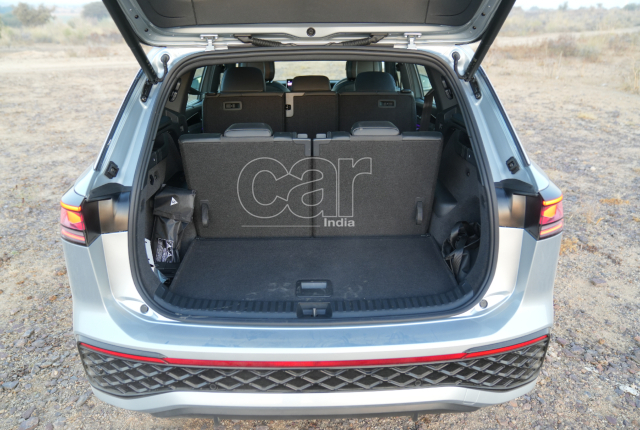
That lack of third-row space has been made up for by boot capacity. Despite being a seven-seater layout, there’s decent space with all the seats up. Yes, the lip is on the higher side, but it’s also flat, so storage is a little easier. In fact, get the second and third rows down, and you have a very healthy 850 litres of boot volume. Get both rows of seats down, and that goes up to 1,905 litres. Overall, it’s more than enough to satisfy the luggage requirements for heavy-duty ski gear or a family road trip. Considering the lack of seating space in the third row, those seats will likely be folded down in most scenarios, making this a five-seater with plenty of boot volume.
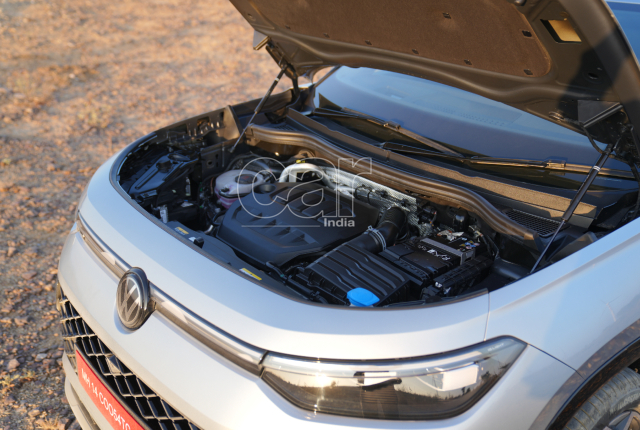
Under the bonnet, you get the same powertrain as that in the Tiguan R-Line, which is a 2.0-litre TSI EVO turbo-petrol engine capable of 204 hp and 320 Nm of torque. This is paired to a seven-speed DSG and gets an all-wheel drivetrain. Has the third row made a difference to the performance dynamics? Fortunately, it hasn’t really affected things, because this rev-happy powertrain can do a calm cruise or a quickstep soiree rather effortlessly. More notably, while running close to triple-digit speeds and trying a roll-on acceleration test, the SUV just keeps pulling along effortlessly. The seven-speed DSG complements this experience with smooth and quick shifts.
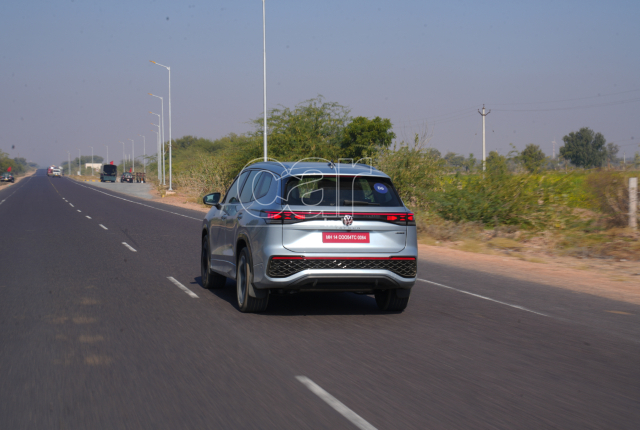
What was even more impressive was the way this SUV rides and handles, to the point that you forget it’s a full-size SUV, even though it doesn’t get the Dynamic Chassis Control Pro system from the Tiguan R-Line. With the suspension on the stiffer side, it can dance around corners with precision and ease, while remaining planted, especially around high-speed bends. There are six different driving modes, including the Individual mode that you can adjust for the comfort or sporty level of the steering feedback.
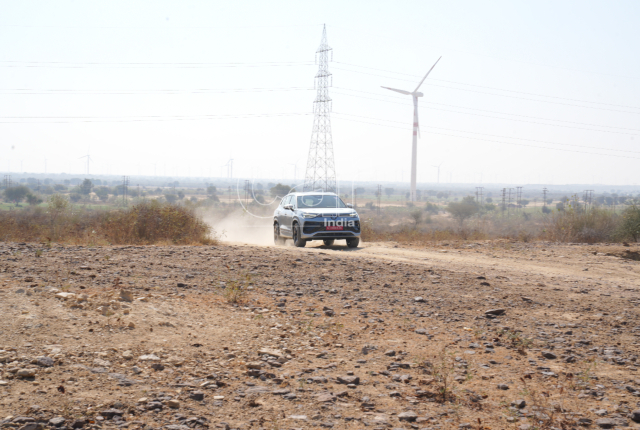
Yes, this sporty suspension set-up means you will notice some road noise while traversing bad roads and speed-breakers, but the SUV remains stable throughout. So far as off-road chops go, you get a 4MOTION intelligent all-wheel drivetrain system, and it does a satisfactory job to tackle mild off-road patches. It isn’t really meant to tackle extreme scenarios, and that’s not really an issue considering the seven-seater flagship SUV segment it belongs to.
The nice mix of clear open stretches and some rustic roads was a nice combination to test the Level 2 ADAS suite that includes things like Park Assist, Lane Keeping Assist, Adaptive Cruise Control, and Auto Emergency Braking. While they all functioned as they should, the sensitivity levels could be toned down a little for Indian conditions. Nevertheless, they complement other key safety features such as nine airbags, ESC, and hill ascent and descent assist.
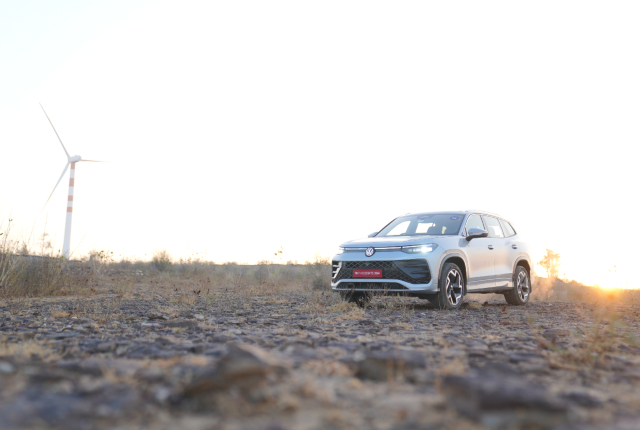
The Volkswagen Tayron R-Line’s price is yet to be announced, but it will be a crucial factor for its success in India. This will be a completely knocked down (CKD) SUV locally assembled, and not a completely built-up unit (CBU) like the Tiguan R-Line. Thus, one may expect a competitive price tag, especially compared to its cousin, the Škoda Kodiaq. Sure, it doesn’t quite have the ideal third-row experience, but it has sensibly solved a lot of the issues in the Tiguan R-Line in terms of fundamental features for this segment while continuing to offer a fairly engaging driving experience. Priced right, it could be a worthy contender as a seven-seater SUV.







Leave a Reply