


Can this baby Swede still offer the Volvo experience without big compromises? We spent some time with it in Jaipur to find out
Words: Gaurav Davare
Photography: Sanjay Raikar
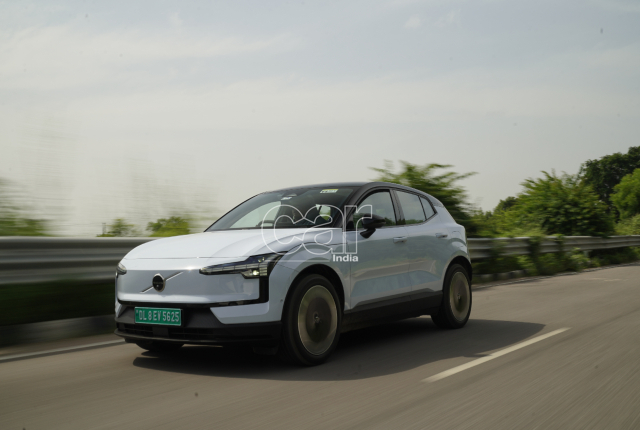
In India if one wants to opt for an entry-level Volvo, the EX40 electric SUV has been the choice for some time now. There is however an even lower Scandinavian entry point for a Volvo EV from 2023 in the form of the EX30. While it’s not launched yet in India, we’ve gotten the opportunity to sample it in the country, specifically Jaipur. Since Volvo EX30 is a baby Swede, the real question is whether this entry-level offering can continue to offer the Volvo experience we’re familiar with, without serious compromises? Let’s find out.
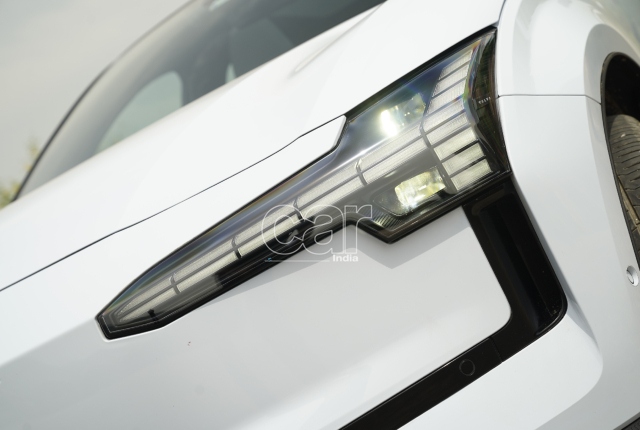
One can straightaway tell that the Volvo EX30 is unmistakably Volvo as the marquee’s design philosophy prides on subtle, sleek and understated elegance without needing to be shouty about it. Since this isn’t an electric SUV based on an internal-combustion-engined model, the closed panel is considerably smoother and flows with the rest of the body nicely. Another Volvo trope are the Thor-hammer DRLs, but have rectangular elements similar to the EX90. I particularly like how the front fender really exaggerates, flowing into the wheel arch and almost bulging into the hood.
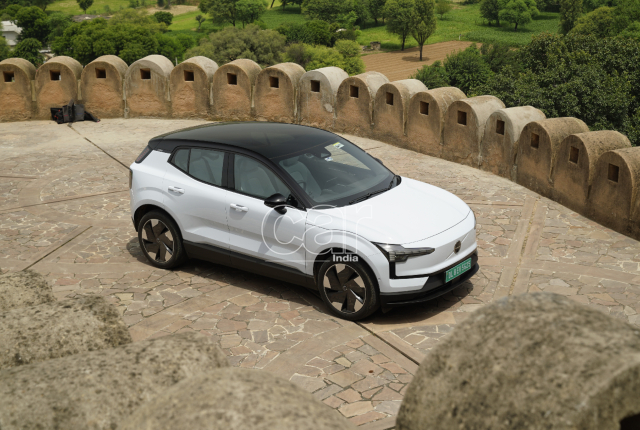
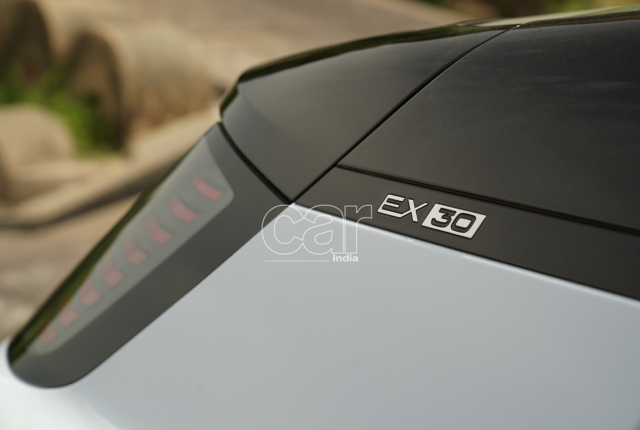
It is from the side angle where the EX30 really brings out its SUV character. The big 19-inch wheels and protruding wheel arches really fill the proportions nicely, giving the Volvo EX30 proper SUV characteristics. At 4,233 mm it is almost as long as the Hyundai Creta. The Cloud Blue definitely gives off Scandinavian vibes as it may look white or light gray under certain lighting conditions, but there’s a small tinge of blue as well. To complement this shade, there’s blacked-out elements on the roof, pillars and the ORVMs, which have a seamless finish. Moving towards the rear, it looks modern especially with those vertical lighting elements that remind me of the EX90 again. Overall, ticks the Volvo boxes on the exterior.
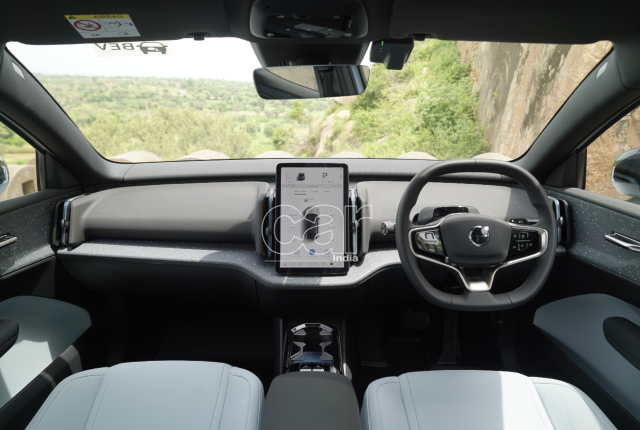
Volvos have generally followed the Scandinavian minimalistic theme in their cabins as the layouts are largely clutter-free. In the Volvo EX30, I’d say they’ve gone a step above as apart from the traditional Volvo vertical AC vents, there’s barely any physical controls. The power window switches for the front and rear occupants are in the centre, which might polarise opinions as I would prefer them traditionally on the doors. Another key point in the cabin is that a fair amount of sustainable materials and plastics have been used, yet it hasn’t really hampered the fit and finish of the cabin as they all feel rather premium.
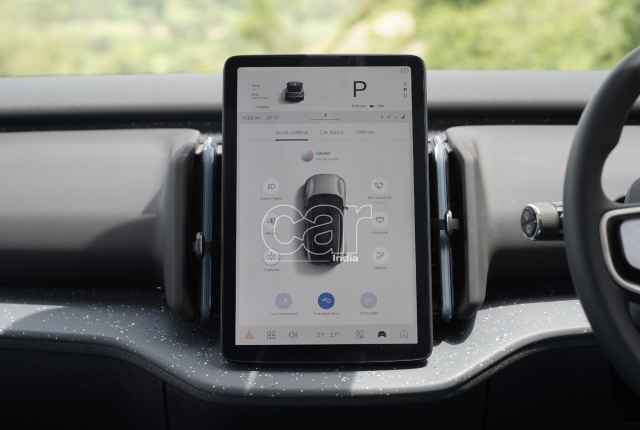
If little physical controls weren’t enough, there is no driver instrumentation behind the steering wheel. That’s because the main attention-grabbing element is at the centre. This 12.3-inch touchscreen infotainment system is larger than the flagship XC90’s unit, making this the largest touchscreen unit for a Volvo in India. Here is where you’ll be looking for important vehicle dynamics information. That’s not all, as while Android Auto is already integrated like on modern Volvos, it finally gets wireless Apple CarPlay.
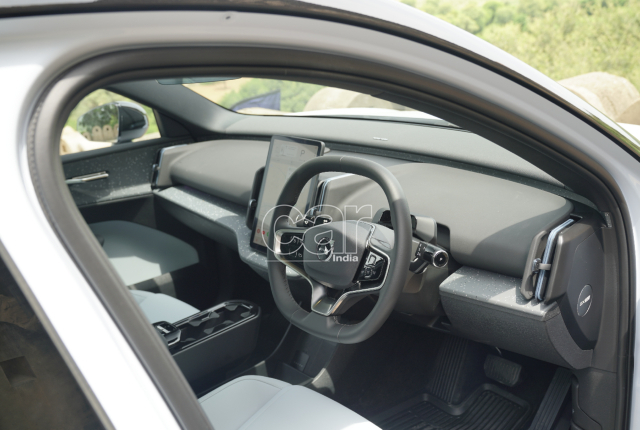
The not-so-fun bit about this touchscreen? You’ll have to rely on it for a big chunk of car functions right down to the ORVMs and even opening the glovebox, although you can set a security pin for the glovebox. Yes, the user interface allows quick access to key car functions, but I would prefer a balance of physical controls as too much reliance on the touchscreen for basic controls feels distracting. Other niceties onboard include a tire pressure monitoring system that now displays live pressure data rather than just alerts, a wireless phone charging pad, instead of a key fob, powered front seats, there’s an NFC card and digital key for ingress and egress, a Harman Kardon sound system with decent audio quality, Scandinavian-themed ambient lighting themes, a dual-zone climate control, a powered tail gate, and an air purifier.
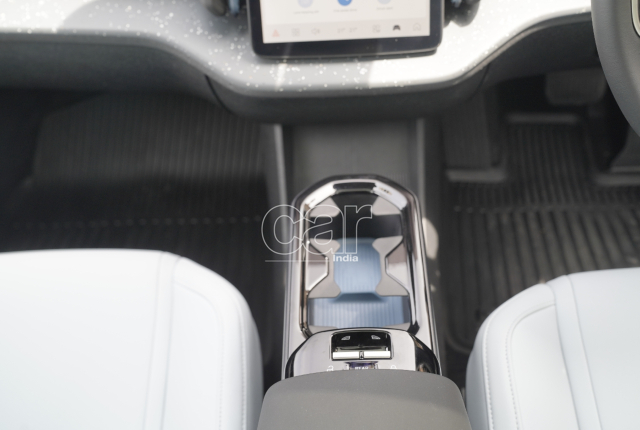
There’s also a bit of IKEA in the Volvo EX30 as since the front speakers are on top of the dashboard, there’s more space for the front door pockets, and there’s a clever assortment of sliding panels and hidden cubicles for storage. These complement the very usable 318-litre boot that can be expanded to 904 litres with the seats folded flat. Those seated at the rear however will find things a bit awkward with the high floor taking away a fair bit of under-thigh support, and this area is only good enough to fit two full-sized adults. Also, it would’ve been better to have a single-pane electric sunroof rather than a fixed glass roof as the cabin can get toasty rather quickly on searing hot days like the day we drove it around in.
Being a Volvo, safety is on brand and this Euro NCAP 5-star rated electric SUV, gets multiple airbags, a 360-degree camera, rain-sensing wipers, hill hold assist, as well as ADAS features like adaptive cruise control, driver attention alert, lane assist, driver door opening alert and auto-parking.
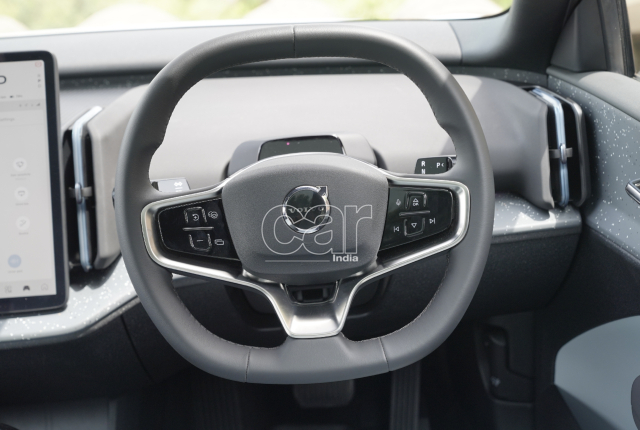
Now, to how the Volvo EX30 feels like to be driven in, and the setup we’re getting for India is the Single-motor Extended Range. This means a single electric motor powering the rear wheels, putting out 272 hp and 343 Nm, paired to a 69 kWh battery pack. Before I get to my impressions on its driving dynamics, I’d like to point out that there are certain fundamental functions of a car that I believe, really shouldn’t be meddled with. The driver instrumentation unit is one of them and with all the important driving information coming from the touchscreen, it can get distracting while driving, which is a bit contradictory in terms of driver safety.
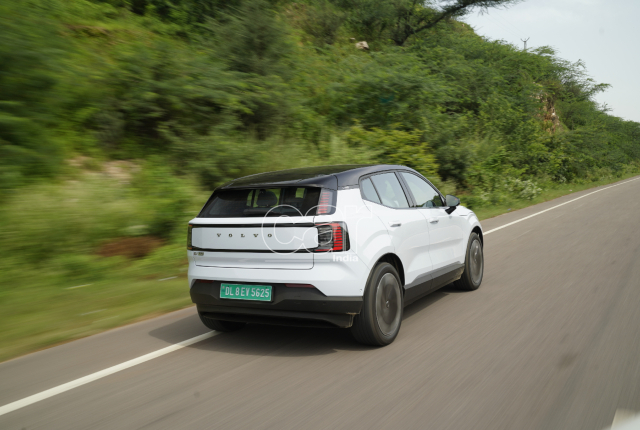
Back to the driving bit. 272 hp doesn’t seem like a lot in EV terms and markets abroad do get a dual-electric motor AWD option making a combined 428 hp, but I feel with an SUV this compact, the single-motor is more than enough for this SUV’s compact stature. With a claimed 0-100 km/h sprint in 5.3 seconds, it feels fairly peppy off the line, yet the power delivery is linear and predictable. Enough to crawl along traffic bottlenecks and cruise along highway roads. It impressively corners with a fair degree of composure and even while the steering is at its firmest setting, feedback feels light, yet precise. Ideally, this could’ve been the standard setting with a firmer option available. Unfortunately, the 19-inch wheels with 245/45R19 tyres mean a fair bit of road noise and with a suspension set up on the stiffer side, it will get noisy in the cabin when you impact speed breakers, or potholes past a higher than necessary speed. That being said, the EX30 doesn’t unsettle itself while tackling these elements. The 177-mm ground clearance is more than enough to travel along Indian roads without much hassle. As for the ADAS sensitivity, it could have been dialled down a little for India as interventions were at times sudden even at their lowest sensitivity settings.
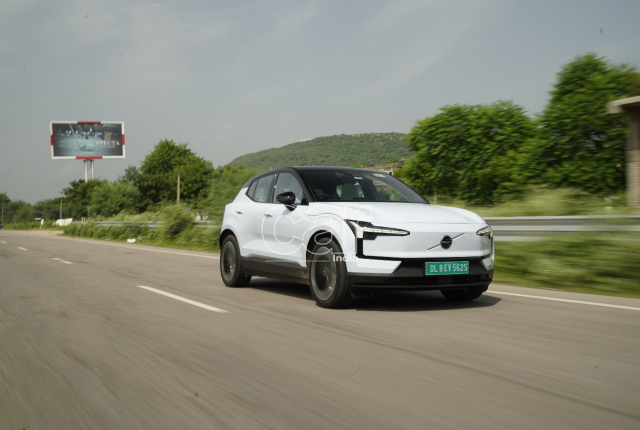
Can the Volvo EX30 go the distance? WLTP-claimed range stands at 480 km on a single charge and I started my drive with a 95 per cent charge and 383 km of range. There aren’t any drive modes apart from a one-pedal mode to maximise energy recovered during regenerative braking and extend range. After 100 km of running I had 252 km of range left, so getting between 300 to 330 km on a single charge is realistic, enough for weekly city duties, but not quite enough for serious long distance outstation trips.
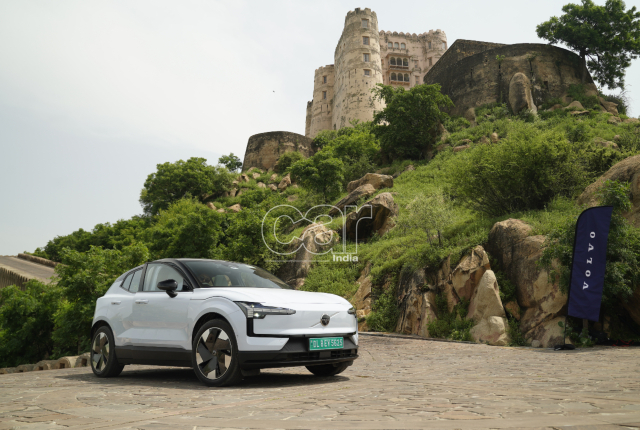
At the end of the day, there are some good things and not so good things about the Volvo EX30. It gains in looks, the cabin’s premium fit and finish, clever storage spaces, a decent amount of features and a rear-wheel drive electric motor that does the job in a smooth and predictable manner. On the other hand, rear seat space isn’t the greatest, too many controls are dependent on the touchscreen, the range will limit this to city driving and it can get quite noisy over rough surfaces. So, pricing will play a key role for the Volvo EX30 to be considered a decent option as an EV, especially against ever-increasing competition in this space with alternatives such as the Hyundai IONIQ 5, Mahindra XEV 9e, BYD Seal, and BMW iX1 LWB. Of course, the answer to that will have to wait until the end of September, when the prices are announced.








Leave a Reply