


What started out as a special edition is now a mantra that applies in more ways than one. The G-Class has received the latest-spec big diesel engine, with more advancements, power, and torque than ever before. We got our hands on it ahead of its launch.
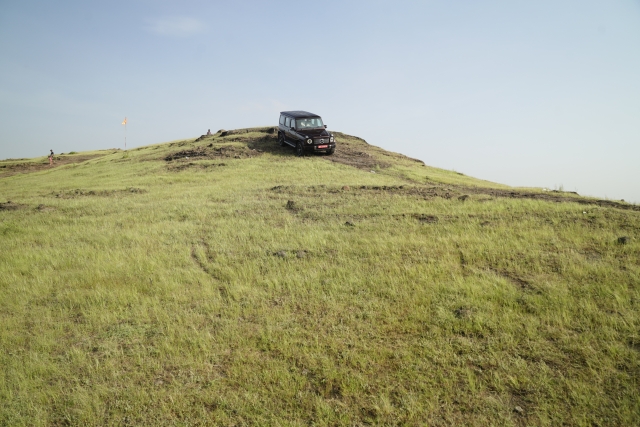
The Geländewagen, German for “off-road vehicle” and often shortened to “G-wagen”, is one of the most iconic symbols of the automotive present. Being in production for 70 years in what could be considered a consistent form—apart from a few nips, tucks, and LED elements outside and a world of changes underneath—the G-wagen has stood the test of time. With a history of service in the military and constant evolution of the car, to keep it not just relevant but also desirable, the G-wagen is the proverbial money tree for Mercedes; every shake drops a new version, or limited edition that doesn’t just carry a hefty price tag but also sells out with a line out the door. The secret? A simple and unchanged formula. An embodiment of the philosophy Das Beste oder Nichts—“the best, or nothing”.
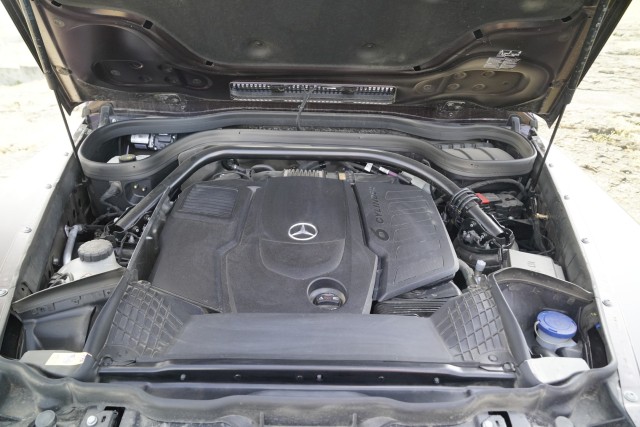
This G-wagen is more or less identical to the G 400 d Adventure Edition that we tested in early 2024. The big change is the engine, which is now the enlarged OM 656 in-line six-cylinder turbo-diesel unit. Where the 400 d displaced 2,925 cubic centimetres (cc) and produced 330 hp and 700 Nm, the new 450 d displaces 2,989 cc and produces 367 hp and 750 Nm—numbers that make it an apt successor to the 15-year-old 450 CDI, a 4.0-litre V8 turbo-diesel engine, offered in the S and GL, but never sold in India. Yes, some of us are used to four-figure horsepower and torque, but that is the reserve of high-end sports cars or über-luxury offerings, so it’s easy to forget that 750 Nm is still a lot of torque, and the fact that it’s coming from a three-litre engine makes it all the more big deal for me. Remember, it was Mercedes that was first to offer a diesel-engine production car. The 260 D from some 90 years ago made about 45 hp from 2.5 litres of displacement. The G-Class started off as the 250 GD with the OM 602 engine—2.5 litres, 84 hp, and 154 Nm—which earned the tag of “the million-mile engine” for its reliability. The W460 generation and W461 military models used this engine. Not much has changed today, at least externally. The block-shaped box continues to thrill and bring smiles to many people across age groups.
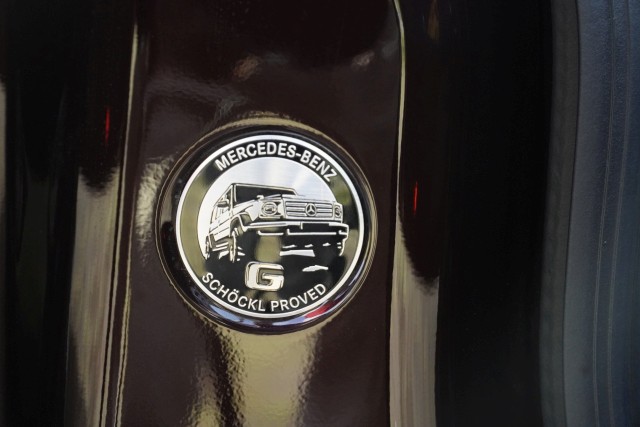
The new G 450 d encompasses everything that Mercedes-Benz has learnt over the years, but especially the knowledge of what should just be left as it is. Nostalgia sells, but so does top-class safety equipment, comfort features, and, yes, big screens. But, thankfully, those are just garnishes for the ladder frame vehicle with four-wheel drive and three lockable differentials. The G-wagen offers something for everyone, and that’s the beauty of it. It’s not a car to be driven fast or thrown into corners—given the room, it can do those things just teetering over the limit set by physics in some cases—but it can do a lot more than most “regular” off-roaders and SUVs.
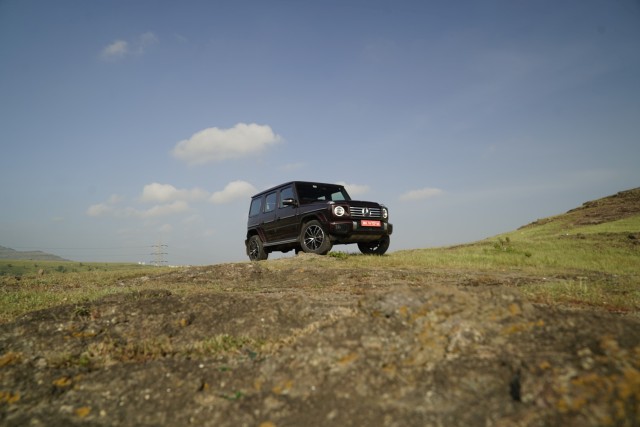
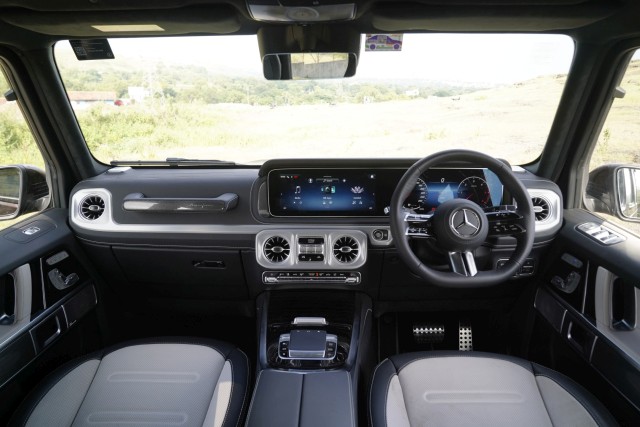
The luxury quotient in the G 450 d is truly a couple of notches higher than the next best off-roader. The ability is far more than any luxury SUV in its price bracket—including its “crossover” sibling, the big GLS, which we drove recently. That’s a luxury SUV for the family or the business. The thing is, 70 years later, the G has developed an unfathomable and enviable reputation most other cars—except, maybe, the Toyota Hilux—can only dream of enjoying for the foreseeable future.
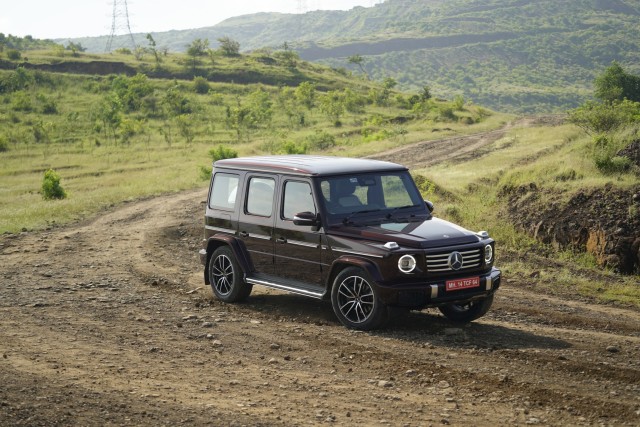
I know this is a test review, so, yes, the big change is the engine. And it’s also a 48-volt mild-hybrid, something the 400 d (and 450 CDI) was not. There is a dedicated 48-volt lithium battery and a 15-kW (20-hp) electric motor-generator sandwiched between the engine and transmission that assists with starting, coasting, and energy recuperation, relieving some of the load on the engine and improving efficiency. The nine-speed automatic transmission does a fine job of keeping the engine relaxed while harnessing a good chunk of low-down torque with more on call, just a feather of the right pedal away. The additional output means the zero to 100 km/h time is crunched to 5.8 seconds, about half a second quicker than the 400 d, with a top speed of 210 km/h. I can think of no place around here I would like to even attempt that.
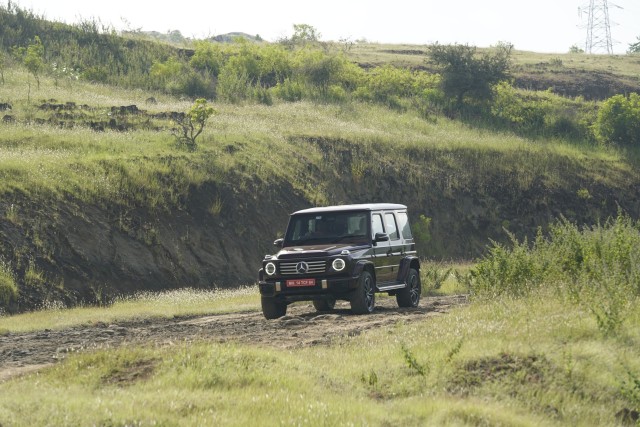
The crux of its strength lies in its unperturbed urban, highway, and off-road performance, leveraging its monstrous torque at engine speeds below 1,500 rpm, with the breadth of its performance rarely needing to call upon anything beyond 2,500 rpm. “Effortless” only begins to describe it. Peak power comes in at 4,000 rpm if you really want to feel the rush. At 2,480 kilograms, it’s about 50 kg heavier than the G 400 d (but 75 kilos lighter than the GLS 450 d). Thus, the surge of acceleration accompanied by the gradual but mighty build-up of revs is something to be savoured. And it’s not just about the power.
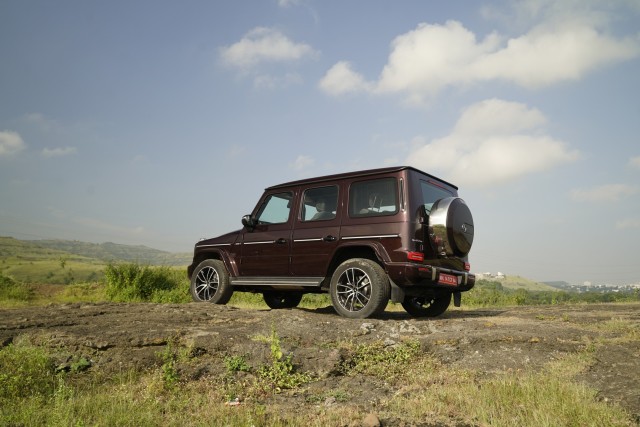
The ride quality is excellent, and not just for a G-Class or big off-roader. The suspension tune is pliant and all-absorbing. It holds its line well, feels steady, behaves predictably, and is quick to respond to steering input and braking. The collision warning and active assistance systems do a good job behind the scenes as well. Overall, it’s not as much of a handful as anyone may first imagine. Yes, the driver’s seat is high and puts me shoulder-to-shoulder with minibus and some light truck drivers, but it doesn’t feel overly tall or cumbersome.
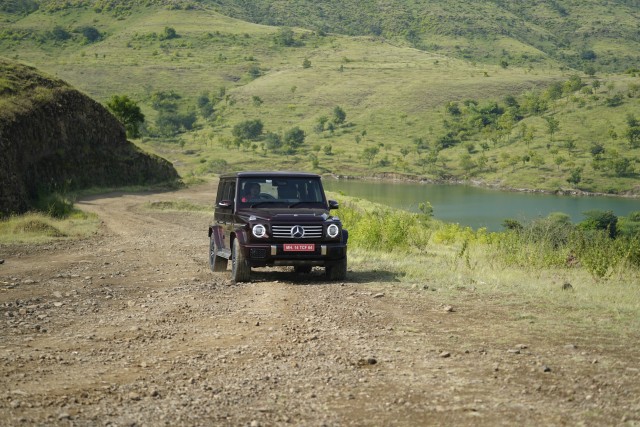
The big news: efficiency. The 48-volt MHEV set-up means a significant improvement is visible, especially on open stretches at cruise speed, where the e-motor maintains momentum without any engine input. I saw eight km/l in the city, with a much higher figure of nearly 20 km/l on the aforementioned open stretches with a relaxed right foot. The drive modes help, somewhat, with the efficiency, but the usual Eco, Comfort, and Sport drive modes are only half the story.
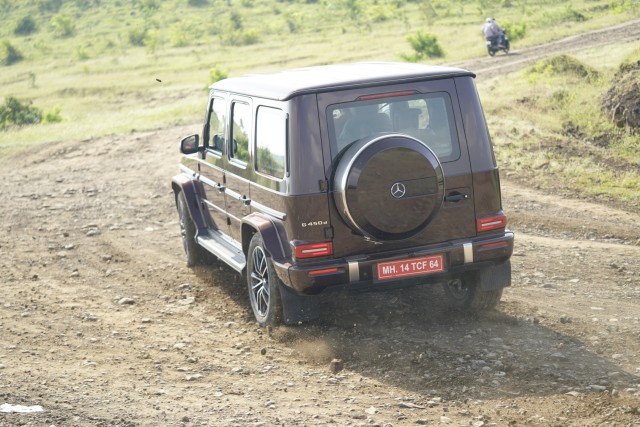
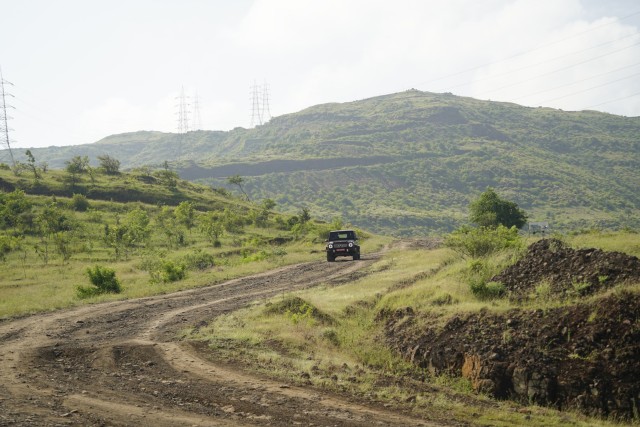
Its off-road ability is the talking point, though. The post-monsoon condition of roads engenders challenges comparable to purpose-built off-road test tracks, except that consistency is not a factor. The 241-millimetre ground clearance is sufficient, the 20-inch wheels with 275/50 tyres work well to absorb shocks, and the heavy-duty suspension with independent front double wishbones and a rigid rear axle allows for long wheel travel and impressive articulation. The approach and departure angles are 31° and 30°, respectively, with a breakover angle of 26°, enough for the most challenging surfaces. The G 450 d can wade through 700 mm of water at a steady crawl and deal with gravel, pebbles, and rocks with equal aplomb.
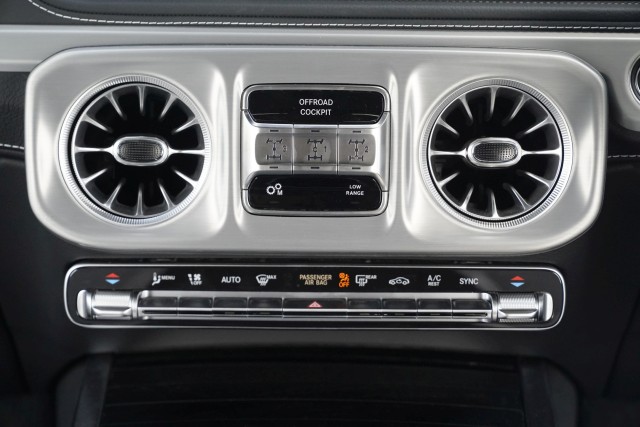
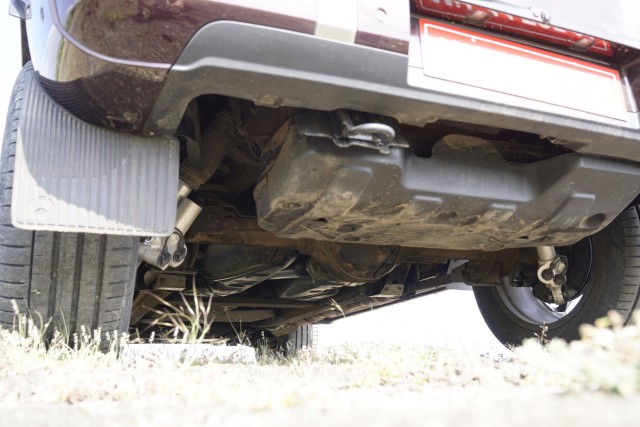
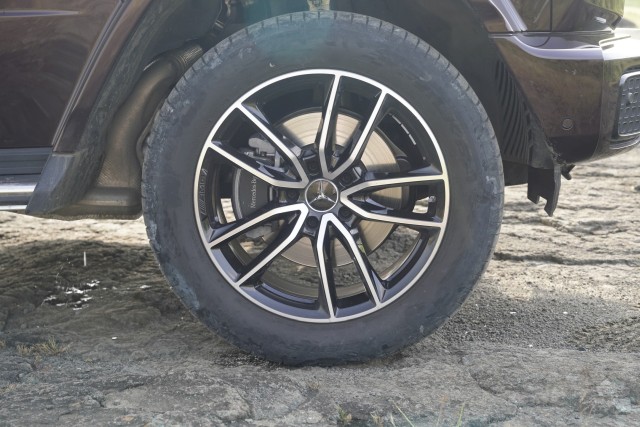
There are three additional drive modes apart from the usual Mercedes Dynamic Select modes, and they are Trail, Rock, and Sand, all of which work well together with the Low Range mode to crawl up or down the most challenging of obstacles. There are also three separate diff locks for the front, centre, and rear, which can be applied as the situation calls for. Rest assured, you would not find the need for a G-turn function here; the G 450 d will just muscle its way up, around or through pretty much anything.
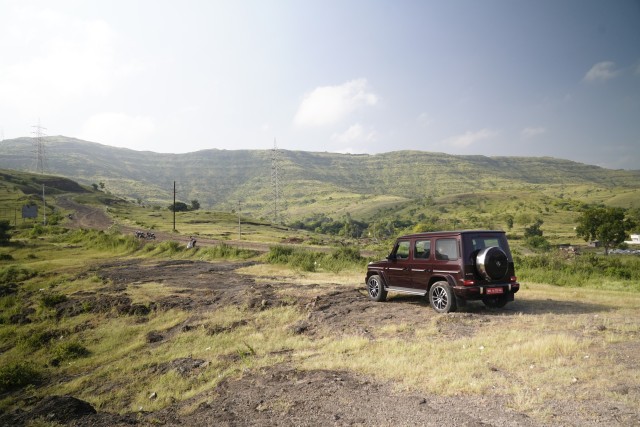
At Rs 2.9 crore (ex-showroom) and with just 50 units available, the G 450 d brings exclusivity, yes, but also effortless capability and unabashed purity of nature. It does not pretend. It does not hold back. It just is. And I love it. The G-wagen has stood the test of time in terms of design and engineering, and with a big diesel engine—Euro 6e-compliant no less—it stands the test of emission regulations that continue to vilify diesel. Drive a big diesel, or a hybrid diesel, and you will know exactly what I have been on about for a decade. A 367-hp, straight-six diesel engine powering a 2.5-tonne SUV with the aerodynamics of a row-house, being sold in 2025, shows that the G 450 d embodies its tag-line; stronger than time, it is indeed.
Story: Jim Gorde
Photography: Sanjay Raikar







Leave a Reply