


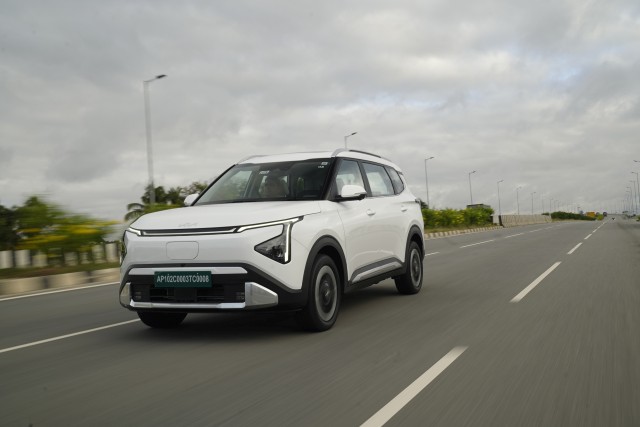
The Kia Carens Clavis EV is the fully electric version of the MUV and the first sub-Rs 20-lakh three-row seven-seater EV in India. We drive it in Bengaluru.
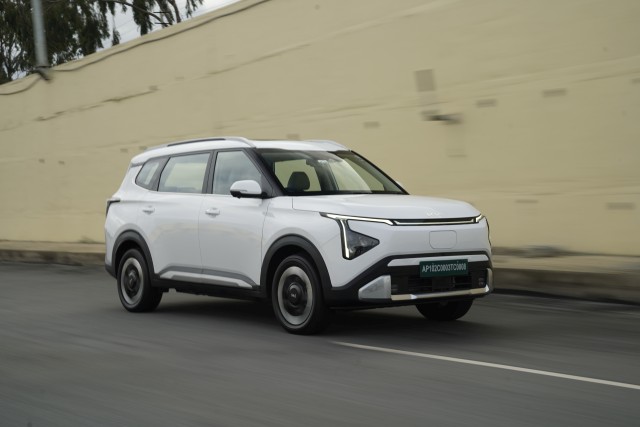
Bringing in an all-electric version of a car that was introduced just weeks ago speaks volumes about the commitment to deliver quality mobility to the seekers of silent drive and instantaneous torque. Yes, the electric push has been gaining momentum and the market share of electric vehicles (EV) has more than doubled over the past year. With the domestic mass market restricted to offerings from a handful of brands until recently, there was still a gaping void in the seven-seater space below Rs 20 lakh. Enter Kia. And the Carens Clavis EV.

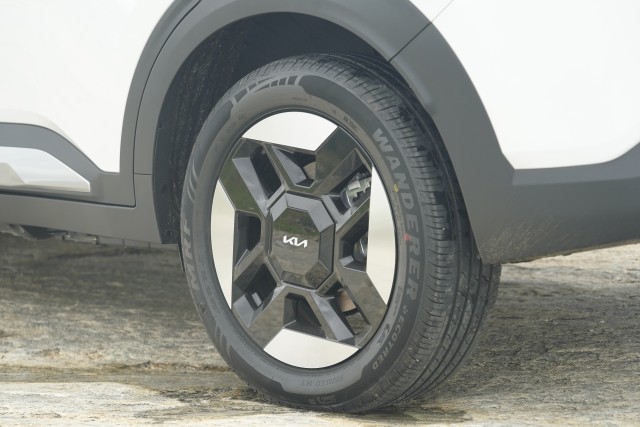
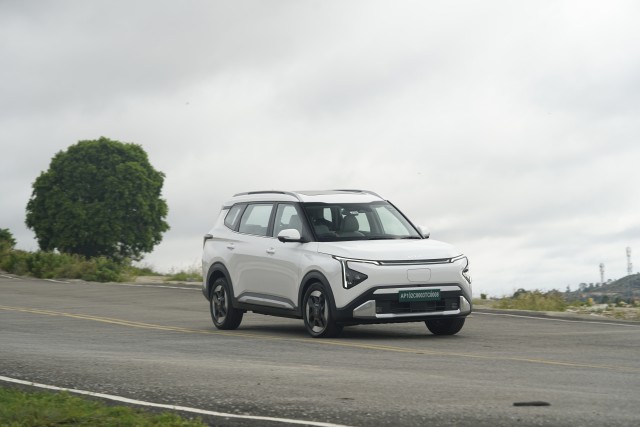
At first glance, there is almost nothing to differentiate the Clavis EV from its combustion-engine counterpart once you get past the more closed-off face, the active air flaps, and the nose-boop charging-port cover—and, of course, the green number-plate. The proportions, lines, lighting elements, and even the wheel sizes are similar. The overall length is still 4,550 millimetres and the wheelbase is still 2,780 mm. It’s still 1,800 mm wide and 1,708 mm tall and offers the same 216-litre all-rows-up boot capacity as well. So, what’s different? Well, there are more subtle differences. The wheel design is different, depending on the variant—there are four variants in total, for now—with the two standard-range variants (HTK+ and HTX), equipped with 16-inch wheels and the long-range HTX and HTX+, the latter of which we have here, getting 17-inchers. These optimized surface elements have led to a lower drag coefficient of 0.29 compared to the engine-bearing Clavis’ 0.32 value. There is also a 25-litre “frunk” which is useful for storing up to 10 kilograms, but is stuffed with the charging kit here.
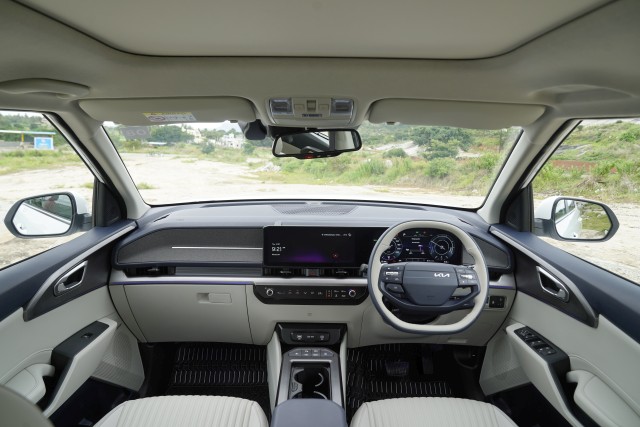
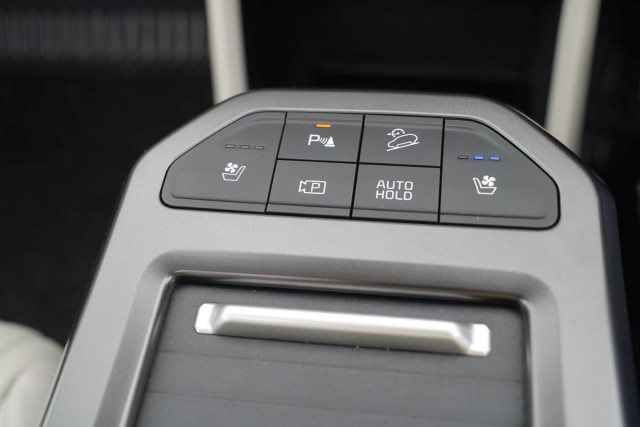
Inside is where the Kia Clavis EV gets some more evident changes. No gear lever and transmission tunnel means more free space, which has been used quite well, and frees up more usable space. There is a distinct new floating centre console with a large storage section below. The centrepiece holds a set of covered cup-holders and the controls for the ventilated front seats, parking assist with a surround-view monitor, auto hold, and the hill descent system. There is also a deeper covered storage space under the arm-rest. The rest of the Clavis EV interior is similar, if not identical, to that of the Clavis.
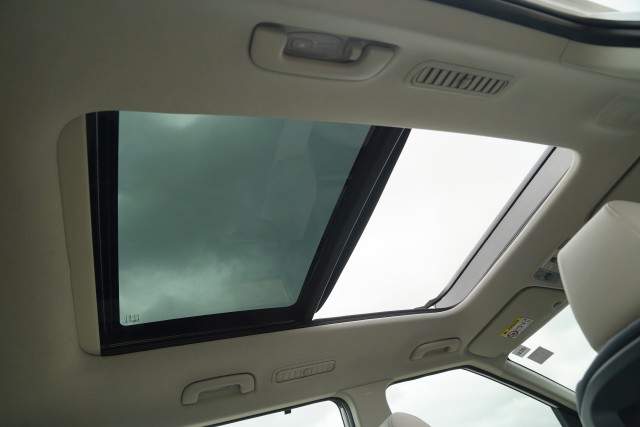
The twin 12.25-inch screens make for a 26.62-inch screen surface area. That glass area is dwarfed only by the dual-pane panoramic sunroof in this HTX+, spreading across almost the entire cabin ceiling. The theme is still a dark blue and beige effort consistent with the Carens and retains the family feeling. Speaking of which, this first three-row vehicle comes with seven seats as standard across all the four trims, although there could be six-seat versions in the future, as more than one statement made by the Kia spokesperson during the product presentation ended with ‘for now’.
The second row seats three and is 60:40 split-folding, whereas the third row split-fold 50:50. This means enhanced versatility and cargo-carrying capability. There is also a “boss” mode for the left rear passenger, controlled by the lever on the side of the front passenger seat. Space and comfort are something the Clavis EV has plenty of. The other important talking points are the overall quality, ergonomics, and fit-and-finish, all of which are comparable to more premium luxury cars costing far more. And, for reference, this Clavis EV HTX+ costs Rs 24.49 lakh (ex-showroom). The entry variant is priced from a more appealing Rs 17.99 lakh.
The Kia Carens Clavis EV houses the battery pack in the floor. This lithium-ion battery pack runs on a 400-volt system and offers 51.4 kWh of energy density in this long-range model, with a single 126-kW (171-hp) electric motor with a stated range of 490 km. The standard range model, as with the Hyundai Creta within the parent group, offers 42 kWh with a 99-kW (135-hp) motor and a range of just over 400 km. Both offer a peak torque of 255 Nm. This makes the long-range EV the most powerful model in the Clavis line-up with even the 1.5 turbo-petrol falling short by 11 hp and two Newton-metres. The weight, although not disclosed, should comfortably eclipse that of the petrol and diesel models; however, it isn’t all that evident on the go.
More on the next page >














Leave a Reply