


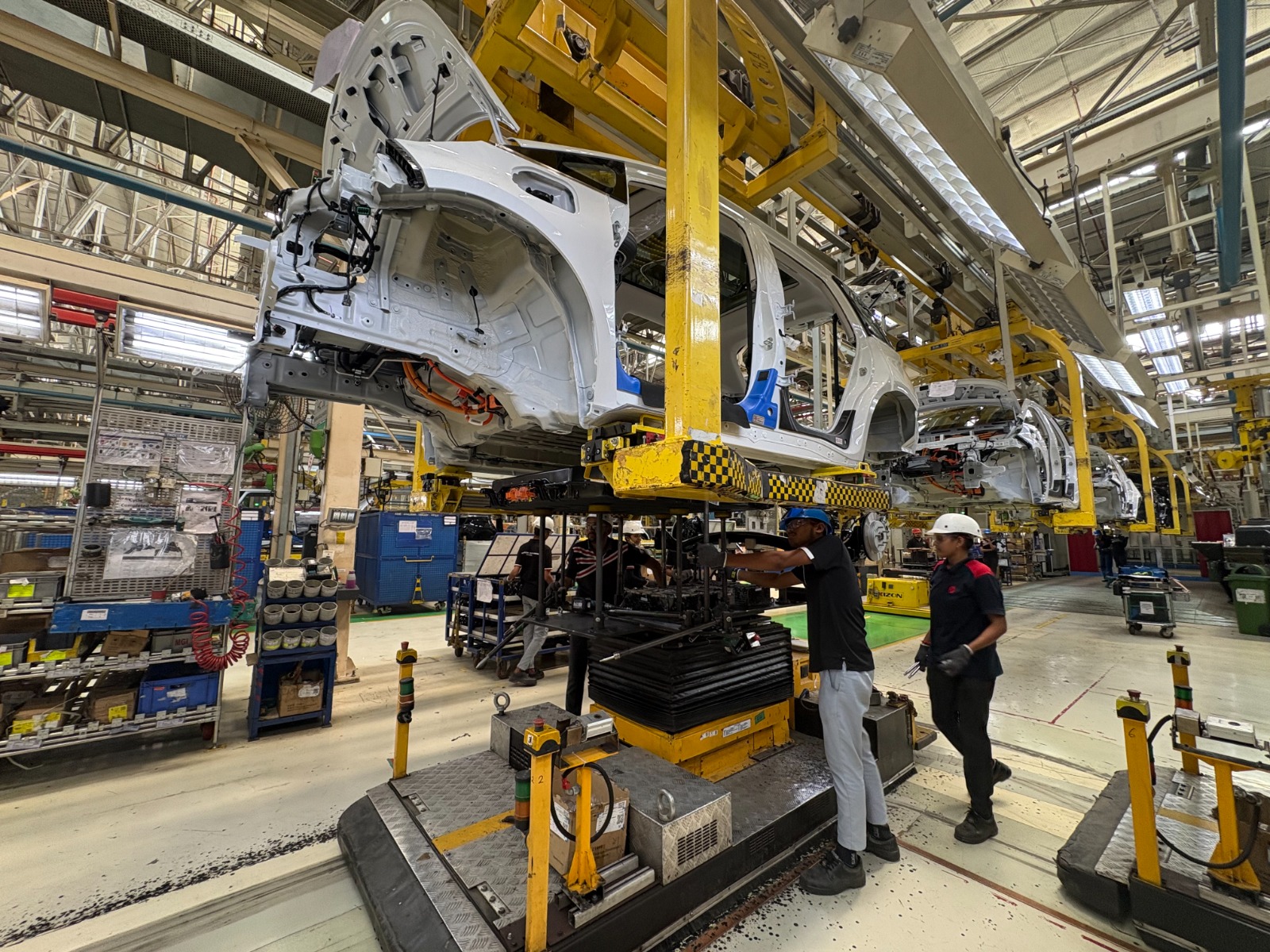
We travel all the way to JSW MG Motor’s Halol battery assembly plant to understand just what goes into the making of the chemically dense sealed enigmas that power the silent new machines of the future
Visiting JSW MG Motor’s battery assembly floor is like stepping into a different kind of engine room. The look is industrial, predictable, but the work is precise, almost surgical. The air smells of plastic and metal, the machines hiss, and the people move with a quiet attention that makes the place feel less like a factory and more like a laboratory for motion.
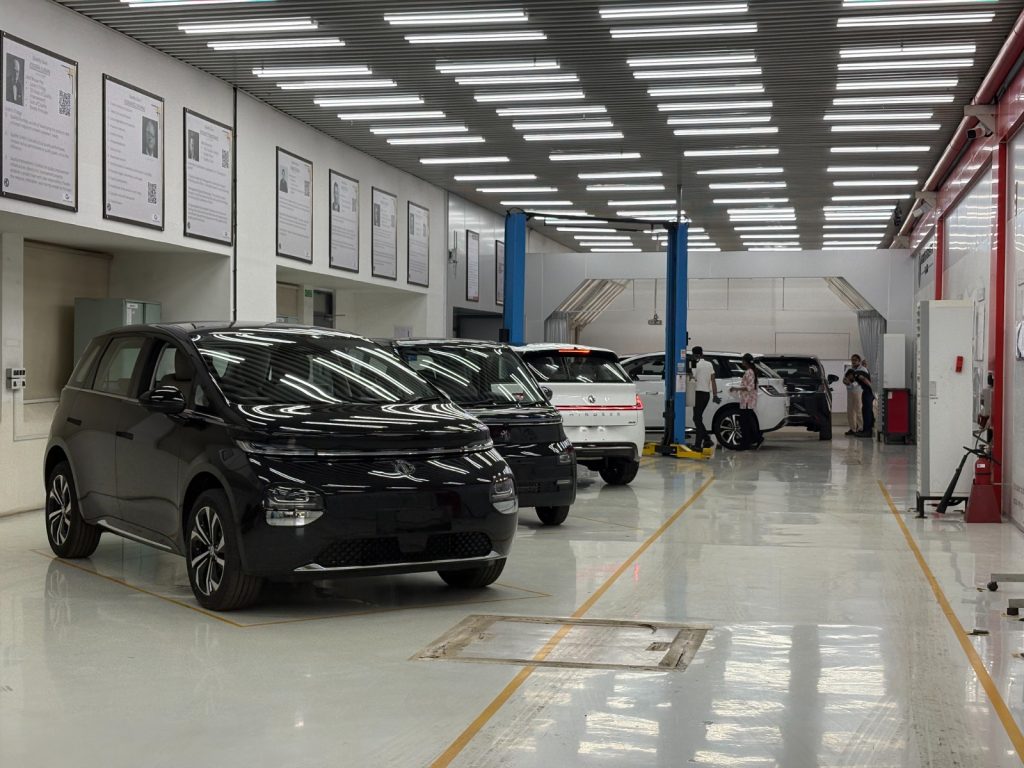
This is JSW MG Motor’s Halol, Gujarat campus, where JSW Group and MG Motor, now owned by Chinese state conglomerate SAIC, have invested to create an electric future. The plant has been retooled to support compact electric cars, with production capacity of just over 100,000 vehicles annually and expansion room if demand climbs. On the day we visited, the focus was on the Comet, the Windsor, and the Windsor Pro. The Comet uses a 17.3 kWh pack, the Windsor runs on 38 kWh, and the Windsor Pro stretches to 52.9 kWh. Three sizes, three distinct requirements, one highly choreographed assembly process.
A Workforce with a Difference
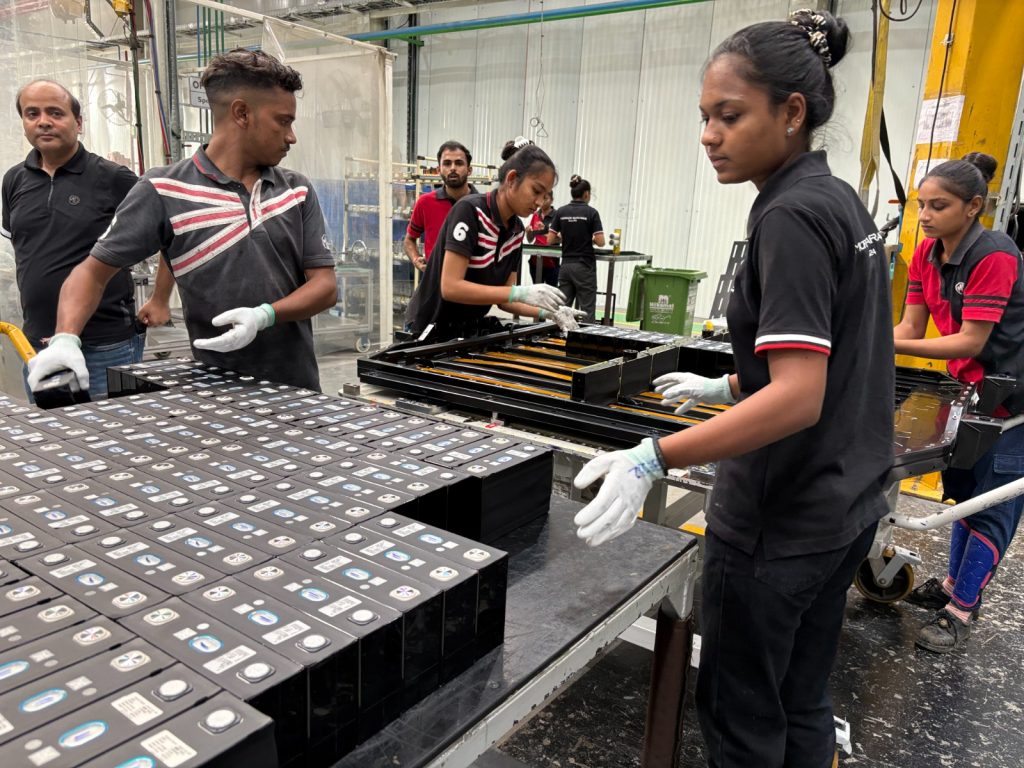
What you notice first is the people. MG has made a point of pushing diversity in its production teams, and this was clear from the moment we stepped on the floor. At one point, the entire battery assembly plant was staffed by women, and today women still account for the overwhelming majority. The share now sits around 85 to 90 percent, and crucially, women are not just on the repetitive assembly stations. Many of them are in supervisory and managerial roles.
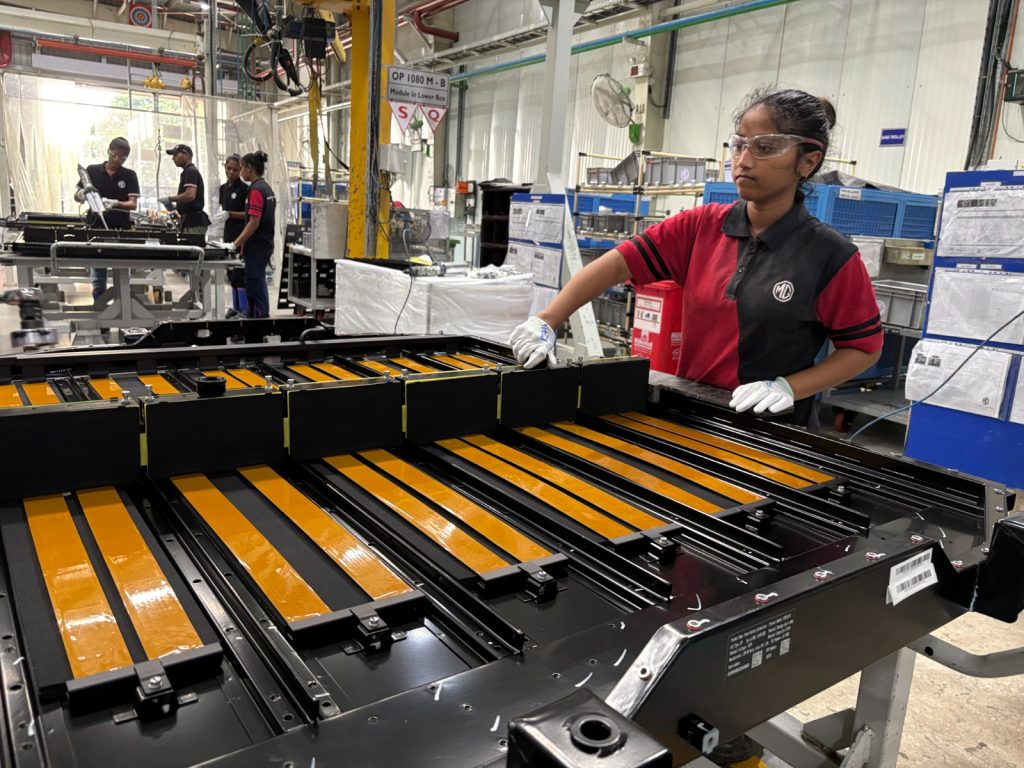
One of the production managers who walked us through the plant was Kanupriya Khandwal. She explained how modules move across stations, how each test is enforced, and how the line treats quality as a discipline rather than a catchphrase. Her presence underscored a simple but important point: inclusion here is not symbolic, it is structural.
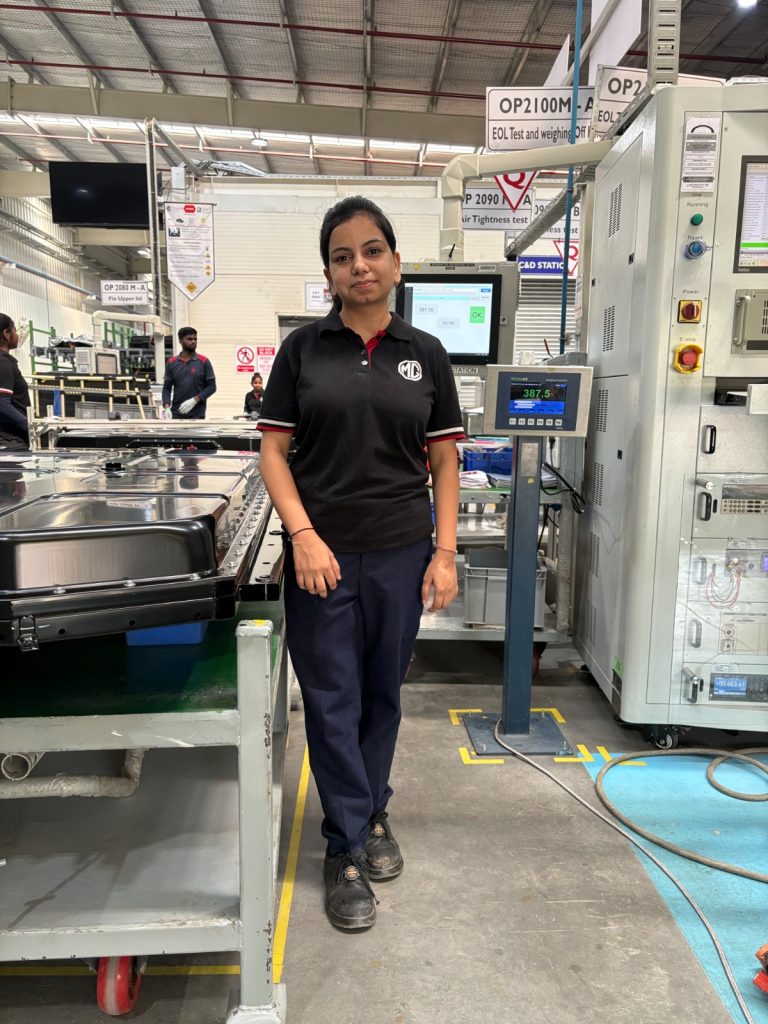
MG has built support systems around that choice. Women’s hostels, dedicated buses for commutes, and strict security protocols are in place. The pipeline stretches down to grassroots training programs in colleges to feed a steady flow of technically capable recruits.
Anatomy of a Battery
The assembly floor is divided into four distinct levels: the module line, the pack line, the final line, and the end of line process. Each section has its own rhythm, its own checks, and its own culture of precision.
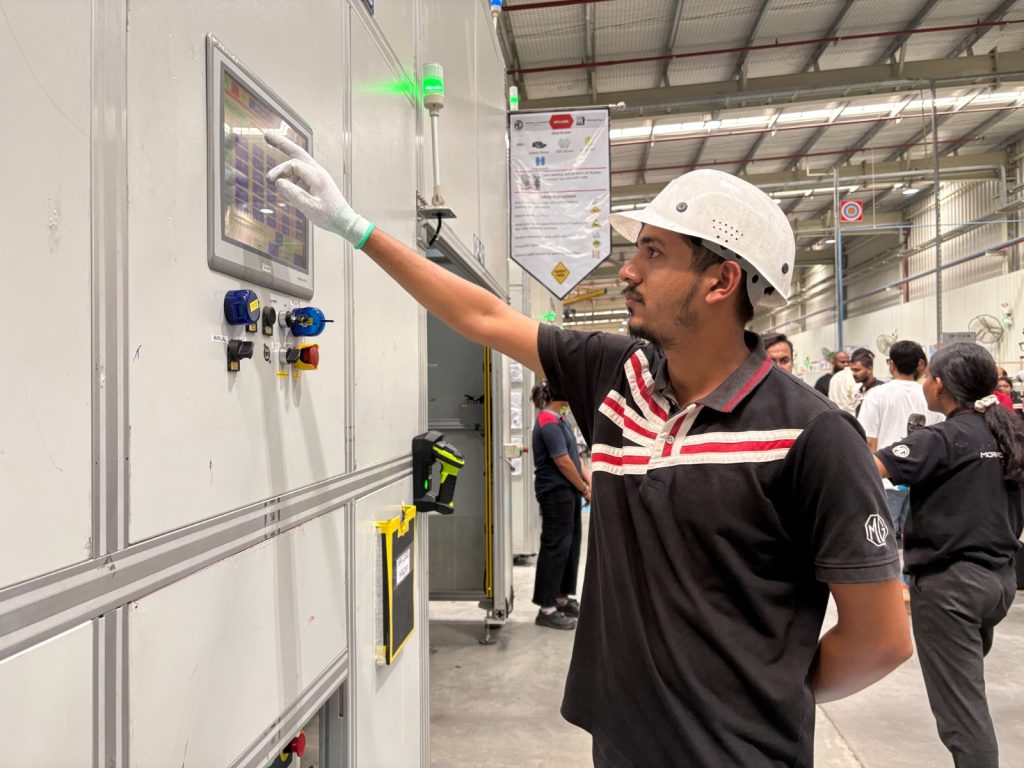
On the module line, cells arrive from overseas vendors prequalified, sorted by capacity and internal resistance. The Windsor’s pack uses 98 cells, the Comet runs with 36. Each cell is placed with exacting care, about one kilogram per unit. Operators conduct open circuit voltage tests, insulation checks, and polarity verification at multiple steps. Modules are stacked, fitted with coolant circulation hardware in the case of the Windsor and Windsor Pro, and tagged with traceability stickers. The emphasis is relentless: every cell, every module, must be accountable.
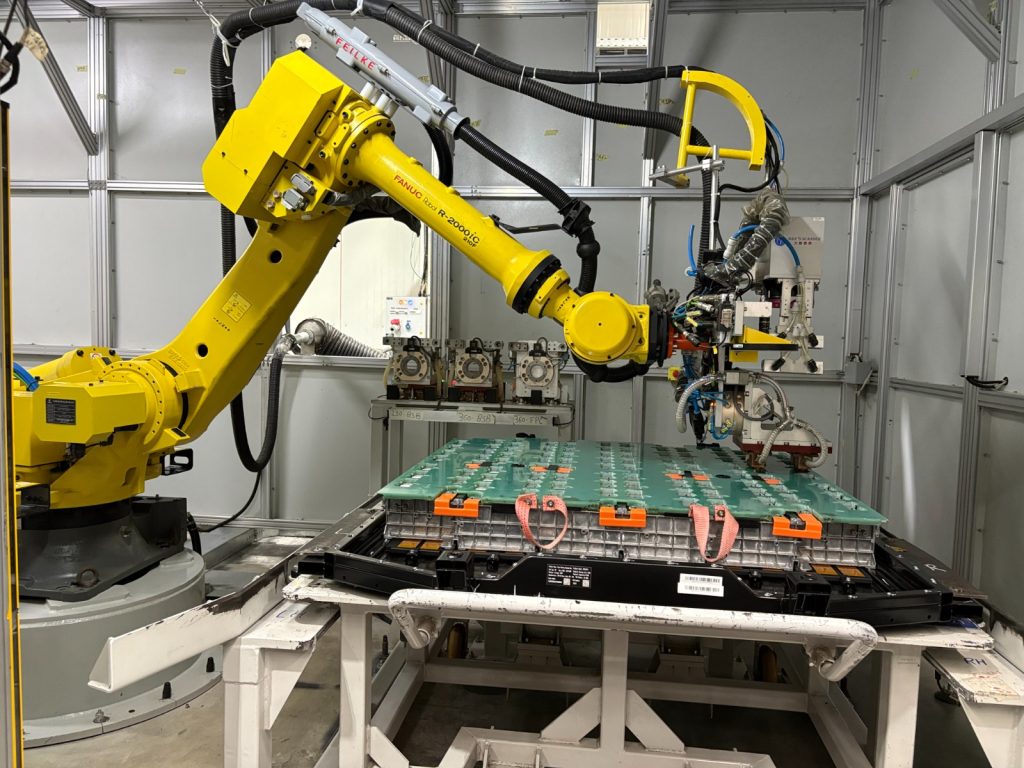
On the pack line, modules are gathered into larger assemblies. Bus bars are welded. Torque tools fasten connections under strict monitoring. Gaskets and covers are applied, and the housing is sealed to IP67 standards. Leak tests at around 3,000 pascals verify integrity. From this stage onward, the battery is treated as high voltage. Operators wear protective equipment and every action is double-checked.
The final line runs charging and discharging cycles, simulating conditions that the pack will face in real use. Internal resistance is checked again. Any anomaly in balance or capacity is flagged. The pack is pushed until the data proves it can withstand both regular duty and stress.
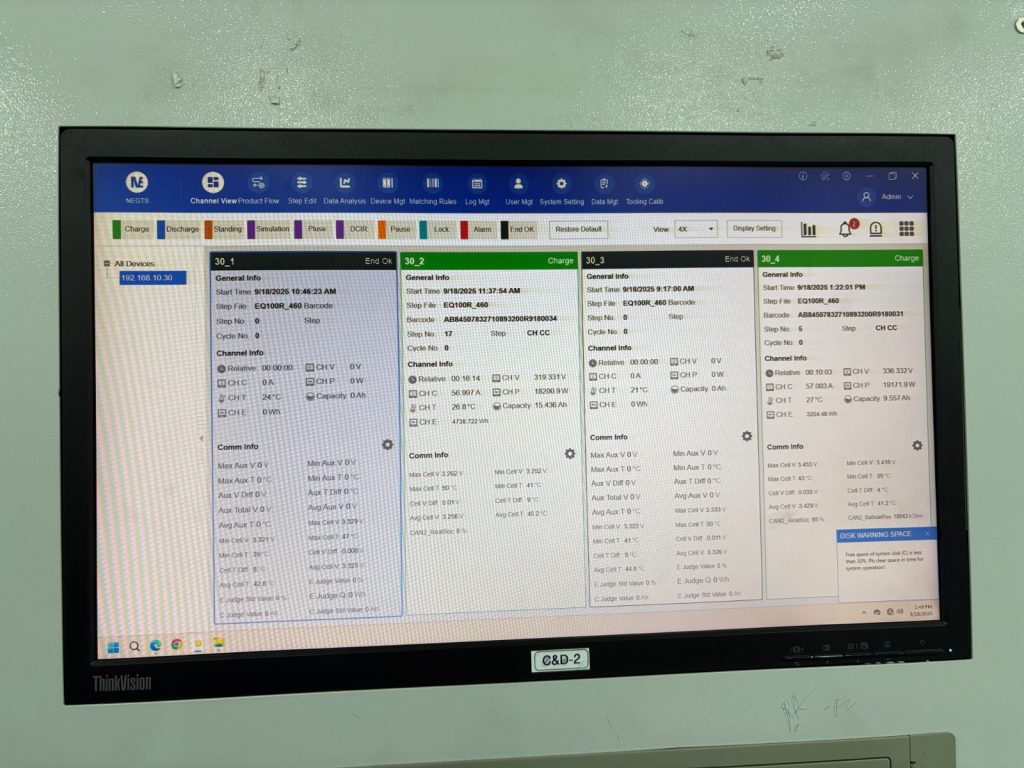
The end of line process ties everything together. Traceability is scanned. Voltage, insulation, and torque logs are matched to batch records. If even one measurement is off, the pack is pulled aside and stripped for rework. Nothing leaves the floor without the numbers to back it.




















Leave a Reply