


The new Hyundai Venue is based on a new platform and offers an elevated experience in every notable parameter. We drove it in Goa.
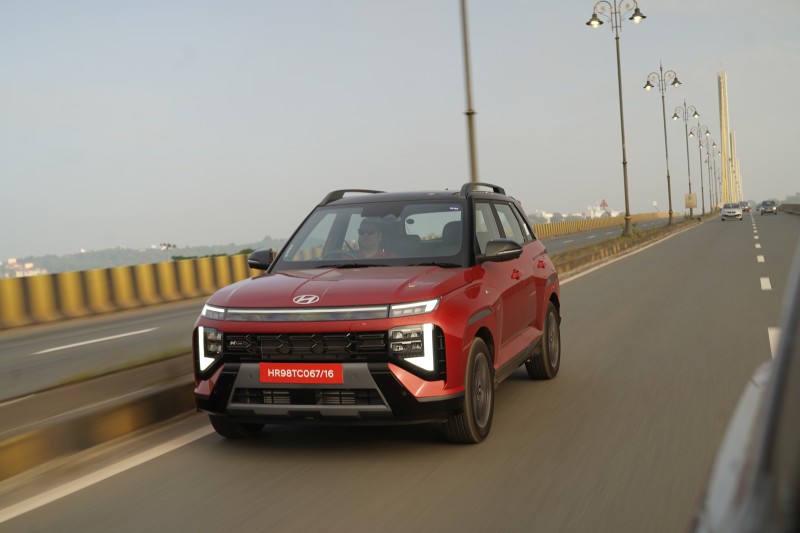
A loaded small car in the compact SUV segment is always a big deal, even more so when it comes from one of the leading players in the ultra-competitive SUV arena. The Creta is ruling the roost in terms of sales, desirability, and equipment (with that order varying every other month), but the point is, what if the Creta is too big? What if the need for many was a smaller car with the same sort of experience, features, equipment, and, to some extent, even performance? Hyundai has been smart and introduced the new Venue with a choice of multiple powertrains, petrol, turbo-petrol, diesel, manual, and automatic—yes, there is a diesel-automatic variant this time round. And there’s even the performance-focused N Line. We’ve had a go in the top-spec N-Line and the diesel-auto variants, but first, a quick round-up of the changes.
The new Venue has been conceptualised as a software-defined vehicle (SDV). This means it was developed to be more connected and software-driven than ever before. Electronics are everywhere, and there are several controllers that make this happen. And 20 of these controllers are ready for wireless over-the-air (OTA) updates. The Venue is a car that updates a lot of its software and applications, much like a smartphone; apt for this digital age? There’s more. There is Level 2 ADAS, 12 languages for the navigation system user interface, and voice commands that control the most needed features, supporting five languages for now. With the SDV formula, even this list could well be updated soon enough.
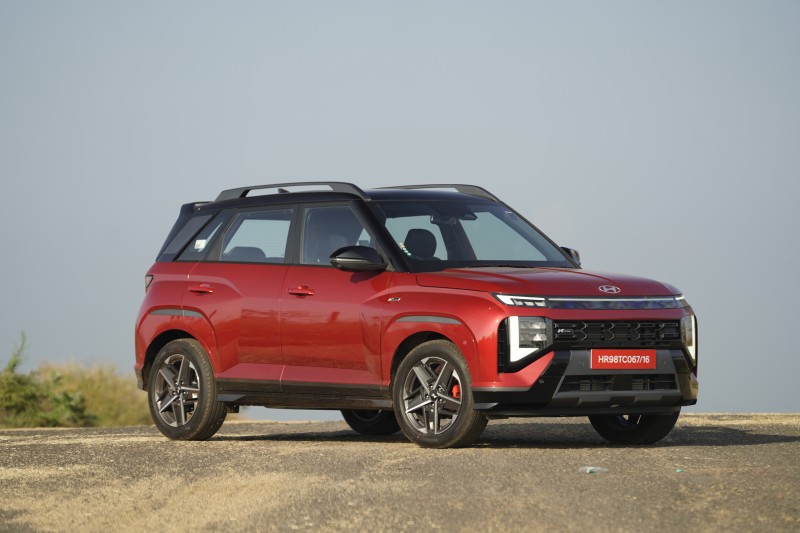
The first car I got my hands on was the Venue N10 DCT, the absolute top-spec N-Line with the 1.0-litre TGDI turbo-petrol engine and seven-speed dual-clutch automatic transmission. I also got to sample the top-end diesel, but more on that later.
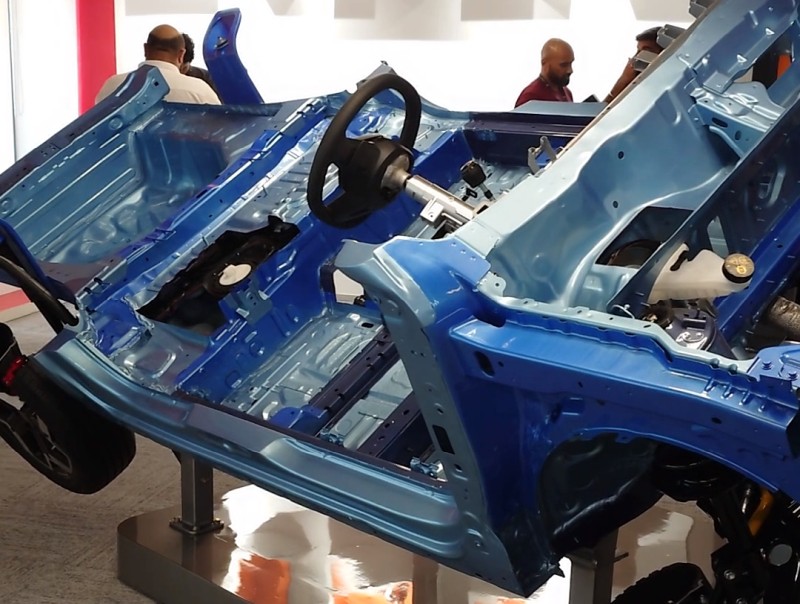
The global K1 platform is a new architecture specifically for endowing compact models with the virtues of larger and more expensive ones. The Venue is more than a baby Creta now. It is larger than its predecessor, being 33 millimetres taller (+15 mm with roof-rails), 30 mm wider, and running a 20-mm longer wheelbase as well. The cargo volume is also up to 375 litres now. Overall, the Venue now has a butch stance and even more SUV appeal, appearing larger and more dominant. Of course, it has to take on some credible names from its modern, versatile, and well-equipped cousins: the Kia Sonet and Syros; the robust, planted, and tank-like Škoda Kylaq; the value-for-money, dependable, and spacious Maruti Suzuki Brezza; the stylish and loaded Fronx and Toyota’s Taisor; the affordable and potent Renault Kiger and Nissan Magnite; and even the high-selling Tata Nexon.
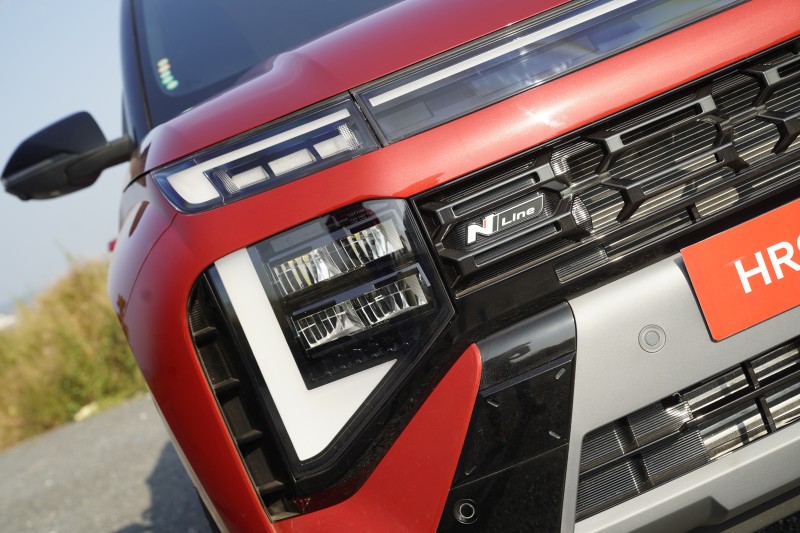
In terms of quality, fit-and-finish, and the list of equipment on offer, the new Venue has most of those names beaten and now delivers a knockout punch in terms of refinement—bettering even the Kia duo, with which it shares its powertrains. The Venue brings in some kit tweaked in ways never seen before in its segment. These include the LED lighting with light-bar across the front, quad-beam LEDs, and, inside, a curved dual-pane touchscreen set-up combining two 12.3-inch units for a large surface area that is angled at the driver—much like a curved gaming monitor that puts one at the centre of the action. There is also an nVIDIA-powered ccNC (connected-car Navigation Cockpit) which helps with real-time navigation and driving data. These are just some of the elements that complement the innovative additions and some that raise the bar in their own way, adding a touch of class to the compact SUV segment while elevating the in-cabin experience.
The highlights of the kit start with six airbags, traction control, stability control, wireless Android Auto and Apple CarPlay—and that’s just what the base HX2 trim with the 1.2-litre petrol engine offers. This top-end N Line model packs ventilated front seats, a comprehensive Level 2 ADAS suite including 21 features, five of which are not even offered in the HX10: collision warning and avoidance based on both rear cross-traffic and blind-spot alerts, as well as safe exit warning. There’s also a neat oval smart key-fob now.
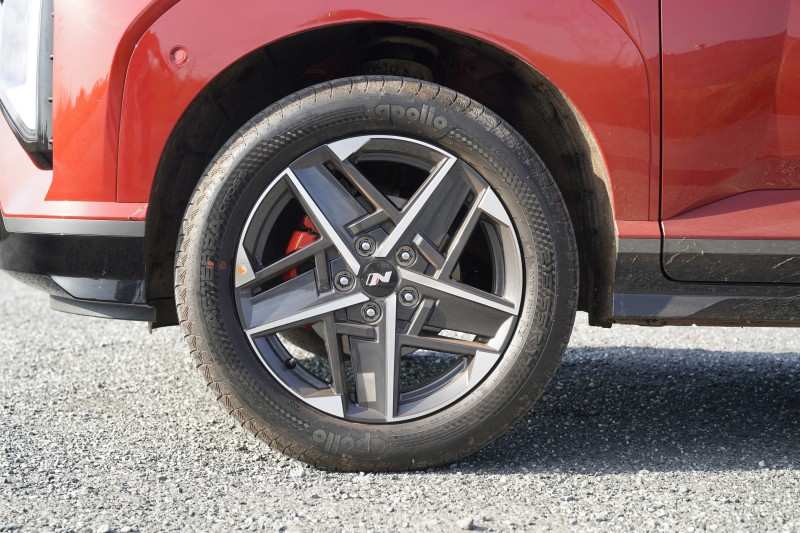
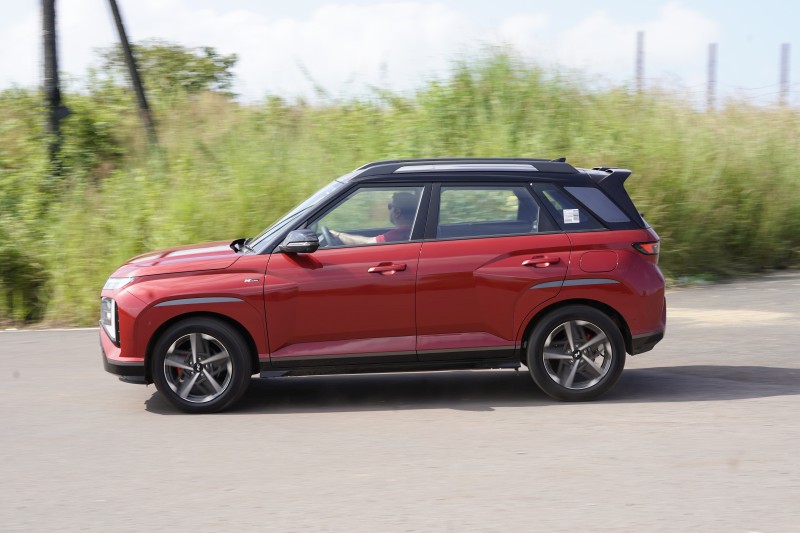
The Venue N10 DCT we were allotted would be the one we drove the longest. Starting from the W Vagator at seven o’clock, a little after sunrise, the road to the south of Goa would include everything from narrow vaddo streets to main roads and a highway stretch, too. The N Line variants now get unique styling and design elements, including the sportier grille with the “N Line” logo, along with 17-inch wheels wrapped in 215/55 rubber, and disc brakes front and rear (also in the HX8 automatic and HX10 variants). It also gets a more pronounced rear spoiler and a distinctively different interior.
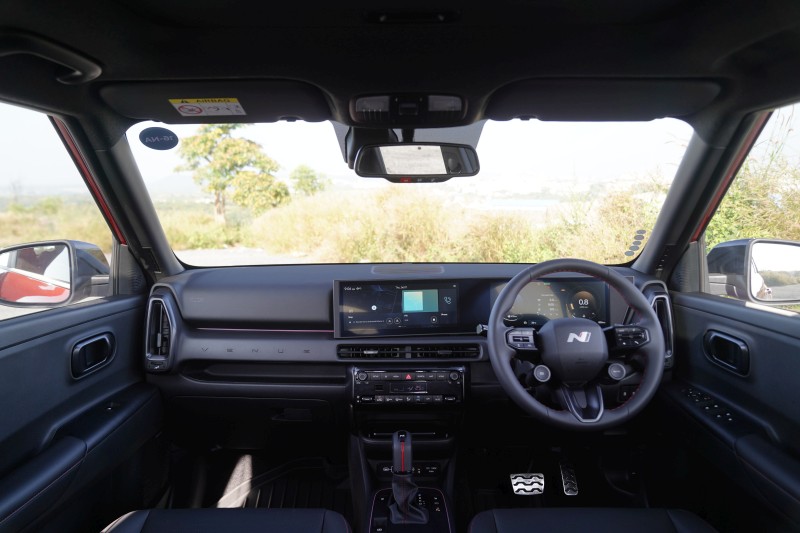
Step into the N Line cabin, and it feels extremely sporty in terms of both layout and the material used. The black upholstery with red contrast stitching is joined by an art leather drive selector with a red line. The steering wheel is a thing of beauty. It features a bold “N” logo and detailing almost identical to the wheel in the 650-hp Ioniq 5 N; something we drove a couple of years ago. There are buttons that look like knobs on the wheel, one each for the drive and traction modes, which, in the standard car, are on the centre console with two buttons and a dial. The feel is the all-important parameter, and the overall air in the cabin is premium with quality materials and great ergonomics, and attention to detail. There is a mix of touch controls and physical buttons—something very modern and European—which makes accessing functions easier and more mechanically satisfying, knowing that the instruction was executed without the need for a second glance.
The front seats are ventilated, and the support is excellent. They are wider with more bolstering and offer better support during dynamic driving or when taking bends. There is a single-pane sunroof with a manual sunblind, simple and nice to use in Goa, especially early morning. The rear seats, too, offer much better room, thanks to smart cushioning with increased knee-room coming from the scooped-out front seat-backs. Adjustable head-restraints front and rear are an appreciated bit of kit. The active and passive safety features, including adaptive cruise control, braking assist, and collision avoidance for front, blind-spot, and rear, thanks to the comprehensive Level 2 ADAS suite, and the surround view monitor, all useful in tight spots, should also pave the way for a five-star safety rating soon enough.
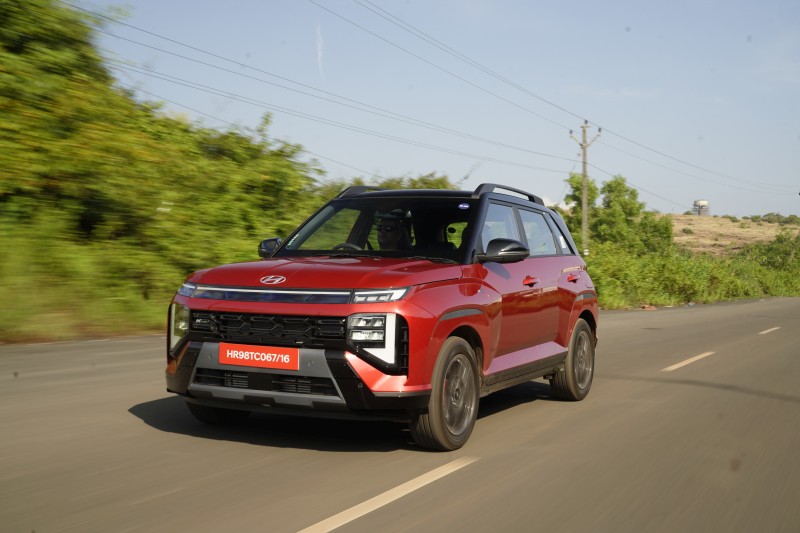
The handling dynamics are a strong point for the Venue N Line. The steering is excellent, turns are tight, braking response is good, and the suspension, though not as stiff as the i20 N Line’s, is firm enough to feel the road and contributes vastly to its precise and predictive handling characteristics. There is a bit of turbo lag in the “Normal” drive mode, while “Eco” makes it feel like it’s on a blend of 20 per cent cough syrup. However, in “Sport”, it’s raring to go and the revs are kept on the bubble.
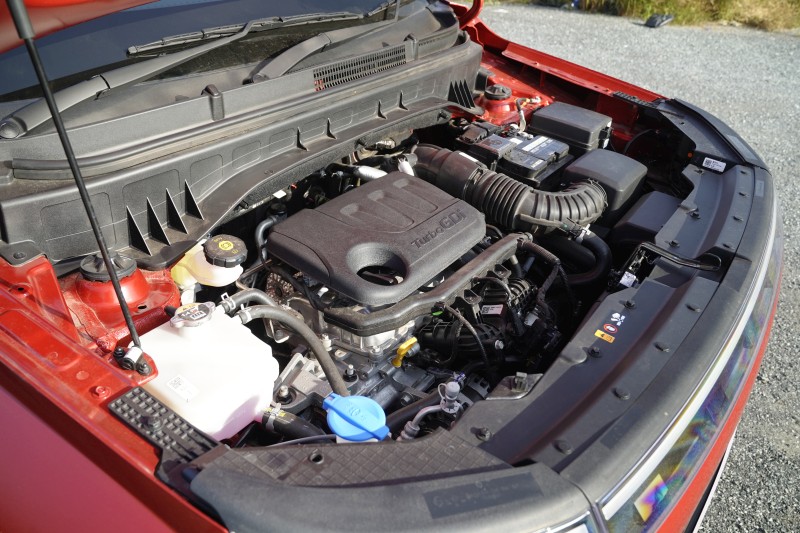
The engine still makes 120 hp and 172 Nm from its 998-cc turbocharged direct-injection petrol engine, and the seven-speed auto dual-clutch transmission (DCT) does a decent job of transferring the power while making for quick acceleration. Using the steering-mounted paddle shifters also helps take better control, should one find oneself in slow-moving traffic with the potential of a sudden overtake. Hyundai’s fuel-efficiency claims may seem lofty, but they’re pretty accurate. I saw as much as 19 km/l on the return trip, with the same mix of highways and crowded roads. The biggest enemy of fuel efficiency is stop-go situations—think abrupt braking, heavy traffic, or ungainly speed-breakers—which destroy any gained momentum. However, the efficiency figure, which dropped to 13 km/l after spending nearly 45 minutes in the city’s stop-go situations and in a jam, was still commendable. This was partially thanks to the engine stop-start, which worked fine so long as the battery had a charge level.
There is another element to be happy and proud about. The Hyundai Venue will be exclusively manufactured at Hyundai’s Pune plant, just about an hour west from where I am sitting, and it will be exported to over 30 countries. It is also the first of 26 new cars that will be introduced over the next five years. I also expect to see more versions—including gas, hybrid, and electric—in the near future. The brand has to be bold and break convention. After all, when you want it the most, there’s no easy way out.
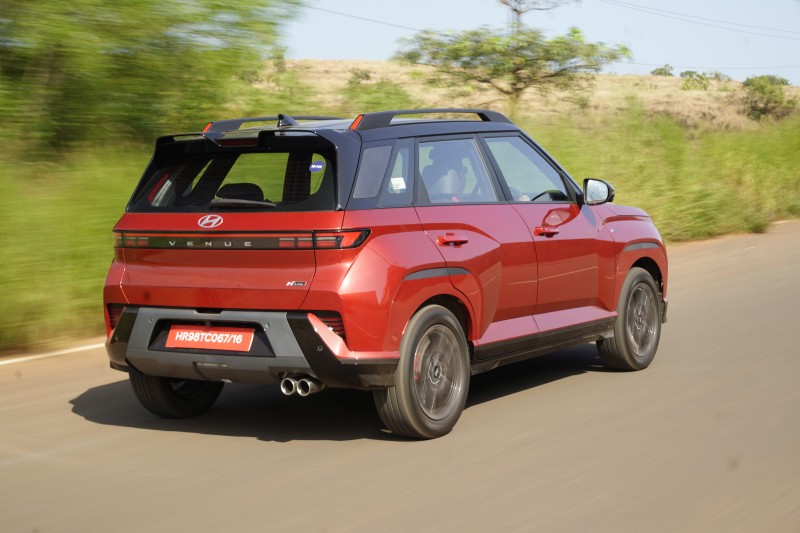
Need to Know – Hyundai Venue N Line N10 DCT
Price: Rs 15.48 lakh (ex-showroom)
Engine: 998-cc, in-line three, turbo-petrol, direct-injection
Max Power: 120 hp @ 6000 rpm
Max Torque: 172 Nm @ 1500-4000 rpm
Transmission: Seven-speed, dual-clutch automatic, front-wheel drive
Suspension: MacPherson strut front, torsion beam rear
Weight: 1200 kg (estimated)







Leave a Reply