


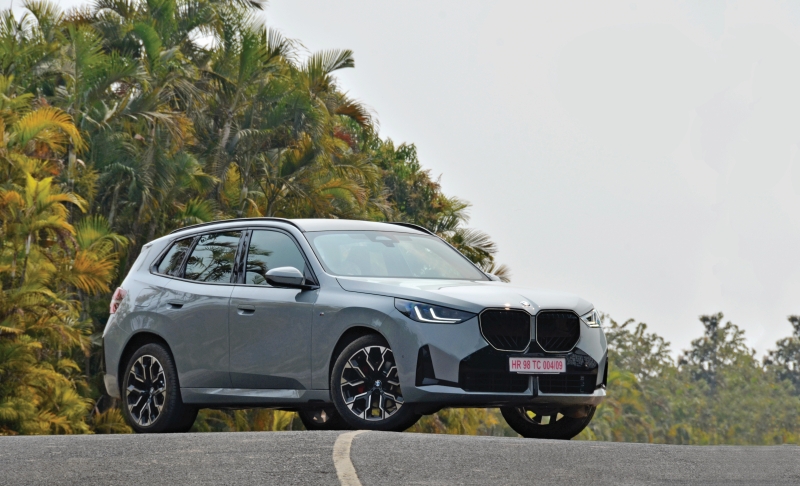
The BMW X3 has received a more potent petrol engine choice in the form of the 258-hp “30” spec four-cylinder motor wrapped in M Sport Pro trimmings. How much of a difference does it make? We find out.
Story: Jim Gorde
Photography: Sanjay Raikar
The X3 is BMW’s bestseller globally and it did quite well in India, too, thanks to the larger size, long equipment list, and the fact that customers were given a choice of both petrol and diesel engines. However, something felt amiss. Where the 20d turbo-diesel has a chunky 400 Nm of peak torque on offer with a thick spread across the band, the 20 petrol didn’t quite bring the same sort of effect and feel to the table. BMW sought to offer buyers of the brand a more potent petrol option. Enter the X3 30 xDrive.
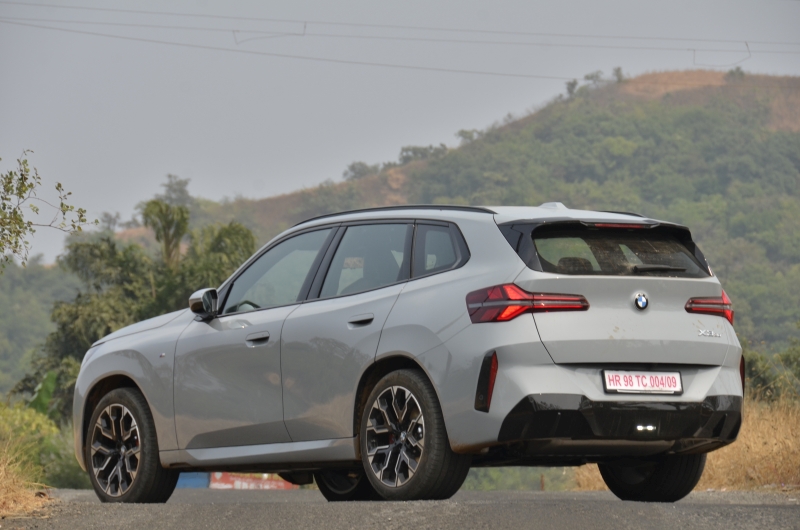
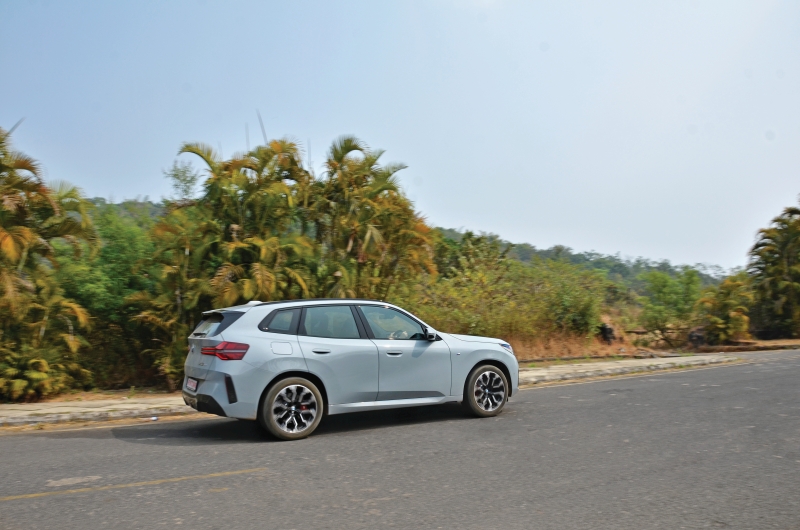
It’s been almost a year since we drove the new X3 with the diesel engine here in Pune. And it was finished in black. This one came in the smoked ice-cream shade of Brooklyn Grey Metallic. And it’s quite a cool scoop. The new X3 30’s styling is almost identical to that of the X3 20 xDrive and 20d xDrive, but for the embellishments from the M Sport Professional touch. There are now 20-inch M dual-tone alloys wheels instead of 19s and they get mixed rubber in true M Sport style, 255/45s at the front and wider 285/40s at the rear. The wheel-arches look more filled up and this lends a sportier side-profile overall. Head on, however, the stance still looks bold. Though the aggressive design language seems to be well-restrained in this iteration, it does have a more smooth, premium aura; especially with its XM-like proportions at the rear.
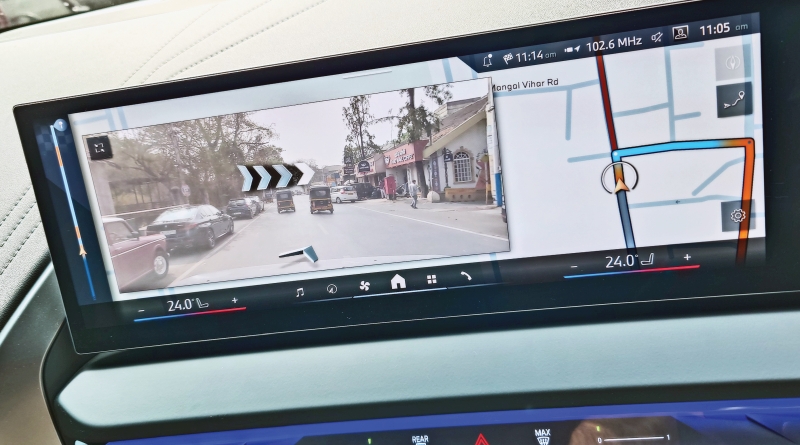
The kit is all there and it features a high level of connectivity. One of the many neat features is the augmented reality (AR) navigation, which displays the front camera feed—on the driver-oriented curved centre display—with overlays that clearly show exactly where one needs to go or take a turn.
Then there’s the reversing assistant which remembers up to 10 manoeuvres over 600 metres and can relieve one of that duty upon return—great for those with fixed parking spots after a long day. But, this is the new 30 M Sport Pro, so let’s get to the feel of the package.
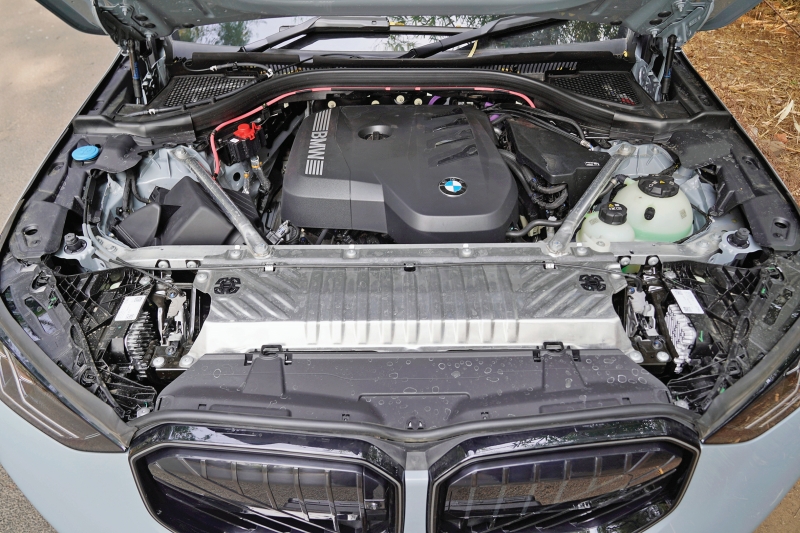
The “B48” BMW in-line four-cylinder, direct-injection petrol engine displaces two litres and runs a 48-volt mild-hybrid (MHEV) system with a dedicated 960-Wh battery pack and an integrated starter-generator motor that enables some key functions: silent start-up, auto stop-start, and engine-off coasting at highway speed for a fair distance. The engine delivers a peak 258 hp and 400 Nm, notably higher figures over the X3 20 xDrive. The same eight-speed torque-converter automatic does duty, sending power to the xDrive intelligent all-wheel-drive system. The red-line is set high at 7,000 rpm because peak power comes in from 4,700 rpm but stays until 6,500. That’s a fat power-band. But what about the torque? The 400-Nm rated peak is listed from 1,600 to 4,500 rpm. How does that feel off paper?
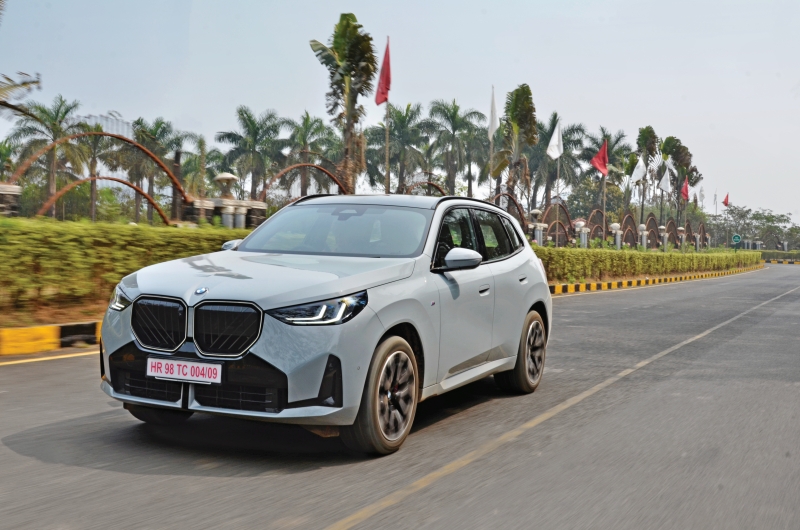
The X3 30 is quick to pile on the revs and go through the lower ratios quickly. Although the sound is quite muted; something that can be attributed to the sound insulation which helps enhance cabin refinement by some margin over old rivals. The feel is still not as urgent as, say a lighter 330 sedan, but the heavier X3 does not disappoint once on the boil. When it is past 3,000 revs, there is fuller feel to the power delivery, although, it’s not the full-fat creamy experience which a diesel provides; this is like a gelato—it hits the taste buds more with every additional spoonful. That said, it is quicker to accelerate thanks to the additional power—100 km/h from standstill come up in just six seconds and the top speed is 210. The X3 feels planted and sure-footed thanks to its immaculate steering and taut suspension set-up. Yes, it is a tad firm but that’s what makes feel, and behave, like a proper BMW. There are the drive modes to consider, too.
This X3 M Sport Pro came with three available modes, Personal, Sport and Efficient. Most of the driving was done in Personal and Sport, with Efficiency ideal for eking out the most, um, efficiency on the highway. In the city, I saw between seven and eight kilometres to the litre, driving in normal traffic and regardless of mode. On the open road, it doubled, with the MHEV tech doing its thing right.
Sport mode in here is a bit special, it disables the stability control when activated—hence the need to confirm activation—and feels more free-revving, although, the drive-split under hard acceleration felt more equally divided and there were no signs of it being more tail-happy. The focus seems to be on refined performance. It’s like saying, “If you want to slide the rear, get an M2 or a 330.” This is a mid-size sport-luxury vehicle and it feels and behaves like one.
Don’t mistake its refinement for rolled-back capability. The X3 can take on a fair bit of rough and no-road sections. The 216-mm ground clearance aside, its 20.6° approach angle, 22° departure angle, and 18.7° ramp breakover angle aren’t off-roader figures but they create plenty of room between a close shave and a deep cut; make it an able set of wheels over obstacles both foreseen and unforeseen. It can handle the urban jungle and everything on its outskirts, too.
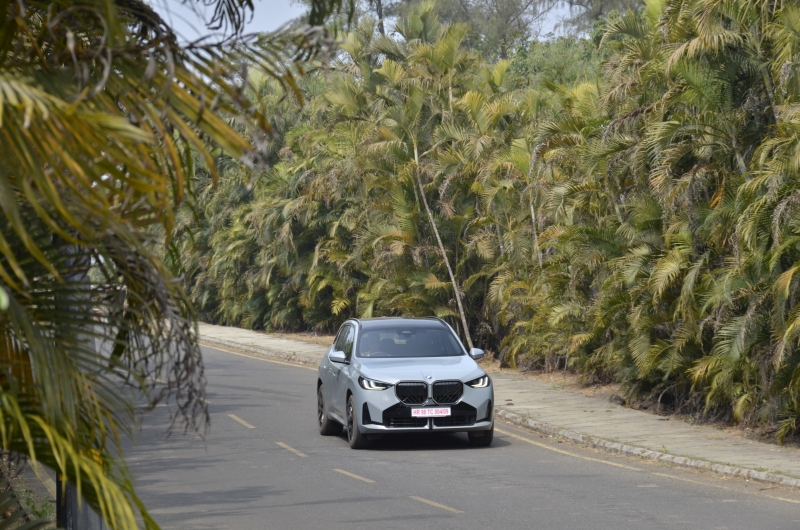
Heading to the outskirts and around is also fun thanks to the said planted feel and aforementioned Sport mode. On narrow roads with sweeping, even tight, bends, the X3’s incisive steering feels precise, even intuitively feeling like its leaning into a corner, something completely out of character for a 4.7-metre long, 1.9-tonne SUV. It is enjoyable. The fun and rev-happy nature come at the expense of petrol but, then again, BMW owners just want to have fun, at least for most part. There are other modes to keep that in check, too. So, the X3 has indeed raised its game with the petrol engine. It’s fast, it’s fun, and it’s probably as well-connected as its target audience.












Leave a Reply