


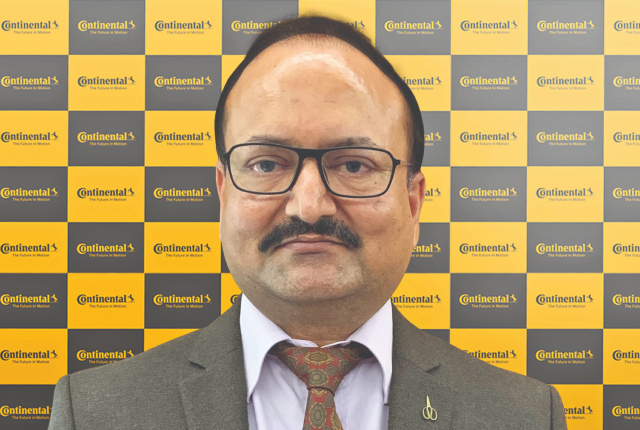
We caught up with Samir Gupta, Managing Director, Continental Tires India, to discuss, among other things, the recently launched CrossContact A/T² all-terrain tyres and the process of developing a new tyre
Continental Tires has launched the CrossContact A/T2 all-terrain tyres in the country, and India has been chosen as the first global market for these tyres. Apart from experiencing the tyres at the Continental Tires Track Day 2026 held at Dot Goa 4×4, we also had a chat with Samir Gupta, Managing Director of Continental Tires India. Here are the excerpts.
Please explain to us what goes on in the process of developing a new tyre.
Definitely the environment: the Indian road conditions. So, that’s the foremost thing. The second thing is the future: what kind of vehicles are being produced now, and what kind of vehicles are being sold. If you see now in India, more than 60 per cent of vehicles sold in the last couple of years are utility vehicles (UV). If I see a car park today, roughly one-third is filled with UVs, and this will go up to more than 50 per cent in the next five years.
So, that is another consideration: which kind of tyres should we develop for this market, for what kind of ranges? What are the consumer expectations, whether they want to drive this car only on highways, or they want to experience all kinds of terrain? Today, we see that customers are more experimental. They want to experiment with different tracks now, so that is another consideration. Besides all these requirements, there is one internal requirement which cannot be compromised while fulfilling all those desires: the safety and comfort of our customers. So, without compromising on the performance, safety, or comfort, how can we fulfil all those desires of our end consumers, put together, make the decision which tyres we should develop and what kind of specifications we should have.
Are there any particularly different processes used for developing an EV-compatible tyre compared to, say, an ICE vehicle, and how do you develop a tyre that is compatible with both ICE and EVs?
We first need to understand the basic difference between ICE and EV. Basically, the tyre is still rolling on the road, but the difference comes in the vehicle, so when the vehicle has an engine, the engine noise camouflages the tyre noise. In an EV, you don’t have that camouflage, so tyre noise is much more noticeable compared to an ICE vehicle. The second difference is that EVs are heavier, so you need more traction. These are the things which we are always investing in R&D. There are a few factors which we never compromise in developing any tyres. One is the traction, whether it is a dry surface or a wet surface, braking should be good, traction should be good, noise levels should be very low, and comfort should be high. So, as long as we are meeting these three criteria, then it makes tyres compatible with both ICE and EVs.
Were there any compromises you made or refused to make while developing the recently launched CrossContact A/T² tyres for Indian conditions?
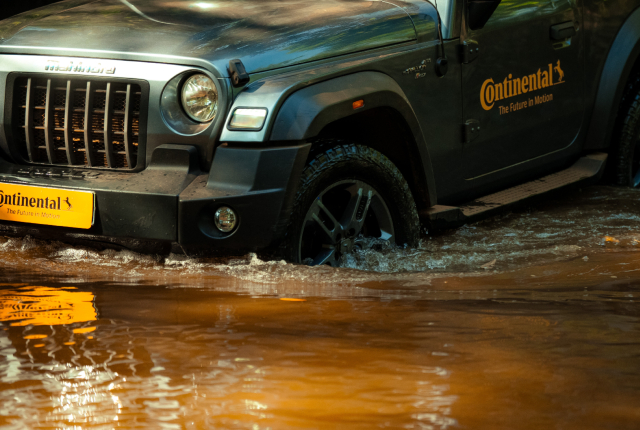
No compromises, Gaurav. We have a customer understanding, where we understand the customers’ requirements and desires without compromising on internal aspects of promises that we make on comfort, noise, and performance.
What may we look forward to in the future?
We are still understanding the Indian market, and we are also seeing all the kinds of vehicles that are coming up. So, we’ll keep launching new tyres as and when required. A few things are still in the pipeline. Secondly, we are also looking into adding new sizes to the existing range, typically the 18- to 22-inch range. Recently, we have announced the investment of Rs 100 crore in the Modipuram plant, and the purpose of this is not only to overall boost the performance that definitely will happen, but also to increase our capability to produce 21- and 22-inch tyres in the Indian market. So, that’s the focus we have, and we’ll keep rolling out these tyres in these segments.







Leave a Reply