


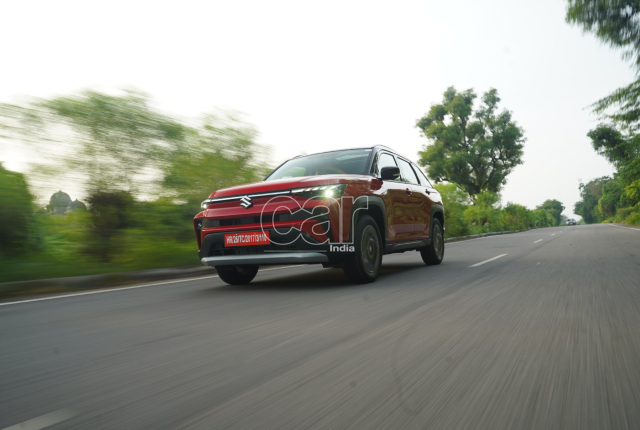
We drove around Jaipur and some specially curated zones to find out whether the Maruti Suzuki Victoris, Arena’s new flagship, can be a victorious contender in the mid-size sport utility vehicle (SUV) space
Words: Gaurav Davare
Photography: Kalidas M
The sub-four-metre SUV segment may be the one that grabs a lot of the limelight and is a hotbed of intense competition in the Indian automotive space, but the mid-size SUV space isn’t exactly far behind on intensity either. Gone are the days when a fundamentally simple SUV was premium enough. The trend nowadays for those looking at a mid-size SUV is close to being a jack of all trades. Maruti Suzuki has already had the Grand Vitara as its mid-size SUV player since 2022 via the carmaker’s premium Nexa brand. Now, the Maruti Suzuki Arena range has a flagship, called the Victoris. This is the second mid-size SUV by the carmaker. Does the Victoris have the potential to be victorious in its segment? We got to spend some quality time with it in Jaipur while also putting it through some interesting, curated tests to find that out.
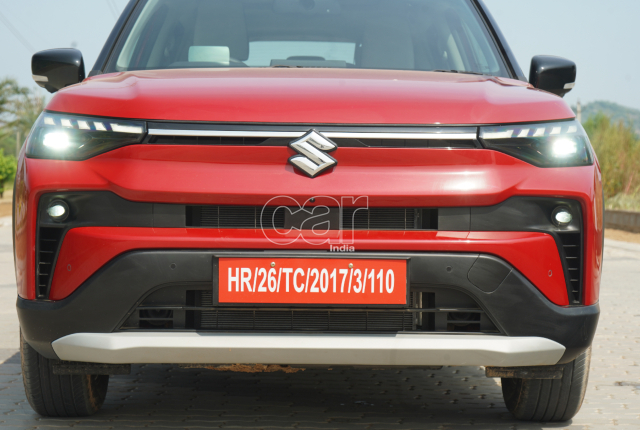
Considering the Maruti Victoris and Grand Vitara are built on the same global C-platform, it is no surprise that the overall silhouette is recognisable owing to fairly identical dimensions. But that’s where many of the exterior similarities end. The Victoris, though it looks butch, yet has a balance of the sleek and the modern. Up front, there’s a fairly upright nose and a nicely sculpted front bumper, complemented by an aggressive pair of eyes (LED projector headlamps) and LED daytime running lights (DRL) that have unique separations. The LED DRL are connected by a chrome strip that cleverly blends with the DRL, so that it can be mistaken for an illuminated band.
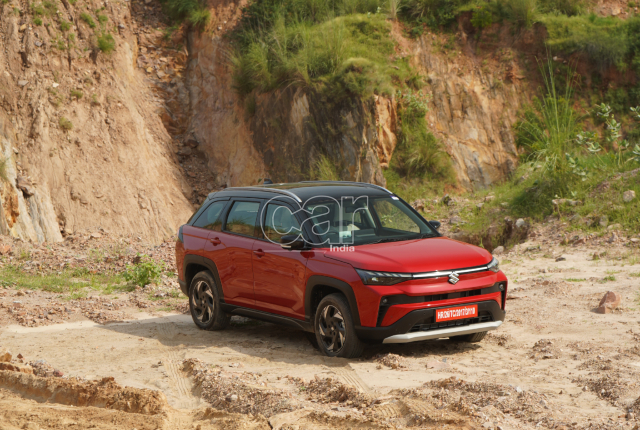
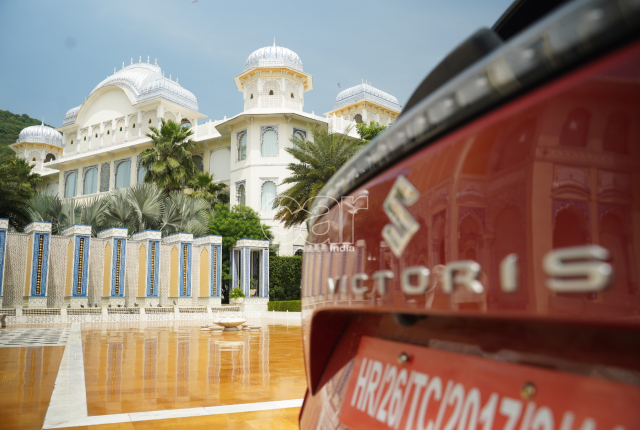
Moving over to the side profile, the SUV boasts of strong character lines, and the 17-inch alloy wheels have a snazzy dual-tone five-spoke design. The squared-off wheel arches and the thick cladding add some muscle to the design, with the sloping roofline giving it that SUV personality. Like the DRL up front, the connected LED tail-lamp strip has separated sections, and it is nicely stretched across the width of the Victoris. Overall, the design is simple, well-balanced, and sophisticated.
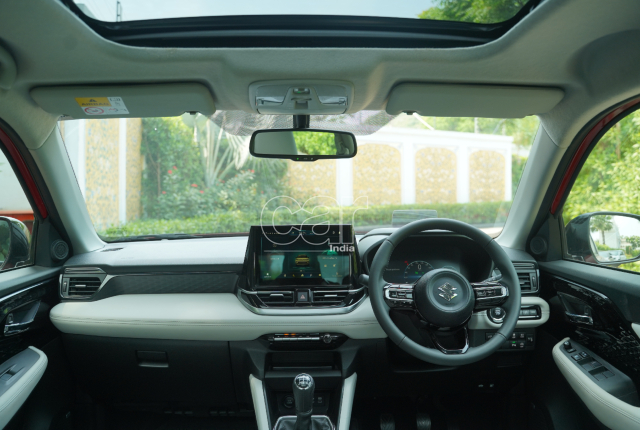
Enter the Victoris, and you get a far more lasting impression. It’s a clear sign that the carmaker has upped the ante. The car looks properly modern, and there’s a generous amount of soft-touch materials, especially around the dashboard, which gives it a premium ambience. The fit-and-finish of the plastics feels much nicer to touch all round and gives the impression of being built to last; par for the course for a car in this segment. There’s a new steering wheel, too, which feels nice to hold, and the controls are also of a decent quality. Fortunately, Maruti Suzuki has not gone the full digital route, which is the trend in ergonomics, as there is a healthy dose of physical controls, all in the right places. The cabin theme is dual-tone, but I would prefer the all-black theme with gold accents limited to the strong hybrid variants.
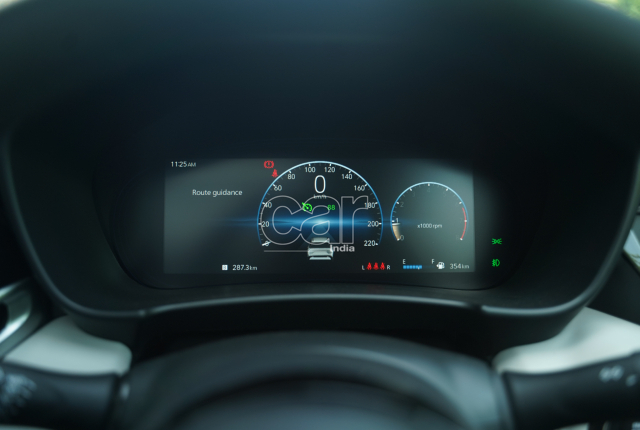
So far as features are concerned, the Maruti Suzuki Victoris is loaded to the gills with things like wireless smartphone connectivity, wireless phone charging pad, 60W Type-C charging ports, an electric dual-pane panoramic sunroof, Alexa-voice assistant, eight-way powered driver’s seat, connected car tech, a heads-up display, as well as ventilated front seats that may be noisy at their highest setting (Level 3), but came in quite handy on our hot test day in Jaipur.
To add to this, the Victoris gets a lot of firsts for a Maruti Suzuki vehicle. It starts with a 10.1-inch touchscreen infotainment system with a familiar easy-to-use UI as well as a 10.25-inch digital instrument cluster that looks simple, yet provides the driver with all the necessary information. There’s a gesture-controlled powered tailgate, but I’d prefer a higher sensitivity level for the sensor. The 360-degree camera is now more pronounced with 11 different viewing angles, so, given its already decent resolution, it’s a plus. There’s an eight-speaker audio system with Dolby Atmos tuning that gives a theatre-like experience inside with a crisp, clear, and strong surround effect. The ambient lighting has up to 64 colours of choice, although I think the brightness could’ve been higher, as it isn’t easy to notice even in mild daylight conditions.
Another sign of improvement from Maruti Suzuki is in safety. The Victoris has scored a five-star safety rating in the Bharat NCAP and Global NCAP’s recent crash tests. It’s helped by things like six airbags as standard, ABS and ESC, ISOFIX, and another new first for Maruti: Level 2 ADAS. This includes features such as automatic emergency braking, adaptive cruise control, lane keep assist, and lane departure warning.
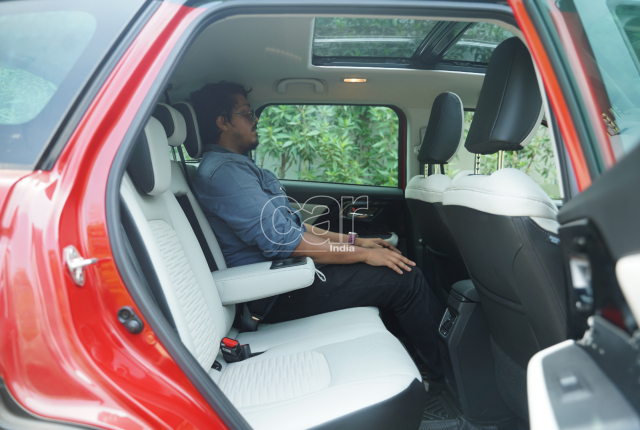
Being comfortable while sitting inside a mid-size SUV is a fundamental requirement, and the Victoris ticks that box ably. There is a great sense of space, and the front seats have enough support to accommodate persons of varying bodily stature comfortably. It gets even better at the rear, where three individuals can sit comfortably. There is plenty of leg room and knee room, and the headroom is more than adequate for a nearly six-foot tall individual. Practicality is another positive with fairly decent front door pad space, multiple storage options around the centre console, and decently sized cup-holders. That said, the rear door pockets could’ve benefited from some more space.
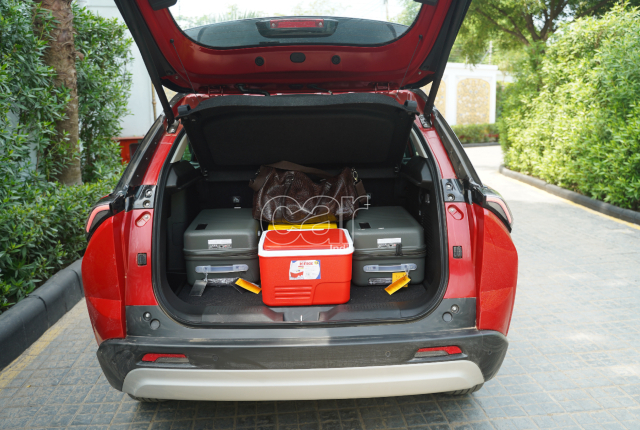
The boot volume with the rear seats up is more than enough to fit in three medium-sized suitcases and a few smaller bags, which should satisfy the practicality needs of a family. Here’s where another key first for Maruti Suzuki comes in, as, in the CNG variants, the CNG tank is mounted in the underbody, which is a boon for boot volume.
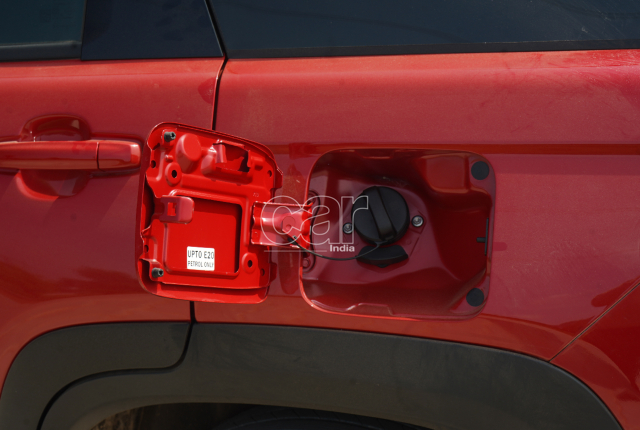
Before we get to how the Maruti Suzuki drives, here’s a quick spec check, wherein, like the Grand Vitara, you can opt for either a 103-hp 1.5-litre K15C four-cylinder mild-hybrid petrol engine with a CNG option or a strong hybrid set-up that combines a 92.45-hp 1.5-litre petrol engine and an electric motor propelled by a made-in-India lithium-ion battery, to produce 80 hp and 144 Nm. Gearbox options include a five-speed manual and a six-speed automatic for the mild-hybrid petrol motor, with the strong hybrid petrol limited to an e-CVT. The mild-hybrid petrol engine can also be had with the AllGrip all-wheel-drive system with Auto, Snow, Lock, and Sport modes.
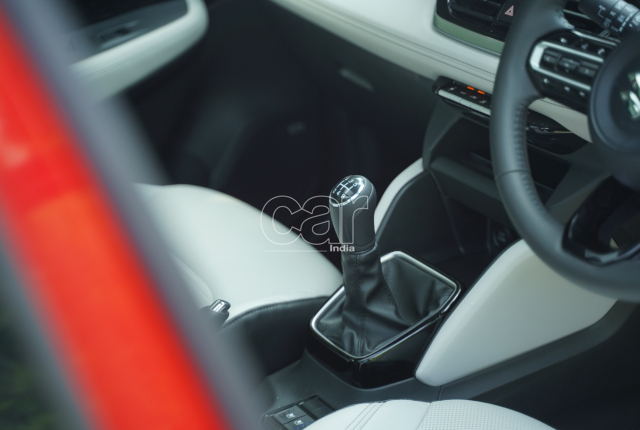
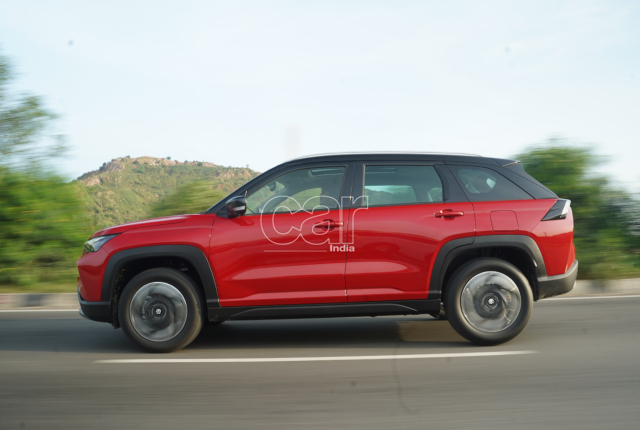

For most of our drive, we had the mild-hybrid petrol set-up, paired with the five-speed manual gearbox. The gearbox is a typically sorted Maruti Suzuki unit. Its shifts are slick and its throws short, making for ease of use even in traffic. The engine, on the other hand, isn’t the most enthusiastic of units; it takes some time to gain momentum, so you’ll have to plan your overtakes in advance. That said, it’s a matter of what you want from an SUV. If it’s for leisure driving around the city or on the highway, power delivery is nicely refined and adequate for those scenarios. Also, Maruti Suzuki claims an impressive fuel efficiency of 21.18 km/l with this set-up, and during my limited time driving it in a variety of scenarios, it never went below 13 km/l on the odometer.
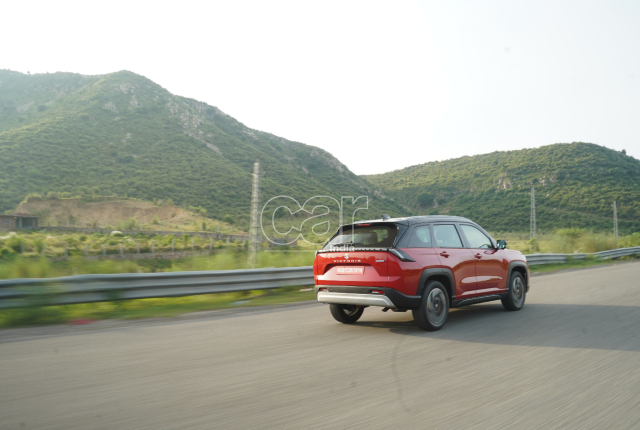
While we wish the Maruti Suzuki had a more exciting powertrain, it somewhat makes up for it in how comfortable it feels while on the move. Ride quality is excellent even on bad surfaces, with the steering being finely tuned with a quick response, making directional changes easy. It also felt largely planted while tackling high-speed bends.

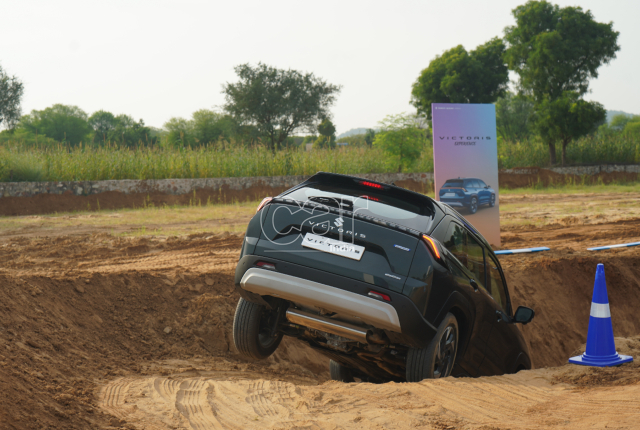
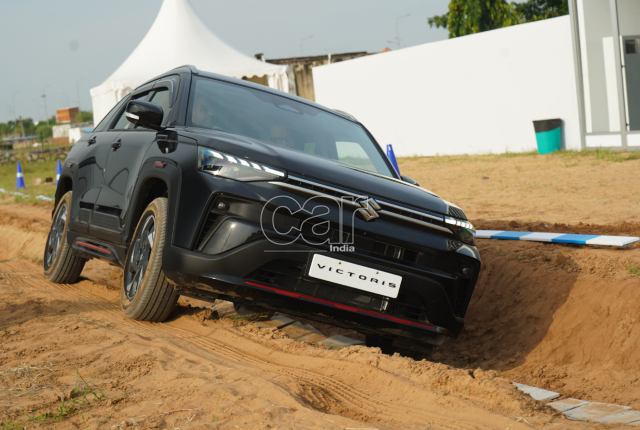
While we didn’t get to test the strong hybrid set-up, we did get to put the AllGrip all-wheel drive on a specially curated off-road experience zone. It had a rock bed, a pothole section, a tipover section with a 28-degree section that is not for the faint-hearted, an articulation section, and challenging side inclines. Through all these, the Victoris performed impressively, especially around the tipover section, for there was no hint of flexing and, with the Snow terrain mode, slippage was minimal while climbing the low-grip surface. The Lock mode gave a near 50:50 power distribution ratio, which proved helpful in tackling the side inclines.
Another curated experience was the Level 2 ADAS demonstration. Sampling things like the adaptive cruise control, road cross traffic alert, blind spot monitor, and the lane changing assist, it looks to be well calibrated for Indian conditions with smooth interventions.
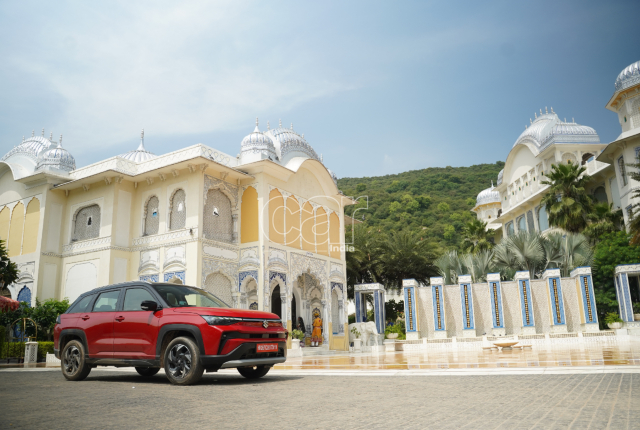
The main pull for the Maruti Suzuki Victoris, however, is its price range. With the introductory price ranging from Rs 10.50 lakh to Rs 19.99 lakh (ex-showroom), it is a very competitive offering. It feels like a well-rounded product in terms of looks, features, comfort, and powertrains. It also benefits from Arena’s vast network of dealerships in the country. Yes, it could’ve benefited from a more powerful engine, but the choices you get score big on frugality.
Overall, the Maruti Suzuki Victoris has the ingredients to be a segment disruptor.









Leave a Reply