


Tata’s new Tiago is here but is it all-new? We find out
Tata Motors is one of the very few manufacturers that are still focusing on hatchbacks, and the latest Tiago is a prime example of this endeavour. Because hatchbacks have taken a back seat after the advent of compact and mid-size SUVs, this raises a reasonable question: why has Tata Motors refreshed the Tiago in 2026? A question that intrigued me so much that I ended up in Bengaluru looking for answers.
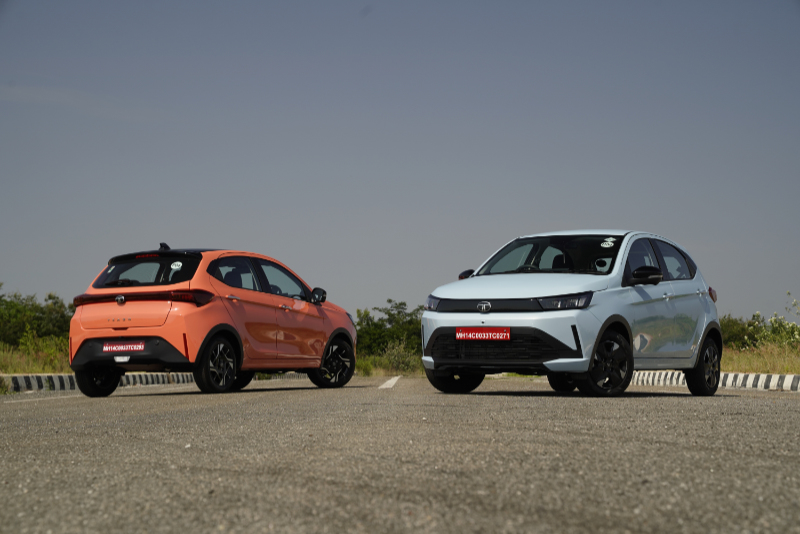
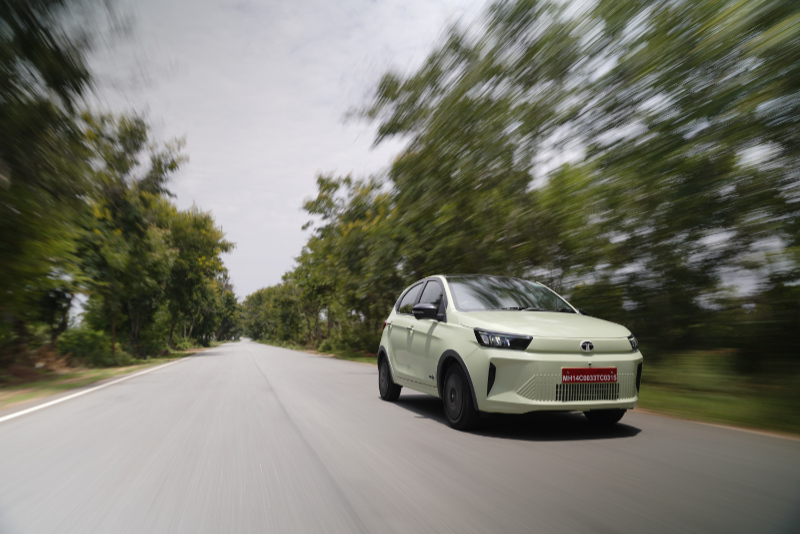
At first, the new Tiago and Tiago iCNG look all-new, but look beyond the obvious, and you shall see familiarities peeking through the cracks. It is not a generational change but a comprehensive facelift, so intense that it gives the impression of being all-new, including the front end, which features new headlamps with LED lights and DRLs. There is a new piece of glossy plastic that sits perfectly between the two headlamps, giving it sort of a connected look. Earlier, this very piece served as a grille, but on the new Tiago it just acts as adornment because the grille has moved entirely into the bumper. It looks nice and gives the Tiago a fresh new look. There are sleek rectangular fog lamp inserts as well, but unfortunately, Tata is not offering fog lamps as standard; you have to get them as an accessory.
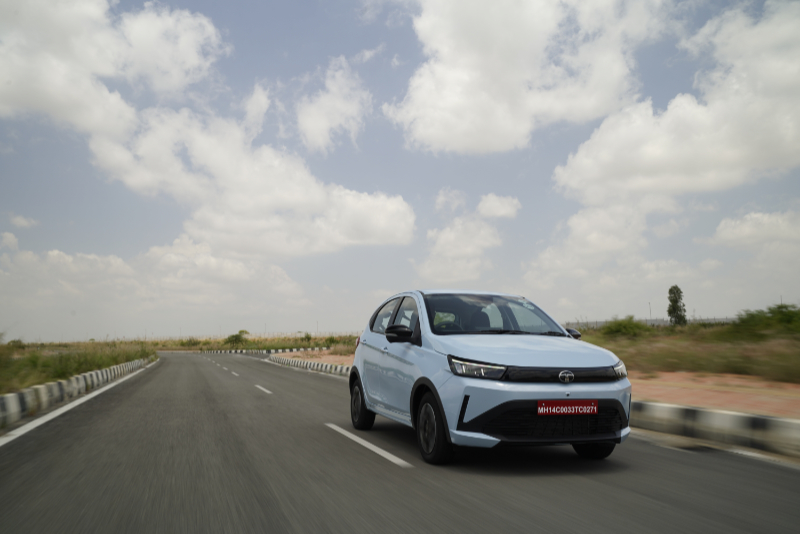
Moving to the side and you find a familiar silhouette welcoming your gaze. The wheels, however, are new, with the top-end variant getting 15-inch diamond-cut alloy wheels. The base and mid variants get 13- and 14-inch wheels respectively. Things have been kept interesting at the rear with a new taillamp design and again a plastic piece that connects the two taillights. However, it is not illuminated; there are no light bars inside it, but I am sure that some shop in some part of the country will come up with a solution and we will get to see a light bar on a Tiago. The rear bumper too features a new design along with a rear windshield wiper and washer. Tata Motors has used plenty of recycled plastics, such as the fender cladding, which not only looks neat but also has embedded granules that enhance its aesthetics.
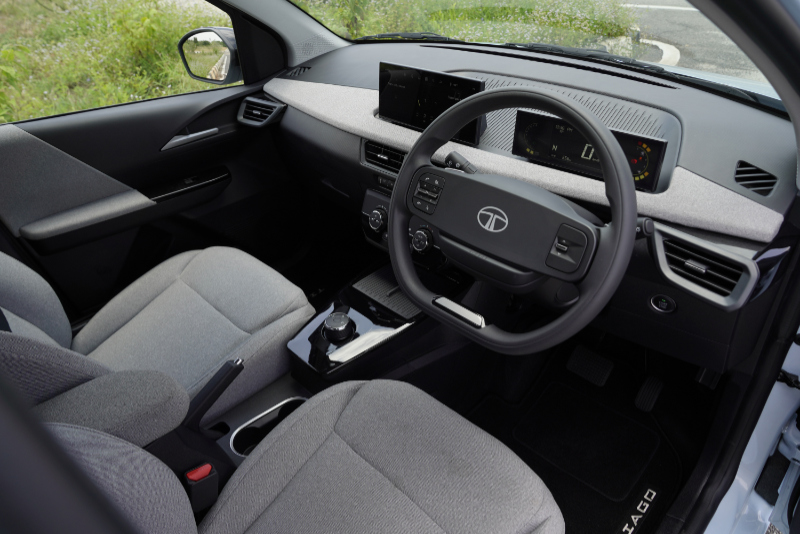
Talking of recycled materials, you get some on the inside, and much of the plastic in the panels, especially in the A-pillar, is recycled. However, the biggest change is the new dashboard design, which now features a grey theme rather than the black-and-grey one before. You still get a nice 10.25-inch touchscreen infotainment system with the latest UI, wireless Android Auto and Apple CarPlay connectivity. There are physical buttons on the centre console as well, especially for the AC, and that is something that has been carried over from the earlier Tiago. Tata has also provided a smaller 5-inch instrument panel with a floating design that looks neat and displays just the right amount of information. The dual-spoke steering wheel is new, without any glossy finish or an illuminated Tata logo. Instead, it gets a simple grey finish with the Tata logo, and mounted controls for telephony, music, voice commands, and cruise control.
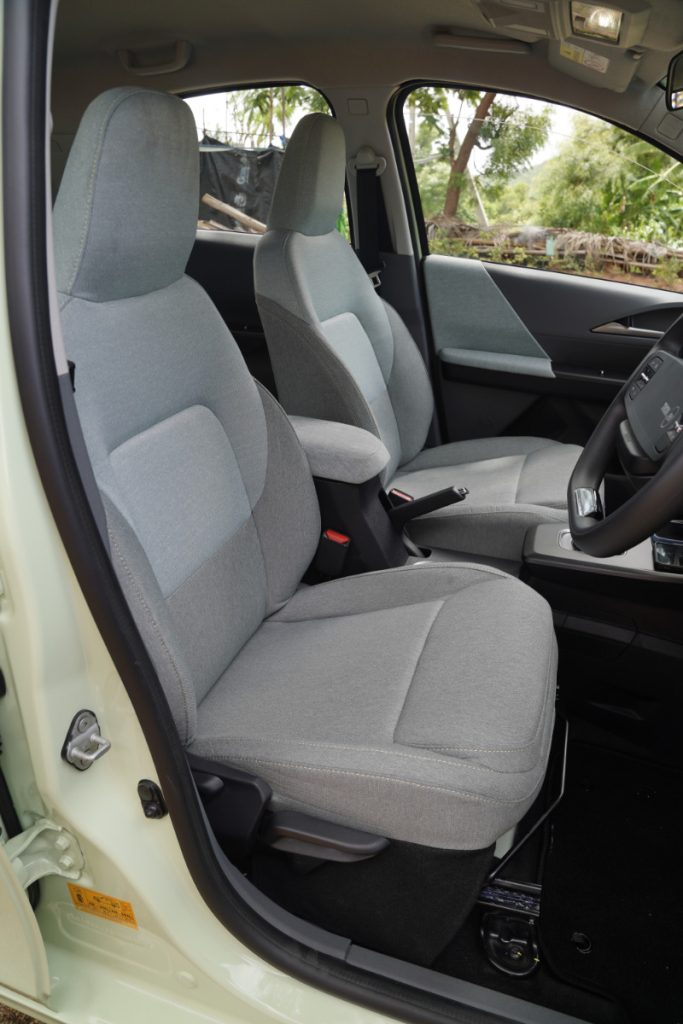
Tata has also reworked the seats by adding more under-thigh support and improving overall seat contouring to provide better bolster and lumbar support. You also get multiple USB ports, including high-powered ones, and dual phone pads in the centre console, one of which also includes wireless charging. Plus, six airbags across the range are reassuring for safety. Space at the back is the same as before, as the platform is still the same; however, Tata Motors has added structural reinforcements to improve overall safety.
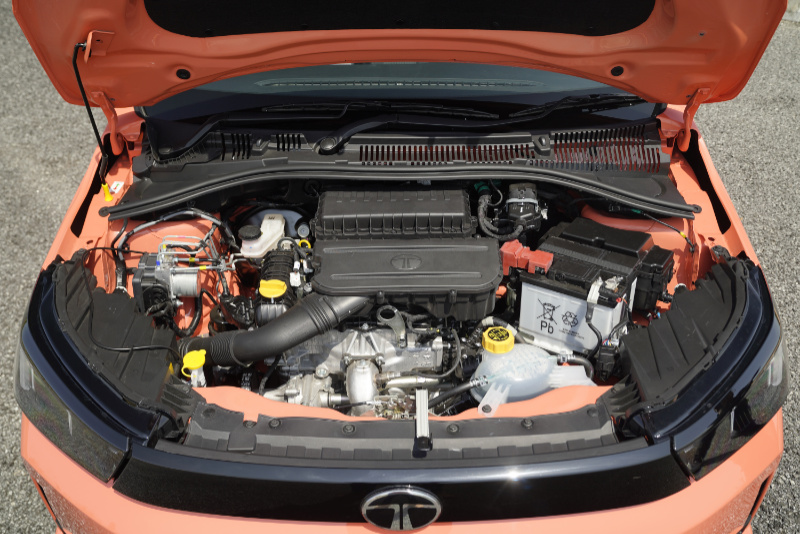
In terms of the powertrain, both the Tiago and iCNG continue to be powered by the same 1.2-litre naturally aspirated Revotron engine, producing 86 hp and 113 Nm in the petrol-only variant and 75.5 hp and 96.5 Nm in the iCNG variant, and comes mated to either a five-speed manual gearbox or an AMT. I drove the one with the manual box in the petrol-only version and the AMT in the iCNG version, and it was quite interesting. The first thing I noticed was how smoothly the car moves as you let go of the light clutch. It reminded me of diesel hatchbacks where all you had to do was let off the clutch, and the car would move forward without needing to rev the engine. In the iCNG variant, the AMT comes with a crawl function, which makes life pretty easy when going through traffic; however, the AMT’s shifting still needs some work, as it is not fast enough even at slower city speeds. Talking of traffic, the engine felt effortless to drive, with power and torque delivered linearly. Even the gear ratios are well balanced, allowing you to drive at 30 km/h in third gear without the engine feeling on the verge of dying.
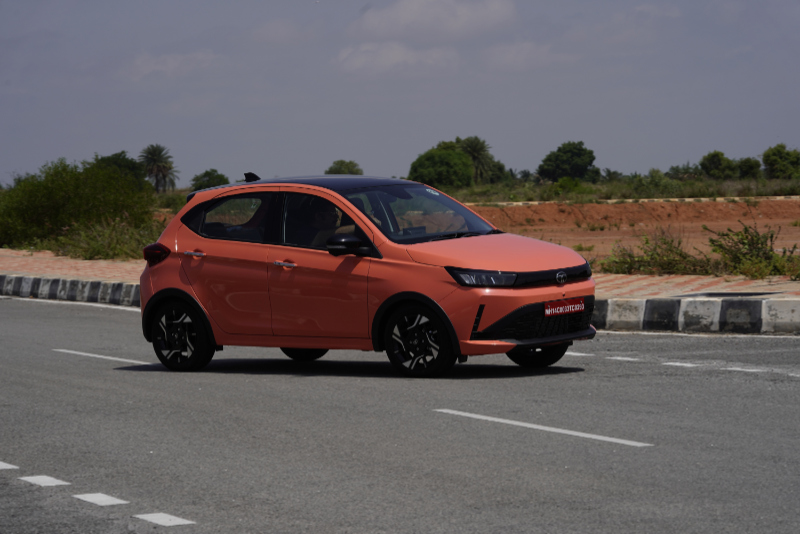
Once on the highway, the engine comes into its own; cruising at a reasonable 80-90km/h in fifth gear makes the engine so relaxed that you hardly hear it running. The iCNG, on the other hand, feels lethargic on the highway, as the acceleration is smooth but extremely slow, especially in the AMT variant. The iCNG teaches you patience and to be calm on the road because everything happens at a slower pace as compared to the petrol-only Tiago. However, when you try to push the petrol-only Tiago beyond 100 km/h, it reminds you that this engine is not meant for performance, as it takes its own sweet time to reach that speed. But we must remember that the Tiago family is not meant for the enthusiast; it is aimed at the kind of group that likes to commute from A to B without stressing about acceleration or high speeds.
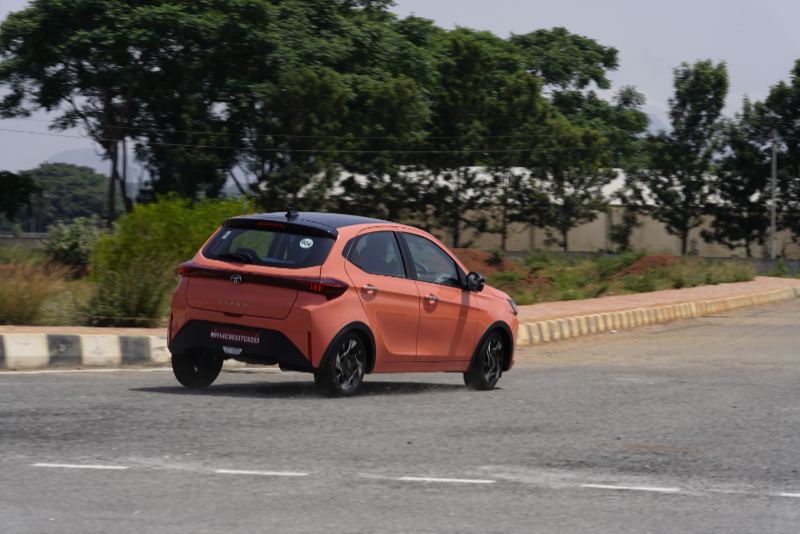
In terms of handling and ride quality, the two cars feel the same because the suspension setup is the same, meaning it can handle bad roads, undulations and loose surfaces without breaking a sweat and while keeping the passengers comfortable thanks to the good ride quality, but handling does take a back seat because of that. Drive the Tiago with a bit of enthusiasm, and you instantly realise that it doesn’t pack a punch. There is noticeable understeer at speeds over 60 km/h, and the soft suspension setup makes it nervous when pushed hard in the corners. However, below 60 km/h the Tiago remains composed and handles the corners with less nervousness. The steering is a mixed bag: at low speeds, there is just enough feedback to stay confident; however, it doesn’t really weigh up well when tackling corners. Brakes, however, are good with decent feel and feedback.
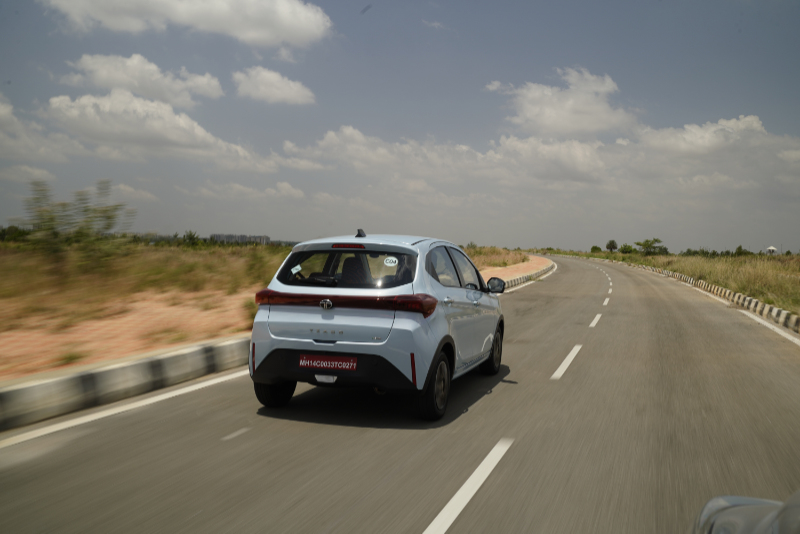
Overall, the new Tiago doesn’t lose its city-car identity, and that is what makes it popular with a whole bunch of people. Plus, with a new face and a new cabin, it feels fresh and very 2026. Plus, you get a whole bunch of new shades that are more youthful than the traditional black, white, grey, silver, and blue. It is also safer thanks to the reinforced structure, ESP, a new 360-degree camera, blind-spot monitoring, and six airbags. However, many of these features are not available in the mid and base variants, so if you want a Tiago or a CNG version of it, consider going in for the top-end Creative+ variant that has all the bells and whistles and is priced at ₹7.3 lakh ex-showroom because, out of the three trim levels, it is the most value-for-money option.
Need to Know – Tata Tiago Creative+ Manual
Price: ₹7.3 lakh (ex-showroom)
Engine: 1,199-cc, in-line three, Revotron petrol
Max Power: 86 hp @ 6,000 rpm
Max Torque: 113 Nm @ 3,300 rpm
Transmission: Five-speed manual wet multi-plate clutch, front-wheel drive
Fuel Tank Capacity: 35 litres
Need to Know – Tata Tiago Creative CNG AMT
Price: ₹8.55 lakh (ex-showroom)
Engine: 1,199-cc, in-line three, Revotron petrol/ CNG
Max Power: 75.5 hp @ 6,000 rpm
Max Torque: 96.5 Nm @ 3,500 rpm
Transmission: Five-speed AMT, front-wheel drive
Fuel Tank Capacity: 60 litres(CNG), 35 litres (petrol)








Leave a Reply