


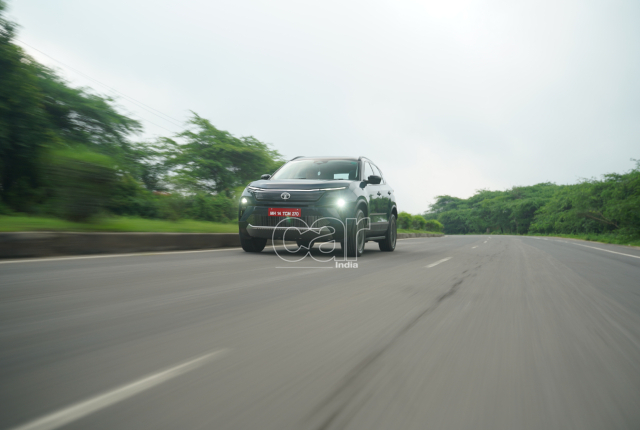
After some minor yet valuable experiences, we finally got some quality time behind the wheel of the Tata Harrier.ev to see if its quiet revolution can walk the silent talk
Story: Gaurav Davare
Photography: Kalidas M
Unless one has been living under a rock, the Tata Harrier.ev has been the talk of town for quite some time now. The price of Tata’s flagship electric sport utility vehicle (SUV) is out and we got a small preview of its capabilities at the Buddh International Circuit (BIC) in Noida. Although valuable, this short experience wasn’t enough for us to form a true opinion about it. Fortunately, now we’ve got the chance to properly get up close and personal with the Tata Harrier.ev in Delhi. Can it really be a capable SUV without needing to be flashy? Let’s find out.
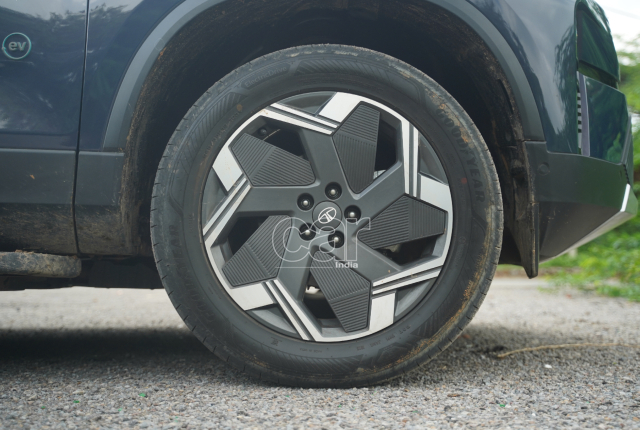
From afar, you’d mistake the Tata Harrier.ev for an internal combustion engine (ICE) Harrier, for they look very similar. There are differences, however, with the closed-off front grille, a different pattern for the air dam, and silver skid-plates. In typical electric vehicle (EV) fashion, the 19-inch alloy wheel design is different to help aerodynamic efficiency and there’s EV badging to further drive home its identity. It ticks one box of a quiet revolution in not needing to look flashy to stand out.
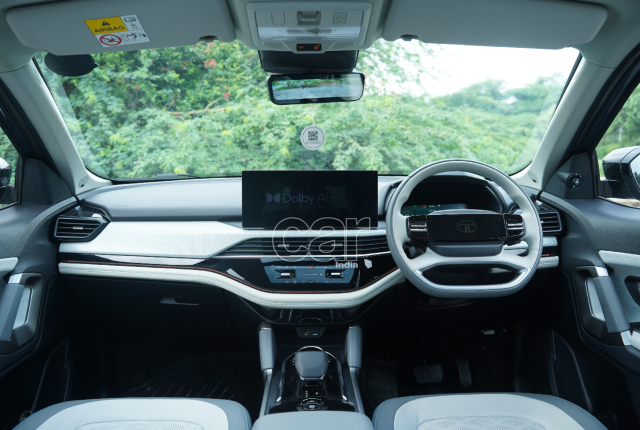
Inside, much of the cabin layout remains identical, apart from the EV-specific graphics and white theme, limited to the Empowered variant. It would’ve been nice to have a dark theme option not limited to the Stealth Edition. Here’s where the gains over the ICE model begin with a larger Neo QLED 14.53-inch touchscreen by Samsung. It’s got higher resolution and more vibrant colours, which is always appreciated and the user interface (UI) is identical to modern Tata EVs, so functionality remains smooth and easy.
A much appreciated upgrade is a digital internal rear-view mirror which is important since the view from the rear windscreen is minimal and the camera being mounted on the shark-fin antenna helps its case. That’s not the only party trick; it can double as a dashcam, with storage capacity up to 128 GB, and the data can be accessed by your phone via a QR code. Apart from that, you can adjust the zoom angles, take a screenshot, and even switch to a frontal view.
There’s also a powered “boss mode” from Safari and the 360-degree camera from before gives way to a 540-degree set-up. The benefits? We’ll get to that later. Other EV-specific features include the Arcade.ev app, vehicle-to-vehicle (V2V) and vehicle-to-load (V2L) tech with even a DrivePay feature for easier charging and payment functions. Add these to an already packed feature list that includes a panoramic sunroof, a 10.25-inch digital driver’s display, powered and ventilated front seats, Dolby Atmos-certified JBL Black audio system, as well as dual-zone climate control, and it’s a pretty hefty upgrade over the ICE Harrier.
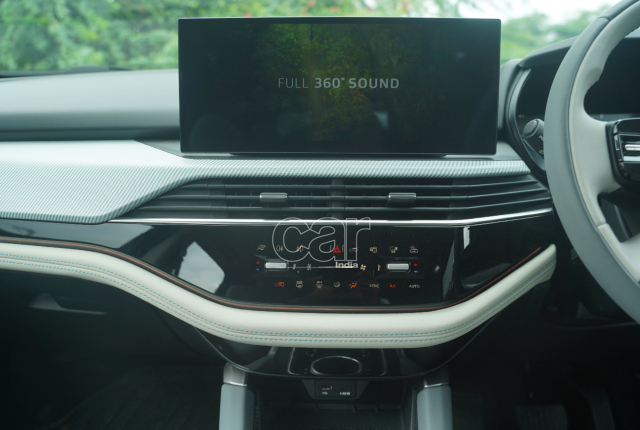
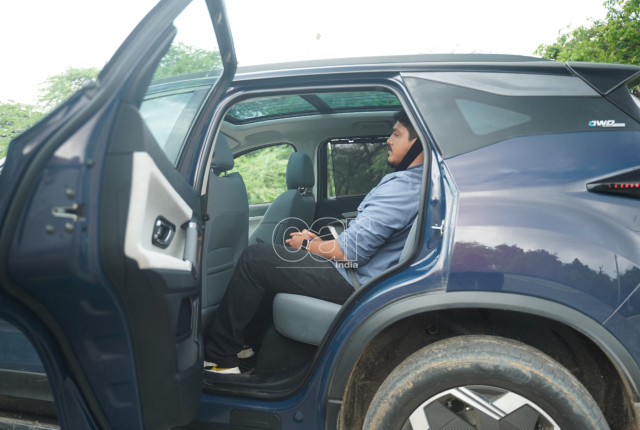
Of course, it being familiar to the ICE Harrier means legacy issues like the less than ideal fit-and-finish as well as limited usability for the door-pockets remain. Also, the touch-based centre console controls could have more sensitivity. You’d think the flat floor has compromised space at the rear, but the difference is negligible as the knee-room, head-room, under-thigh support, and leg-room are adequate for a person of my height (5’ 9”). Two adults can comfortably fit, but a third may be a tight squeeze. Another gripe comes from the 502-litre boot as the load floor height exceeds the tail-gate shut-line and the two surfaces do not align, which can make loading heavy luggage rather tedious.
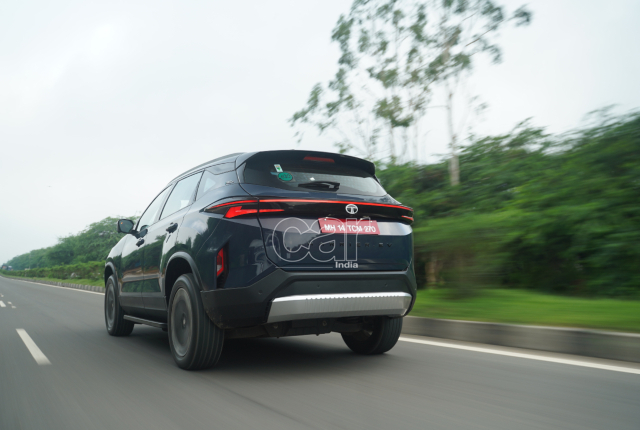
Experiencing, or, in our case, riding shotgun on a racetrack, may be great but it can lead to misleading opinions because track surfaces are perfect. The real world, especially our roads, are far from it with a variety of surfaces. Before we get to that, one of the powertrain options is a 175-kW (238-hp) and 304-Nm RWD single electric motor paired with either a 65-kWh or a 75-kWh battery pack. The other is a dual-motor QWD set-up that makes a combined 396 hp and 504 Nm in Boost mode and limited to the 75-kWh battery pack; a drivetrain set-up that many have been longing for in the Safari and one that we’re driving here.
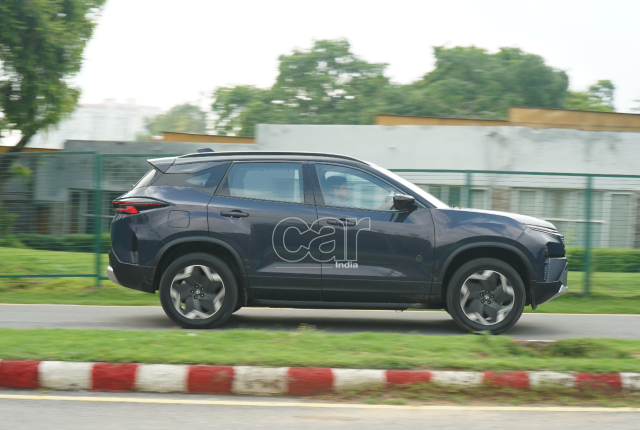
The typical EV acceleration was already impressive at the BIC and the experience does not get hampered on ordinary roads either. The Boost mode gives a nice extra kick to pull this SUV along like a freight train. Crucially, the linear delivery doesn’t catch you off guard and you’re in control. A worthy alternative to the ICE Harrier’s Kryotec 170-hp 2.0-litre turbo-diesel that isn’t the most refined of units.
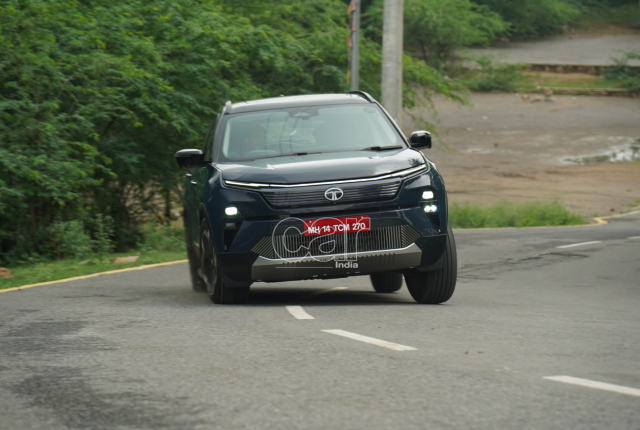
Around a racetrack, it felt impressively composed while attacking high-speed corners and it hasn’t changed on regular roads either. Despite its large stature, body-roll was minimal, which further encouraged me to attack harder and understeer was only apparent when I forced it. Part of it is due to the Harrier.ev getting an independent multi-link rear suspension with frequency selective damping. Basically, they aim to strike a fine balance between stability round high-speed bends and comfort over rough roads.
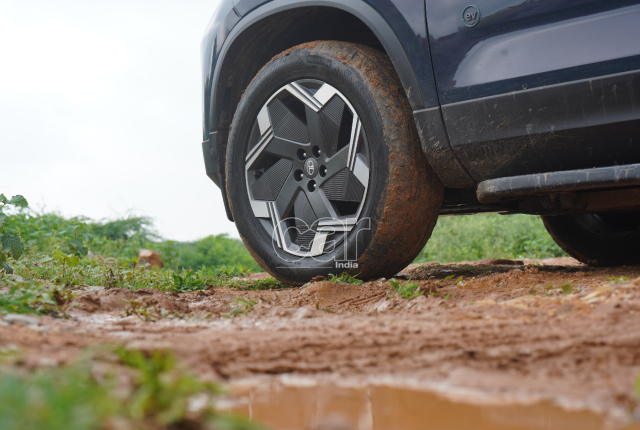
I’ve mentioned before from my Quad Day experience around the tough off-road course that the Sand, Mud/Ruts, Snow/Grass, and Rock Crawl terrain modes made for an effortless course completion. Fortunately, even around the various pothole- and muck-ridden monsoon roads the off-road credentials live up to the essence of an SUV. The 540-degree camera with a transparent view comes in handy for navigating your way out of rocky situations in particular. Yes, under low-speed imperfections, you will feel the thuds, but it doesn’t unsettle the car, better for off-road scenarios.
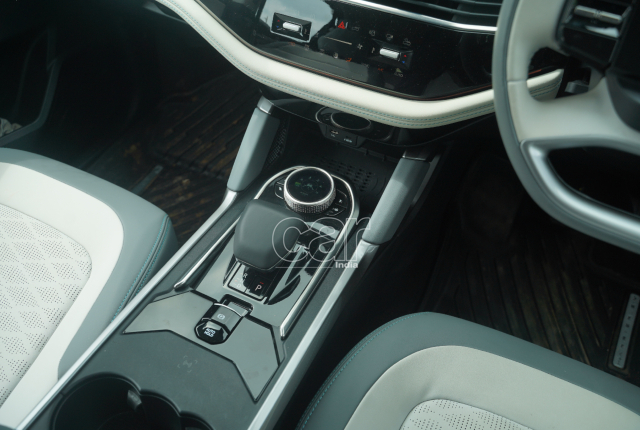
ADAS is quite a mainstream offering, especially on modern Tata models. The Harrier.ev, too, gets it in the Level 2 set-up. Adaptive Cruise Control, Blind Spot Monitor, Lane Assist, and Autonomous Emergency Braking all have their sensitivity suitable for Indian conditions. The Harrier.ev gets an extra edge with the Summon Mode and Auto Parking assist which, as during the Quad Day event, worked without a hitch and can be a useful alternative to get in or out of tight parking spaces.
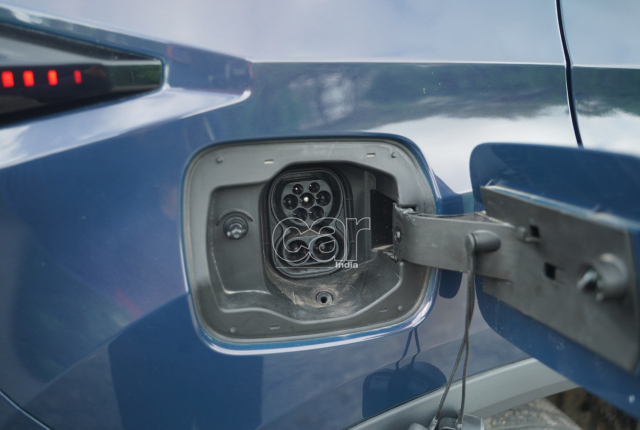
Considering this is an electric vehicle, the other important bit is the range. The MIDC claim for the set-up we drove stands at 622 kilometres or a C75-rated range between 460 and 490 km on a single charge. In the real world, I started off with 504 km on the odometer. After putting it through a variety of tests, a decent part of it being high-speed sprints, I managed to cover over 123 km and ended with 270 km left. So, if you drive it judiciously, getting around 430-450 km in the real world should be possible and more than respectable for heavy-duty weekly use or even an outstation road trip.
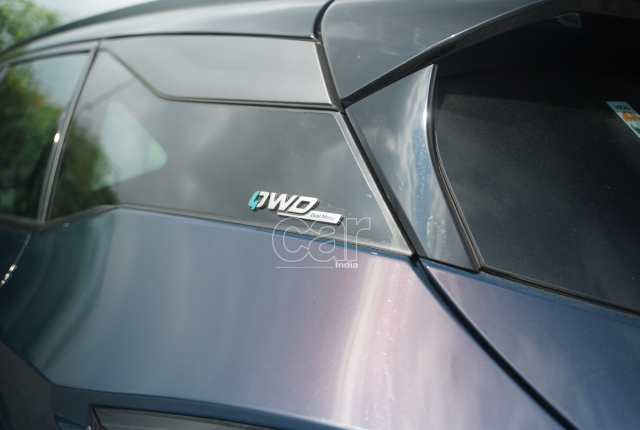
Is the Tata Harrier.ev the quiet revolution it claims to be? I’d say it makes a strong case for itself as it is well-equipped, doesn’t look too flashy, offers respectable range, and has actual off-road chops. The bigger selling point is the price range. Priced from Rs 21.49 lakh to Rs 28.99 lakh (ex-showroom, excluding the charging box that adds another Rs 50,000), the Harrier.ev is actually not far off the top-spec ICE Harrier (Rs 25.75 lakh, Fearless+ AT) and the gap is almost negligible if you add the on-road costs. Which means it can be a serious alternative to an ICE Harrier, and especially against competition like the BYD Atto 3 and Mahindra XEV 9e.
Also Read:
New Tata Harrier EV Launched in India
Interview – Martin Uhlarik – ‘We will focus on improving the customer experience’




Leave a Reply