


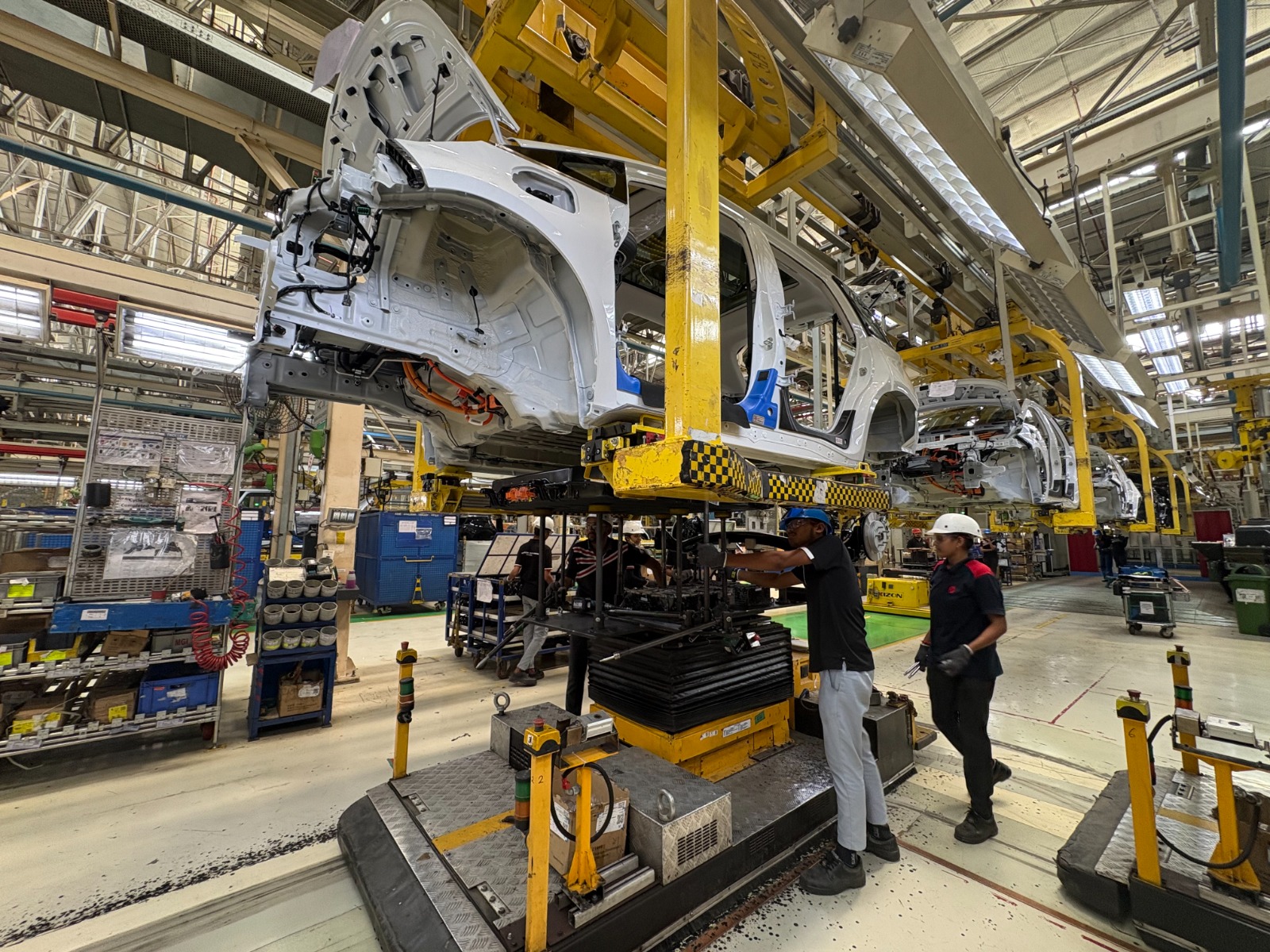
Precision and Quiet
Factories often conjure images of clattering metal and voices raised over the din. This floor is different. The loudest sounds are the hiss of pneumatics and the low hum of diagnostic equipment. Workers are quietly efficient, each station designed for ergonomic comfort. Benches can adjust for height. Shin guards are standard issue where modules are moved. And no one, regardless of gender, lifts more than the safe weight allowed. Anything heavier is handled mechanically.
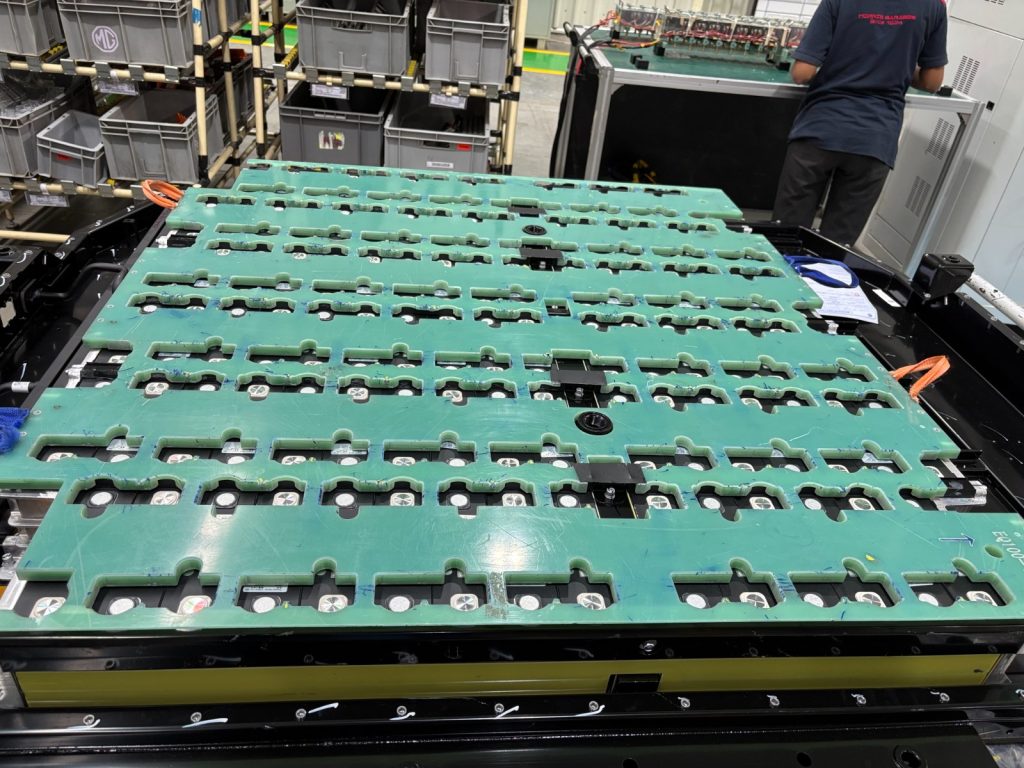
The effect is almost eerie. Rows of modules, stations aligned, and people moving deliberately from task to task with minimal chatter. It looks less like a mass assembly floor and more like an extended operating theater.
Why It Matters
Battery packs are not glamorous. Buyers see the exterior of the car, the touchscreen, the range number. They rarely think about the cells, the bus bars, or the sealing gaskets that make or break reliability. But the Halol plant makes clear how much care goes into each invisible decision. A torque gun that reads too loose could mean a connection fault months later. A module not balanced correctly could reduce capacity and range. A leak test ignored could endanger safety.
Each step at Halol is designed to eliminate that margin of error. The traceability stickers, the cycle tests, the insulation checks are all about controlling the unseen variables. Batteries are durable in service only if they are built with that kind of discipline.
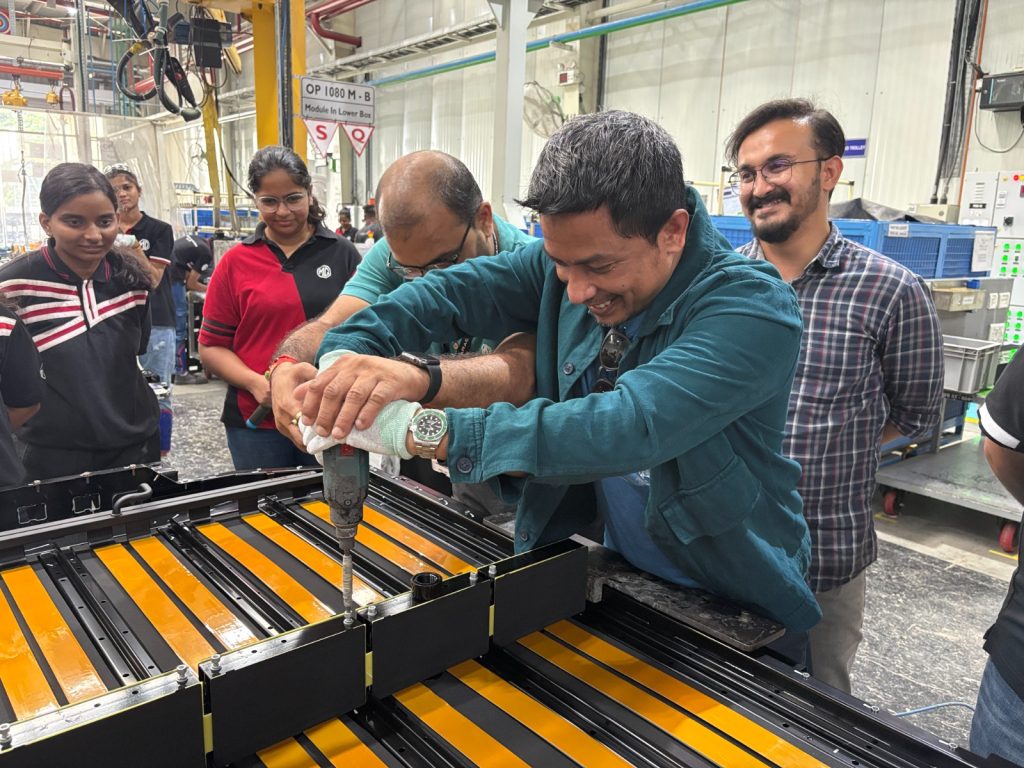
From Pack to Car
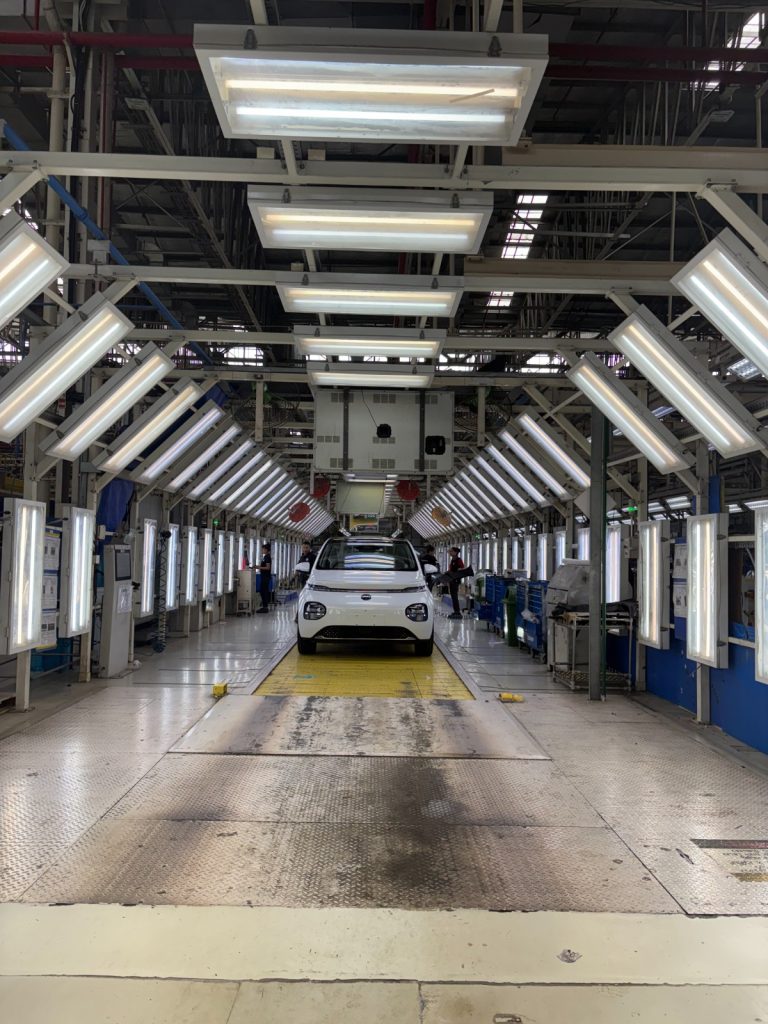
Toward the end of the visit, the team led us across to the car assembly line. This was where the packs we had just watched being built were fitted into their homes, the Windsor, Windsor Pro, and Comet. Here the rhythm was different. Cars emerged from the paint shop, glossy and bare, carried along conveyor belts. At specific points the floor dropped, robots swung in, and the battery packs were lifted into place beneath the chassis.
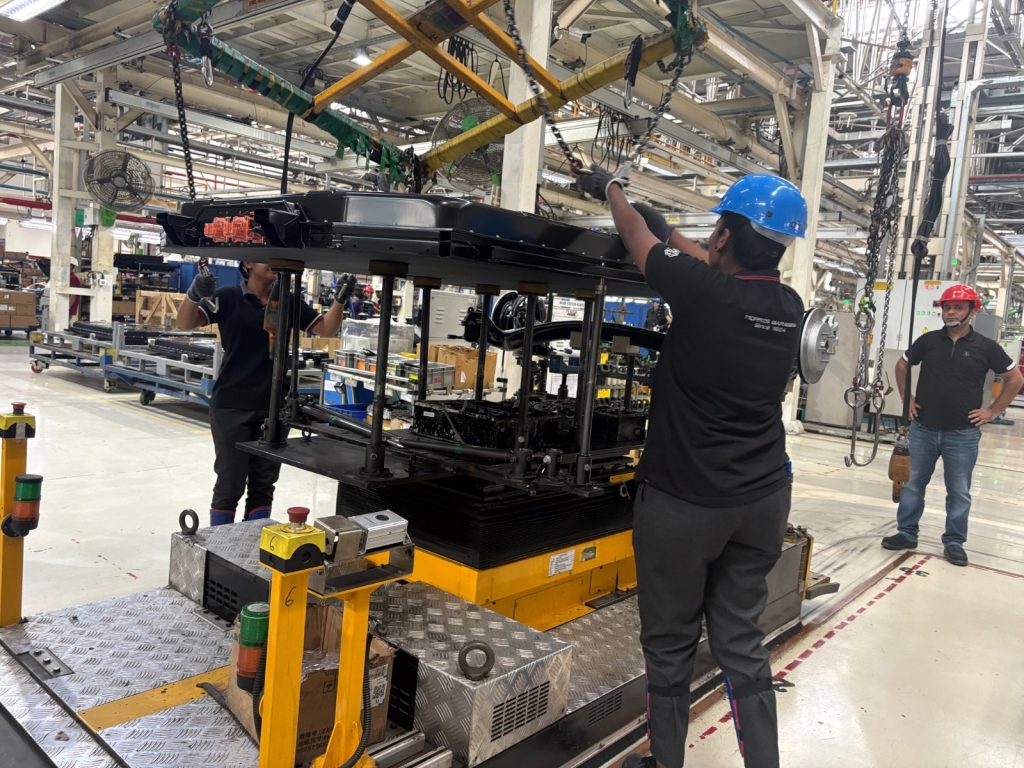
This was the only point in the visit where we saw robots at work. They moved deliberately, lowering heavy packs with steady precision, guided by human supervisors who checked alignments and connections. Watching a battery we had followed from individual cells now slide into the underbelly of a nearly finished car carried its own thrill. It closed the loop, showing the entire journey from module line to moving vehicle.
Closing Impressions
The Indian EV market is still evolving, but evolving at a rapid pace. Costs are still high, sourcing is complex, and recycling remains an unfinished challenge. Even as I finish penning this story, there are as-yet unsubstantiated reports trickling in that SAIC Motors, which currently holds a 49% stake in this joint venture, might be looking to further reduce its stake and halt any further investments.
But inside this plant, progress looks tangible. Our visit to JSW MG Motor’s Halol plant illuminated the details no buyer ever sees, the hundreds of invisible checks that make an EV safe, reliable, and worthy of trust. The packs are heavy, silent, and tucked away under the floor of the Windsor, Windsor Pro, and Comet. But if you listen carefully on the factory floor, amid the hiss of machines and the shuffle of workers, you can hear the sound of an industry remaking itself one cell at a time.
















Leave a Reply